
In 2026, digital marketing for realtors is not about being everywhere at once. It is about running a focused growth blueprint that makes you easy to discover, easy to trust, and easy to contact.
This guide walks through how to use AI visibility, sharp landing pages, targeted Google Ads, and a simple follow-up pipeline so your online marketing for real estate agents stops being random posts and starts behaving like a system that consistently turns searches, clicks, and questions into real conversations and closed deals.
Executive Summary
A Modern Playbook for Digital Marketing for Realtors
The most effective digital marketing for realtors in 2026 is not about being on every platform or posting generic content. It is about building a focused growth system that makes you visible where buyers and sellers actually search and makes it easy for them to raise their hand.
- You consistently attract the right buyers and sellers from search, maps, and AI results because your positioning, content, and ads match what they are already looking for.
- You turn anonymous clicks and casual inquiries into qualified conversations by sending them to sharp landing pages and keeping them moving through a clear follow-up sequence.
- You run a predictable digital engine for your real estate business because you can see which levers are actually creating deals instead of just impressions.
1. Why Most Realtor Marketing Stalls in 2026
Most agents are not losing because they are bad at social media. They are losing because their marketing is random: a few Instagram posts, some portal listings, a boost button on Facebook, and maybe a one-off Google ad. There is no system tying awareness, lead capture, and follow-up together.
In a world of AI search, recommendation feeds, and on-demand information, digital marketing for realtors has to do three things well:
- Make you visible where buyers and sellers are actively looking for help.
- Make it feel safe and easy to reach out to you right now.
- Make sure you never waste a good conversation by failing to follow up.
Everything in this blueprint serves those three jobs.
2. Foundations: Positioning and Offer Before Platforms
Before touching tools, get clear on who you serve and why they should pick you instead of another agent.
Define your core segments
You do not need everybody in the city to succeed. Choose 1-3 segments such as:
- First-time homebuyers in a specific price band or area.
- Move-up families selling and buying in the same city.
- Investors looking for rentals, flips, or pre-launch opportunities.
- NRI or out-of-town buyers needing someone on the ground.
Each of these segments searches differently, worries about different things, and responds to different hooks and offers. Your online marketing for real estate agents should speak to them in their language.
Craft specific offers, not vague promises
Replace generic offers like "Contact me for all your real estate needs" with more concrete and specific offers that immediately tell people what value they will get. For example:
- Free 30-minute homebuying roadmap call for first-time buyers in [area].
- Get a 5-step plan to sell your home in 60 days without underpricing it.
- Weekly list of underpriced rental opportunities in [city] with projected returns.
Each offer can then become the foundation for everything else in your marketing: a dedicated landing page, targeted Google Ads, social media content, and personalized email or WhatsApp follow-ups.
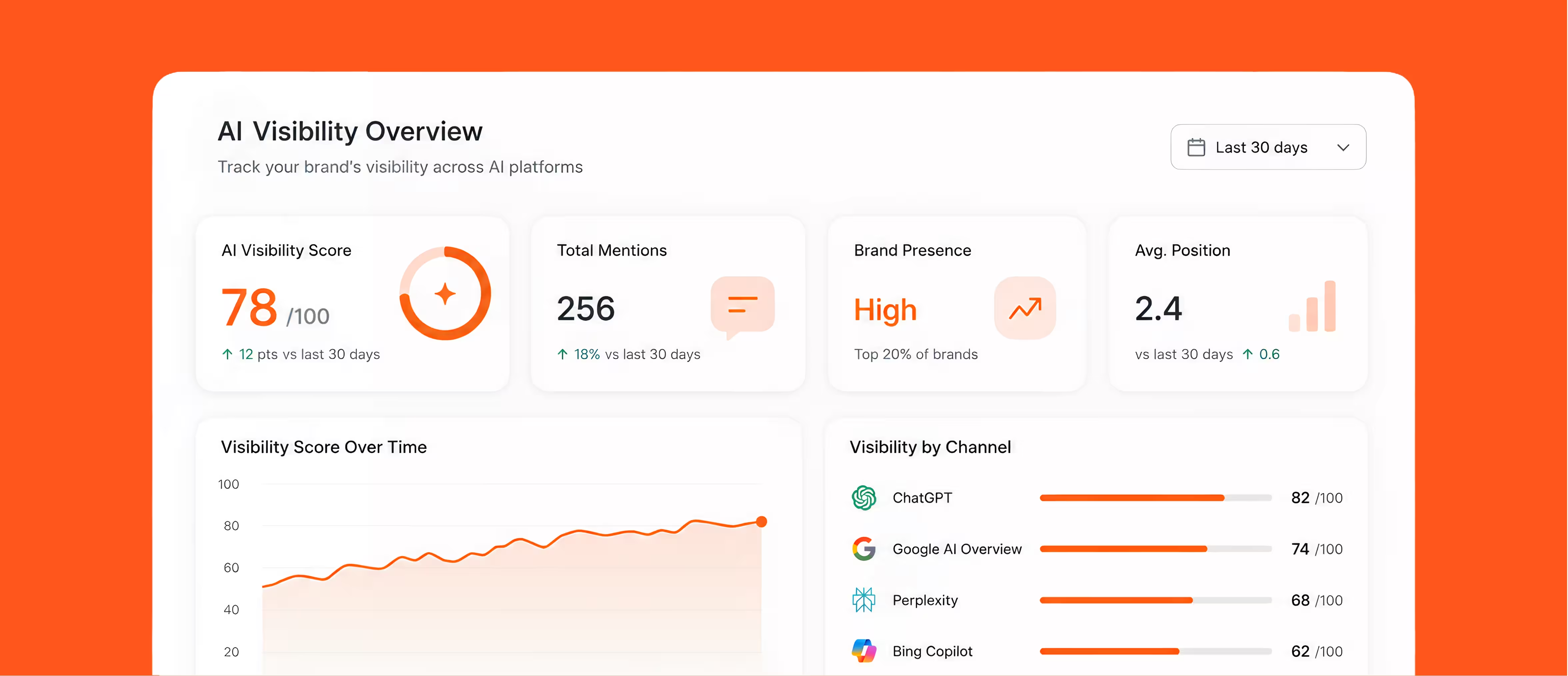
Want to see how visible your real estate brand is when buyers and sellers ask AI assistants for agent recommendations in your area? Get your free AI Visibility Audit for Realtors.
3. AI Visibility: Showing Up Where Buyers and Sellers Ask Questions
In 2026, people do not just rely on Google searches anymore. They ask AI tools, map apps, and voice assistants highly specific questions like "Who is the best real estate agent to sell a flat in [area]?" or "How can I buy a home with a low down payment?"
Strengthen your AI visibility
AI assistants and AI-powered search platforms rely on signals that are structured, clear, and trustworthy. The easier it is for AI systems to understand your business, the more likely they are to surface your brand in recommendations. Focus on these areas:
Optimize your Google Business Profile
- Choose the correct business category.
- Write a clear business description.
- Add FAQs that answer common buyer and seller questions.
- Upload updated photos and publish posts regularly.
Keep business information consistent
Use the same business name, address, and phone number everywhere. Match details across local directories, property websites, social profiles, and listings. Inconsistent details confuse both customers and AI systems that pull business information from multiple sources.
Create structured website content
- Build dedicated service pages and area or neighborhood pages.
- Add FAQs based on real customer questions.
- Include testimonials and case studies.
- Publish local market insights and helpful guides.
Think of this as giving AI systems stronger context about your business. The more consistent and connected your brand information is across the web, the higher the chances of appearing for searches like "Best real estate agent in [area] for first-time buyers" or "Top realtor to sell a flat in [area]."

4. High-Intent Landing Pages: Turning Clicks Into Conversations
Not every page on your website serves the same purpose. When your goal is lead generation, focus on building dedicated landing pages designed around a single action and a specific audience.
Build one landing page per core offer
For each audience segment and offer, create a dedicated landing page designed around one specific goal: converting visitors into qualified leads. Structure the page like this:
5. Google Ads: Capturing Ready-to-Act Real Estate Leads
SEO and AI visibility are long-game plays. Google Ads lets you show up tomorrow for the exact queries that signal strong intent.
Choose keywords with clear buyer or seller intent
Instead of broad terms like "real estate," target:
- Buy 3BHK in [area].
- Sell flat in [area].
- Best real estate agent in [area].
- Real estate agent for NRIs [city].
These people are not simply browsing. They are already moving toward a decision and actively considering their next step.
Match ad copy to the offer and landing page
Each ad group should direct visitors to a dedicated landing page built around one clear offer and a specific outcome. One of the most common mistakes in digital marketing for realtors is message mismatch: the ad promises one thing, but the landing page talks about something completely different. When your ad and landing page stay aligned, visitors immediately understand the value and are more likely to take action.
Start small, then scale
- Begin with 1-2 segments in 1-2 areas.
- Set a modest daily budget.
- Watch which queries convert into calls or form fills.
- Add negative keywords and refine over weeks.
Once you see a pattern, you have a predictable way to buy attention from ready-to-act buyers and sellers.
The agents who win with Google Ads are rarely the ones with the biggest budgets. They are the ones whose ads match exactly what the searcher is trying to solve.
6. Momentum Marketing: Staying Top-of-Mind Without Burning Out
Momentum marketing is about stacking small, consistent actions that keep you visible and relevant without requiring you to be on 24/7.
Turn client work into content
Instead of constantly trying to generate new content ideas, document the work you are already doing every day. Real experiences often create stronger and more useful content than forced topics. Examples of content you can create:
- How you helped a couple buy a home in [area] within a specific budget.
- A quick update on what changed in [area] property prices this quarter.
- How a property moved from listing to offer in 14 days and what you did differently.
You can repurpose the same content across LinkedIn, Instagram, Facebook, email newsletters, and website content. One piece of real-world experience can become content for multiple platforms without creating everything from scratch.
Use AI tools to repurpose, not invent
AI works best when it helps you scale and repurpose content you already have, rather than creating random ideas from scratch. Use it to:
- Turn a client call summary into a content post while removing personal or sensitive information.
- Convert a video explanation into a blog article or website content.
- Rewrite a long market update into a shorter email and social media post.
- Turn FAQs into multiple content pieces for different platforms.
You provide the experience and strategy. AI handles formatting, restructuring, and repetitive execution. This makes content creation more sustainable because you are building from work that already exists instead of starting from a blank page every time.
7. Pipelines and Follow-Up: Turning Interest Into Closings
Leads are only valuable if you have a reliable follow-up system. Otherwise, they become a noisy phonebook.
Build a simple lead pipeline
Whether you use a CRM or a structured spreadsheet, the goal is to make sure every lead moves through a clear process instead of being managed manually. Track stages such as:
- New contact.
- Discovery call booked.
- Actively searching or listing live.
- Offer made or received.
- Closed, lost, or not now.
For each stage, define what actions you take, what information you send, and how often you follow up.
Automate the repetitive, personalize the important
Automation should handle repetitive tasks so you can focus on conversations that matter. You can automate welcome emails, educational email sequences, and appointment reminders. You should personalize property recommendations, pricing and negotiation advice, and situation-specific guidance. A strong real estate marketing system is simply a process where no lead disappears because of missed follow-ups or inconsistent communication.
8. Metrics That Matter: What to Track and What to Ignore
It is easy to drown in vanity metrics. Focus on numbers that relate directly to deals.
Track
- Leads per month by source: AI, search, ads, referrals, social.
- Booked calls or meetings per source.
- Deals closed per source and per segment.
- Cost per lead and cost per closing for paid channels.
- Time from first contact to closing so you know how long pipelines take.
Ignore
- Raw impressions.
- Follower counts without engagement.
- Clicks without context.
This helps you decide where to double down and what to drop in your digital marketing for realtors strategy.
9. Putting It All Together: Your 90-Day Growth Blueprint
To make this practical, think in 90-day cycles rather than fixing everything at once.
By the end of 90 days, you will know what works for you in your market and you will have the beginnings of a repeatable engine.
The most effective digital marketing for realtors comes from a focused system that fits how you actually work and who you actually serve, not from copying what every other agent is doing.
10. Conclusion: From Random Online Activity to a Real Growth Engine
You do not need every platform or funnel under the sun. The most effective digital marketing for realtors comes from a focused system that fits how you actually work and who you actually serve:
- One way to show up when buyers and sellers ask questions: through AI-friendly content, a solid Google presence, and smart online marketing for real estate agents.
- One way to turn that attention into real conversations with sharp, offer-driven landing pages and simple contact options.
- One way to keep momentum through consistent stories, updates, and repurposed content that does not burn you out.
- One way to move every interested person through a clear pipeline so no serious lead is wasted and you know which efforts drive real deals.
Start with the part of your system that feels weakest right now: maybe your AI and search presence is thin, your landing pages are generic, your ads do not match your offers, or your follow-up is scattered. Fix just that piece with a simple, repeatable process. Once that starts producing more qualified conversations and closings, stack on the next layer. Over time, your marketing stops feeling like random online activity and starts behaving like a growth blueprint you can run, improve, and rely on.
Next: see how marketing automation can handle your follow-up while you focus on closings. Read The Realtor's Guide to Marketing Automation That Works.