
In 2026, the most effective real estate lead generation strategies are not about spending more on ads. They are about using a simple, repeatable system to attract high-quality buyers and sellers organically and turn them into real conversations.
By focusing on clear positioning, a strong online presence, helpful content, and structured follow-up, you can stack a few proven real estate lead generation ideas that work together to bring in consistent leads, even when you are not actively prospecting.
Executive Summary
High-Quality Real Estate Leads Without Ads
The most effective real estate lead generation strategies in 2026 are not about outspending competitors on ads. They are about building a simple, repeatable system that makes you visible, trusted, and easy to contact wherever serious buyers and sellers are already paying attention.
- You consistently attract high-intent buyers and sellers from search, referrals, and your local community because your presence and content match the questions they are already asking.
- You turn casual interest into qualified conversations by using a few focused real estate lead generation ideas that capture contact details and move people into your pipeline.
- You run a predictable, ad-free lead engine because you know which organic activities create real opportunities, not just noise.
1. Why Focusing on High-Quality Leads Matters More Than Ever
Most agents do not actually have a lead problem. They have a quality problem. There are plenty of people clicking, browsing, and casually asking questions, but only a small percentage are truly ready to move in the next 3 to 12 months. If you chase everything, you tire yourself out. If you design your system around the right people, your day gets much easier.
Real real estate lead generation strategies that work without ads share three traits:
- They attract people who already care about a specific problem: buying, selling, relocating, or investing.
- They make it safe and easy to start a conversation without pressure.
- They include a follow-up rhythm so no good lead gets lost just because timing is not perfect today.
The rest of this guide shows how to build that kind of system with things you control: your positioning, your online presence, your content, your relationships, and your follow-up.
Chasing volume is easy. Building a system that attracts serious buyers and sellers consistently is what separates agents who always feel busy from agents who consistently close.
2. Make Your Positioning and Market Focus Do the Heavy Lifting
Before you create content or systems, decide who you want to be the obvious choice for. If people cannot quickly understand who you are best for, they will not remember you when they or a friend are ready.
Choose clear segments, not everyone
Instead of trying to work with everyone in your city, focus on 1 to 3 specific types of clients you understand well and want to serve consistently.
For example:
- First-time buyers searching within a certain budget or neighborhood.
- Families upgrading from an apartment to a house.
- Investors looking for rentals or flips in a defined area.
- Professionals or families relocating into your city.
When your audience is clear, your real estate lead generation becomes much more focused. You know what questions to answer, what stories to share, where to show up online and offline, and which partnerships make sense for your business.
Create simple, concrete offers
People usually do not respond to generic lines like "Contact me with any real estate questions." They are far more likely to engage when the offer feels specific, useful, and directly connected to what they are trying to achieve.
For each segment, create 1 to 2 focused offers that solve a real problem or help them make a decision. For example:
- Free 20-minute first-time buyer roadmap call for [area].
- Pricing and home prep review for owners planning to sell in the next 6 to 12 months.
- Monthly list of underpriced rental properties in [area] with simple cashflow estimates.
These offers make your marketing more actionable and give people a clear reason to reach out. They also give your content something specific to point toward across your website, social posts, email campaigns, and offline networking.
Want to see how visible your real estate brand is when buyers and sellers ask AI assistants for agent recommendations in your area? Get your free AI Visibility Audit for Realtors.
3. Turn Your Online Presence Into an Organic Lead Magnet
If someone hears your name or finds you once, the first thing they will do is look you up. Your online presence should do two things instantly: show that you are a specialist, and make it easy to reach out.
Optimize your home base
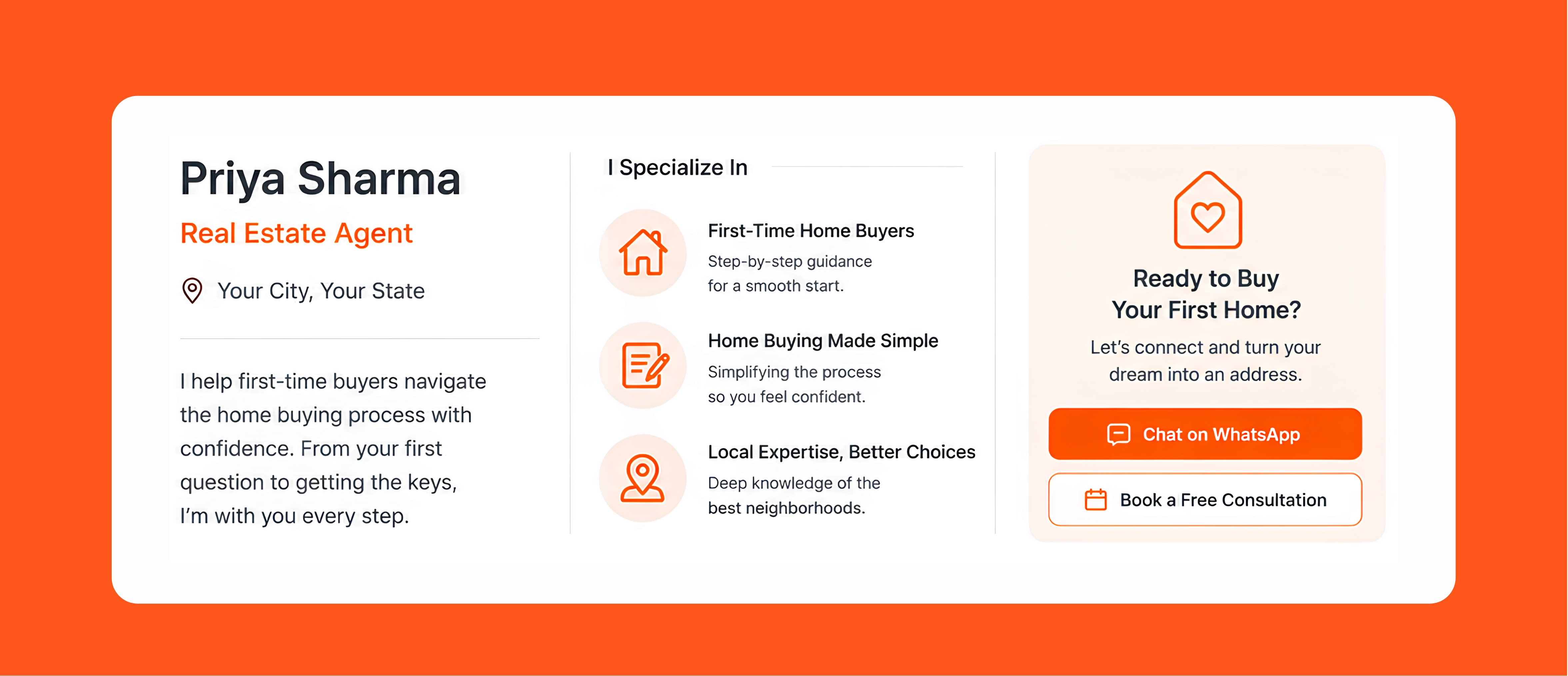
Whether it is a simple website or an agent profile page, make sure it clearly states who you serve and where, shows your main offers, and includes a frictionless way to contact you. You do not need a complex site. You need clarity and a simple starting point for a conversation.
A strong headline example: "Helping first-time buyers in [area] buy with confidence." A short form, email link, or messaging button underneath. That combination alone outperforms most agent websites.
Use profiles and search to your advantage
Update your key profiles on Google Business, portal agent directories, LinkedIn, and Instagram so they match your chosen positioning and geography, show real photos of you, neighborhoods, and client moments where allowed, and guide people back to your home base where they can explore your offers.
A lot of effective real estate lead generation comes down to this: when someone searches your name or "agent in [area]," you should look like a specialist people remember, not just another name in a directory.
4. Use Content and Social Proof to Attract Serious Buyers and Sellers
Content is not about chasing virality. It is about answering the questions serious prospects ask on their way to a transaction.
Answer real, specific questions
Make a list of the questions people ask you again and again. For example:
- How much do I really need to save to buy in [area]?
- Should I buy now or wait with interest rates where they are?
- What should I fix before listing my home?
- What neighborhoods are best for families or commuting?
- How competitive is the market right now?
Turn each question into a short social post, a simple article or FAQ on your website, or a short video you can reuse across platforms. Then end each piece with a simple invitation like: "If you are in [area] and want help based on your situation, feel free to message me for a quick call."
This "teach first, then invite" approach is one of the most consistent real estate lead generation strategies because it builds trust before the conversation even starts.
The goal is not to go viral. It is to be the most useful, most trustworthy voice in the room for your specific segment of buyers and sellers.
Show proof, not just properties
Properties matter, but what really builds trust is showing that you have helped people in situations similar to theirs. That can be:
- Short client stories that explain the problem, what you did, and the outcome.
- Screenshots of grateful client messages with personal details blurred.
- Before-and-after examples of listings you helped prepare, position, or price better.
Try to connect each proof piece back to the type of client you want to attract: first-time buyers, out-of-town sellers, small investors, or relocating families. The goal is simple: you want your ideal client to look at your content and feel, "This person understands people like me."
5. Build a Simple Offline System That Feeds You Leads Every Month
Ads are not the only scalable channel. Real estate is still deeply local and relationship-driven. The trick is to structure those relationships so they keep sending you opportunities.
Make your existing network work better
Start by listing the people already in your network: past clients, friends and family, and local professionals like mortgage brokers, lawyers, financial planners, and contractors. Then create one simple relationship-building habit for each group.
A lightweight pipeline for referral relationships looks like this:
The goal is not to constantly sell to people. It is to stay familiar, helpful, and top of mind so that when someone around them mentions buying, selling, or investing, your name is the one they think of first.
Show up where your segments congregate
Depending on the type of clients you want to attract, offline marketing can include local community events and meetups, interest-based groups like parent communities, investor circles, or industry groups, and small talks or workshops at offices and co-working spaces.
You do not need to be everywhere. The goal is to stay consistently visible in a few places where your ideal clients already spend time. When you combine that visibility with clear offers like a "free buyer roadmap call" or a "seller review," casual conversations become much easier to turn into real opportunities.
6. Follow-Up: Where Most Organic Leads Are Won or Lost
Without ads, your leads cost time and effort, so you cannot afford to lose them through weak follow-up. Most organic leads do not convert immediately. They come back when the timing is right, and your job is to be the person they already know when that moment arrives.
Build a lightweight pipeline
You do not need complicated software to start. A simple board or spreadsheet with clear stages keeps everything moving:
Assign every contact to a stage and always define the next step, whether that is a call, a follow-up email with useful resources, or a future check-in date. The moment there is no clear next step, conversations usually lose momentum and leads quietly go cold.
Use simple automation to stay present
You can systemize parts of your follow-up without making it feel robotic. For example:
- A simple welcome message when someone joins your email list or WhatsApp updates, explaining what they can expect and how you can help.
- A short nurturing sequence for first-time buyers spread across a few weeks, answering common questions and reducing uncertainty before they feel ready to talk.
- A quarterly market update tailored to different segments like homeowners, buyers, or investors in your area.
The goal is not to overwhelm people with constant follow-ups. It is to stay familiar and useful so that when their timing shifts from "someday" to "soon," you are already the person they know and trust.
Most agents lose organic leads not because the lead was bad, but because there was no system to keep the relationship warm until the timing was right.
Want to see how visible your real estate brand is when buyers and sellers ask AI assistants for agent recommendations in your area? Get your free AI Visibility Audit for Realtors.
7. Conclusion: A Simple, Ad-Free Lead Engine You Can Repeat
You do not need ads or a dozen complex funnels to build a reliable flow of real estate opportunities. The most effective real estate lead generation strategies you can run without paid campaigns are the ones that fit how you actually work.
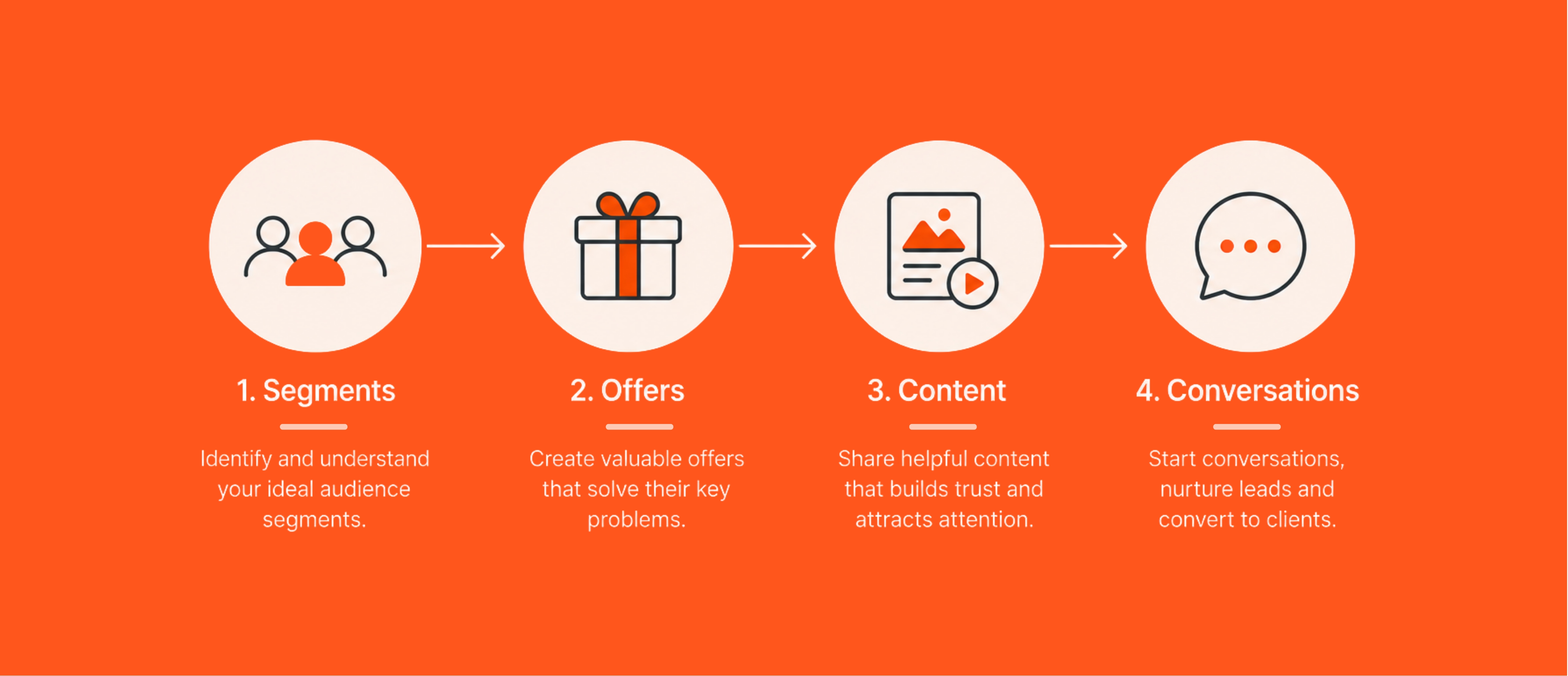
- One clear focus on the kinds of buyers and sellers you serve best, backed by simple offers that make it easy for people to raise their hand.
- One online presence that makes you look like the obvious choice and turns casual visitors into real conversations you can actually act on.
- One steady stream of useful content and proof that answers real questions and shows real outcomes, online and in your local community.
- One simple follow-up system that keeps every promising contact moving, even if their timeline stretches from weeks to months.
Start with the weakest part of your current setup. Maybe you are invisible online, maybe your offers are vague, maybe you never follow up in a structured way. Fix just that piece over the next 30 days.
Once you see a few extra conversations and one or two extra closings come from that change alone, you will know this ad-free approach works in your market, and you will be ready to stack the next part of your system on top.
Continue Reading
Digital Marketing for Realtors: A Complete Growth Blueprint
In 2026, digital marketing for realtors is about building a focused growth system that makes you easy to discover, easy to trust, and easy to contact. This guide covers AI visibility, landing pages, Google Ads, and a simple follow-up pipeline that turns searches into closed deals.
The Lazy Realtor's Guide to Marketing Automation That Works
The agents who quietly win in 2026 are not hand-crafting every email and post. They have built a simple machine around themselves. This guide walks through a practical real estate marketing automation system: capture, respond, nurture, follow up, and re-engage, with minimal tools and maximum leverage.
The Best AI Tools for Realtors to Save Time and Close More Deals
The agents who win now are the ones using a focused stack of AI tools for real estate agents to handle the busy work: content, follow-up, and research, so they can spend more time with clients and less time on admin.