
The agents who quietly win in 2026 are not the ones hand-crafting every email and post. They are the ones who have built a simple machine around themselves. They still show up for the conversations that matter, but the machine does the remembering, the nudging, and the repetitive typing. That is what real estate marketing automation should do for you.
This guide is written for the lazy realtor in the best sense: someone who wants maximum impact from minimum moving parts. You will set up a few clear workflows covering capture, response, nurture, follow-up, and re-engagement, so your business grows even on days when you are too busy to do marketing manually.
Executive Summary
Real Estate Marketing Automation for Agents Who Don't Want Another Full-Time Job
If you have ever thought "I know I should follow up more, post more, email more, but I'm already exhausted," this guide is for you. Marketing automation for realtors is not about building a complex tech stack. It is about setting up a handful of simple, repeatable workflows that run in the background so you can focus on conversations, appointments, and closings.
- You stop losing warm leads just because you forgot to follow up in time.
- Every new contact is automatically nurtured with useful, on-brand messages without you manually typing them.
- Your content, social, email, and CRM all work together as one engine instead of random, disconnected tactics.
1. What Lazy Automation Really Means for Realtors
Lazy here is a strategy. The goal is to conserve your best energy for the work that actually moves deals: real conversations, showings, consultations, pricing decisions, and negotiations. Those are the moments where your judgment and presence matter most.
Everything else, from logging leads and sending replies to drip emails and reminders, can be standardized and automated. The mindset shift is simple: if you do the same thing more than a few times a week, the process should live in a workflow, not in your head.
Automate processes, not relationships
Think of your work in two buckets:
- Processes are the mechanical steps: adding leads to your database, tagging them correctly, sending initial and follow-up messages, and offering a scheduling link. These are predictable and repeatable.
- Relationships are the human parts: listening carefully, advising on trade-offs, negotiating, and handling nuance when things get complicated.
Automation should handle the first bucket so you have more time and mental space for the second. If a message would sound weird coming from a robot, you keep it human. If it is the same thing you say 20 times a week, you put it into an automation.
Want to see how visible you are when buyers and sellers ask AI assistants for agent recommendations in your market? Get your free AI Visibility Audit for Realtors.
2. The Minimum Tech Stack You Actually Need
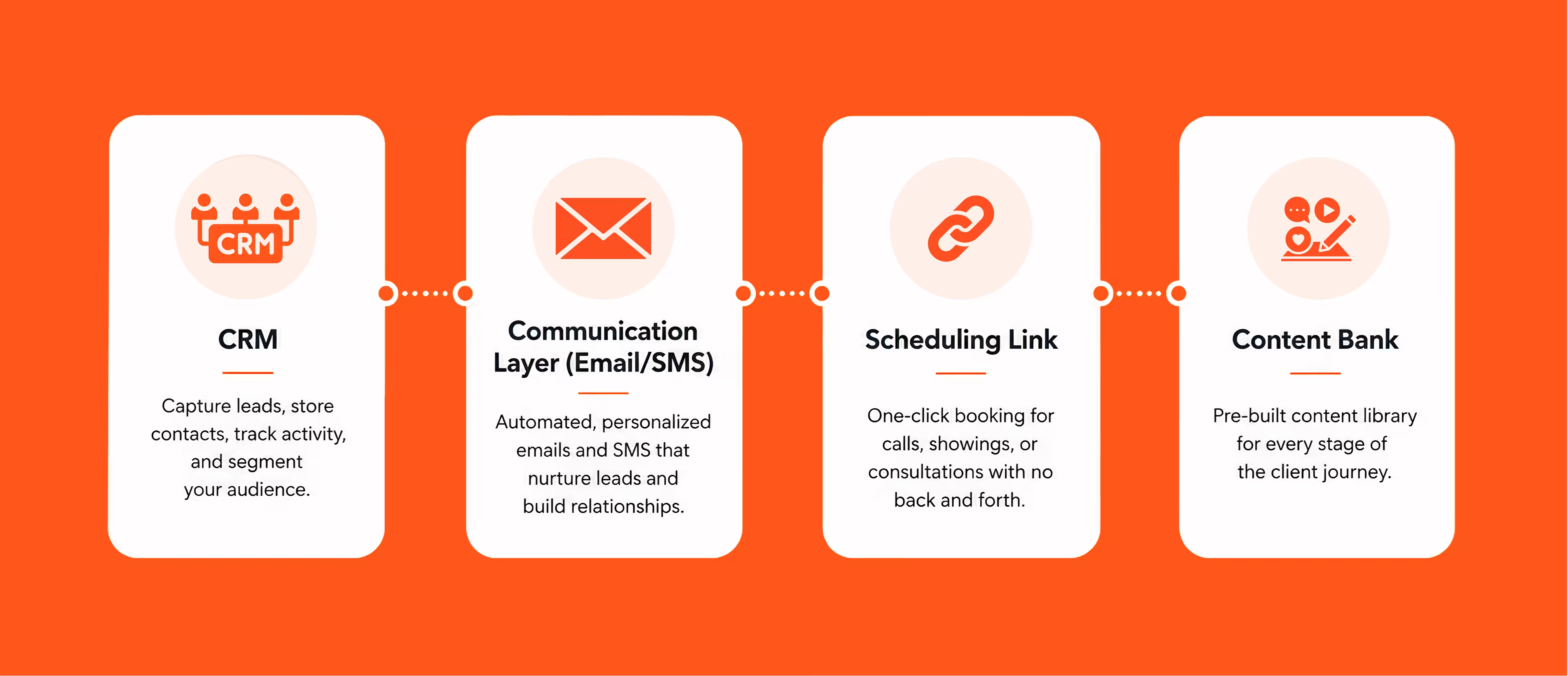
You do not need overcomplicated tech to get effective real estate marketing automation. A lean stack with four core pieces is enough to run a serious business without feeling like a full-time systems admin.
CRM or central lead hub
You need one place where every contact lives. For each contact, you want basic info (name, email, phone), source (portal, website, open house, referral, social), tags (buyer, seller, investor, hot, nurture, past client), and stage (new lead, active, under contract, closed, lost). If a lead does not end up here, you will forget it. The CRM is the single source of truth everything else connects to.
Communication layer
Next, you need channels that plug into your CRM: at minimum, email sending for both one-to-one messages and automated sequences, plus SMS or WhatsApp for short, time-sensitive touches. Ideally every message you send is logged back into the contact record so you see the full conversation history in one place.
Scheduling link
You need a simple booking page where people can grab a time with you for discovery calls, buyer consults, and listing strategy sessions. This cuts out the back-and-forth and gives your automations a clear, consistent next step they can always offer.
Content and template bank
Finally, you need somewhere to store your proven messaging: email sequences, text templates, social captions, and call scripts. Automation reuses these assets instead of forcing you to write from scratch every time. Over time, this library becomes one of your most valuable marketing assets.
3. Automate Lead Capture So Nothing Falls Through the Cracks
Before worrying about clever sequences, you need to make sure every lead you meet actually gets into your system. Manually copying details from emails and DMs does not scale and is easy to forget on busy days.
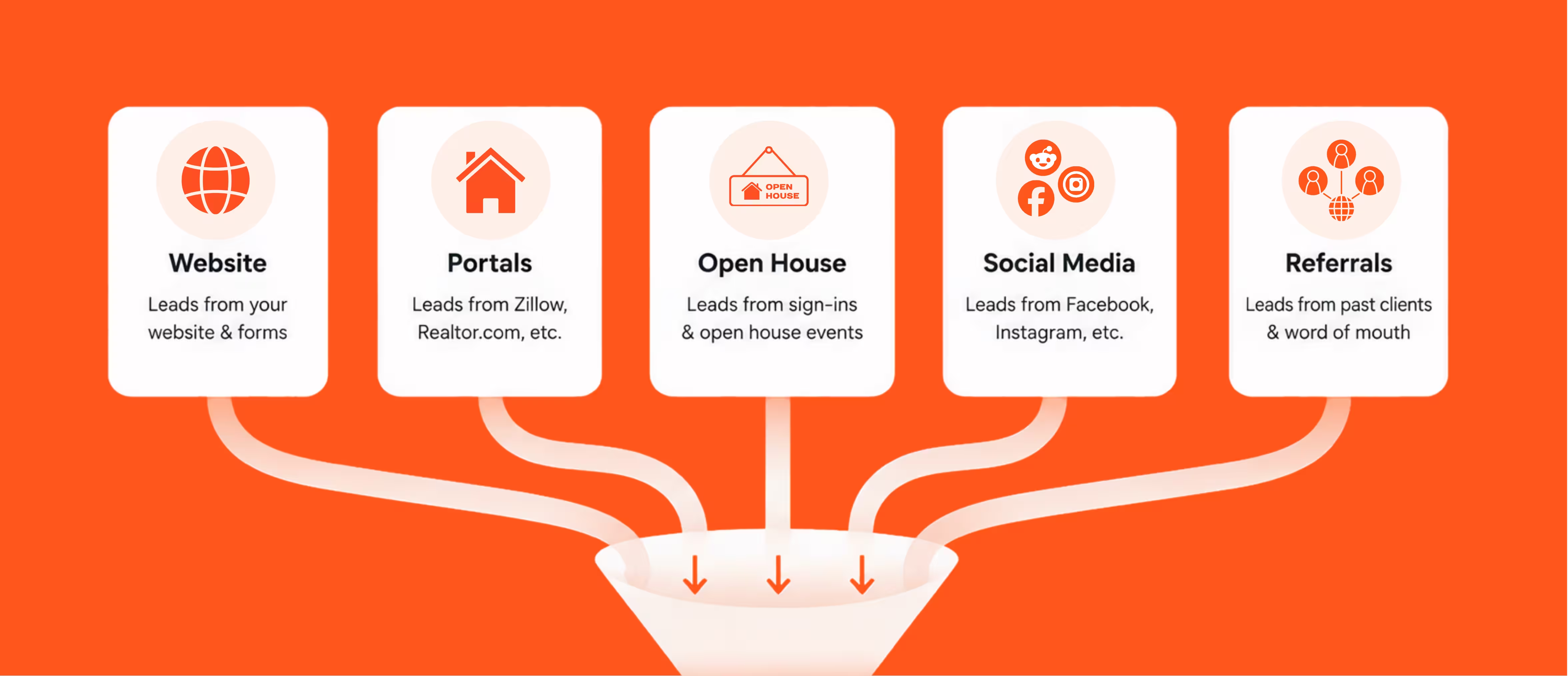
Map every source where leads appear
Start by listing all the places new contacts can show up:
- Website contact forms and home-value ("What's my home worth?") forms.
- Portal inquiries from Zillow, Realtor.com, and similar platforms.
- Landing pages for buyer or seller guides.
- Open house sign-ins via paper or QR code.
- Social media DMs and referral introductions by email or text.
Connect each source to your hub
Your goal is simple: every path leads straight into your CRM with the right tags, without you retyping anything. A website seller form creates a contact tagged "Seller - Website." A buyer guide download creates one tagged "Buyer - Guide." An open house QR submission creates one tagged with the specific address. From this point, adding leads manually should be the rare exception, not the default.
If a lead does not land in your CRM automatically, it will get lost on a busy week. Every source should have a direct pipeline into the system before you build anything else.
4. Auto-Responders That Make You Look Fast (Without Being Glued to Your Phone)
Speed still matters in lead conversion, but that does not mean you have to live inside your inbox. The trick is to let your system respond instantly in a smart way, then follow up personally when you can.
Create scenario-specific first-touch messages
You will get better results if your auto-responses are tailored to the type of inquiry. At minimum, create different versions for a general buyer inquiry, a specific property inquiry, a seller or home value request, relocation buyers, and open house follow-ups. Every first-touch message should acknowledge what they asked for, set a clear expectation for what happens next, and offer a simple next step such as a link to your calendar.
For a seller lead, it might read: "Hey [Name], thanks for reaching out about your home in [area]. I'll review your details and send over a quick pricing and strategy snapshot soon. If you'd like to talk through options, you can grab a time that works for you here: [calendar link]." It sounds human and specific, but you did not have to type it live.
Set up clear triggers for each lead type
Once your templates are ready, wire rules like: when a new contact with tag "Seller - Website" is created, send the seller auto-reply by email and SMS. When a new contact with tag "Portal - Buyer" is created, send the buyer auto-reply. You still need to follow up with real messages and calls, but your automation buys you time and sets a professional tone from the very first touch.
5. Nurture Sequences That Work While You Sleep
Most leads are not ready this week. The lazy way to win them later is to put them into thoughtful nurture journeys instead of hoping you remember to check in.
Start with two core 90-day sequences
You do not need a complex flowchart. Begin with one buyer sequence and one seller sequence.
Write emails like you're writing to one person
Use subject lines that sound like something you would send to a friend, not a mass blast. Keep the body to three to seven sentences. Give one main idea and one link or call-to-action. Write in a conversational tone and avoid jargon. You want these emails to feel like a real agent took a moment to share something useful, not like a drip campaign wrote itself.
Add simple automation rules
When you tag someone "Buyer - New," start the buyer 90-day sequence. When you tag someone "Seller - New," start the seller sequence. When a lead moves to "Active client," pause any generic sequences so they do not get out-of-context messages. When a deal moves to "Closed," stop nurture and move them into your past client workflows. You set it up once, and every new lead gets months of consistent, helpful touches without you manually chasing them.
6. Social and Content Automation You Will Actually Keep Up With
You do not have to be a content machine. You just need a steady presence that reminds people you are active, local, and knowledgeable.
Build a content library in one focused sprint
Schedule a few hours and brain-dump 20 to 30 questions buyers ask you all the time, 20 to 30 questions sellers ask, 10 to 15 neighborhood or community topics you know well, and 10 to 15 stories of client wins, hard lessons, or surprising moments. Turn each idea into a short social post and save all of these in one shared document. That is your bank.
Set simple, repeatable posting rules
Keep your schedule realistic. For example, three posts per week: Monday answers a buyer or seller question, Wednesday shares a short client story or case study, and Friday covers something local with a soft call-to-action. Use a scheduling tool so you can load a month's worth of posts in one sitting. The posts go out automatically and your only live job is to respond to comments and DMs as a real human.
Reuse content across channels and formats
One good idea should not only live as a single post. Use the same topic on LinkedIn and Facebook with minor tweaks, turn it into a short video script, expand it into a paragraph in your email sequence, or add it as a FAQ entry on your website. Automation helps distribute. You focus on creating once and refining.
7. Past Client and Sphere Automation: Where the Easiest Business Hides
Neglecting past clients and your sphere is the most exhausting way to grow. Automation can keep these relationships warm without feeling robotic.
Standardize what happens after every closing
For each closed transaction, your system should automatically send a congratulations email that thanks them for trusting you, shares any important links or instructions, and lightly opens the door for referrals. It should also create tasks for you, such as writing a handwritten note or delivering a small gift if that is part of your brand. You do not have to remember any of this. The workflow triggers off the closing date and status change.
Build homeiversary and market-touch cadences
Past clients should hear from you at natural milestones, even when they are not actively thinking about moving:
- At 6 months: send a brief check-in, "How's the place feeling now that you've lived there a bit?"
- At 12 months: send a homeiversary message that celebrates the year and offers a simple market snapshot or updated ballpark value.
- Every year after: send a short market update and an invitation to get a current value estimate.
For your wider sphere, send a simple quarterly market update: a few key stats for your area, a quick explanation of what it means, and a short note in your voice. Occasionally share a brief story about someone you helped in a situation your contacts can relate to. All of this is driven by tags and dates. You handle the replies and conversations that follow.
Past clients and your sphere are your highest-converting audience. They already trust you. Automation keeps that relationship alive between transactions so that when they are ready to move again, you are the first person they think of.
8. Metrics That Matter (So You Don't Get Lost in Dashboards)
You do not need a second career in analytics to know if your real estate marketing automation is working. You need a handful of outcome-based metrics.
Watch these core numbers
Check weekly or monthly:
- How many new leads did you capture, and from which sources?
- How fast did you respond, both via automation and with a real message or call?
- How many meaningful conversations did you have (actual calls and meetings, not just clicks)?
- How many appointments came from each sequence or channel?
- How many deals closed from new leads, past clients, and referrals?
If conversations and closings are trending up while your manual marketing time is trending down, your automation system is doing its job.
Ignore the vanity metrics (for now)
You do not need to obsess over raw impressions, follower counts, email open rates without context, or the number of workflow runs that do not connect to real outcomes. These can be interesting, but they do not pay your bills on their own.
9. A 90-Day Lazy Realtor Automation Plan
To keep this realistic, roll out your system in three stages instead of trying to do everything in one weekend.
Month 1: Capture and First Response
- Connect every key lead source into your CRM with proper tagging.
- Write and turn on auto-responses for buyer, seller, home-value, and portal leads.
- Set up your scheduling link and include it in all first-touch messages.
- Create a simple daily view of new leads and hot leads and spend 10 to 15 minutes each morning reviewing it.
Month 2: Nurture and Content
- Draft your 90-day buyer and seller nurture sequences and load them into your system.
- Tag existing leads into the right journeys: buyer, seller, or long-term nurture.
- Build a 30-day content bank and load those posts into your scheduler.
- Add clear calls-to-action pointing to your calendar in your emails and posts.
Month 3: Past Clients and Refinement
- Import and correctly tag all past clients, including closing dates.
- Set up post-closing and homeiversary automations.
- Send your first quarterly market update to clients and sphere.
- Review what actually worked: which sequences generated replies and calls, which sources created the most appointments, and where you are still doing manual work that could become a rule or template.
Trim anything that feels heavy and does not contribute to conversations and deals. Refine what clearly does.
10. Conclusion: You Don't Need to Do More, You Need More Done For You
You do not need to hustle harder or become a marketing guru to benefit from marketing automation for realtors. You just need a small set of systems that make sure every lead is contacted every time, keep potential clients warm while they are deciding, protect and deepen relationships with past clients and your sphere, and show you who to talk to today instead of leaving you to guess.
The lazy part is about building workflows once so your day-to-day gets lighter: check your dashboard, make your calls, serve your clients, and let the machine handle the repetition in the background.
To start, do not touch everything. Pick the one area that felt most obvious as you read, whether that is auto-responses for new leads, a simple 90-day nurture, or a past-client touch system, and commit to setting just that one piece up in the next week. Once you see it running without constant attention, you will feel how much easier your business can be when the right things are automated.
The agents who quietly win are not doing more. They have built a small machine that runs in the background so every lead gets touched, every past client feels remembered, and the only work left for them is the kind that actually requires a human.
Next: Make sure AI can actually find you. Read AI Visibility for Realtors: How to Get More Clients in 2026.
To understand why showing up inside AI answers matters so much in the first place, read our complete guide to answer engine optimization.