If most of your orders or footfall are coming from food delivery apps, you are not really building your restaurant. You are building their marketplace. They own the customer, they set the rules, and they take a significant cut of every sale. This guide shows you how to get more customers for your restaurant by building channels you actually control, so you can grow without apps deciding your destiny.
You will see how to turn your restaurant into its own demand engine: people discovering you on Google and Maps, walking in because they have seen you everywhere locally, and coming back again and again because you talk to them directly, not through a third-party screen.
Executive Summary
How to Get More Customers Without Food Apps
In 2026, building a direct customer engine means combining several channels into one system:
- Using Google, Maps, and your neighbourhood presence so people discover you directly.
- Turning first-time guests into repeat regulars by capturing their contact details and following up with simple, direct offers.
- Reducing your dependence on food apps over time, keeping more of each sale as profit, and growing a customer base you actually own.
Why Depending on Food Apps Is So Risky
You are paying silent rent on every order
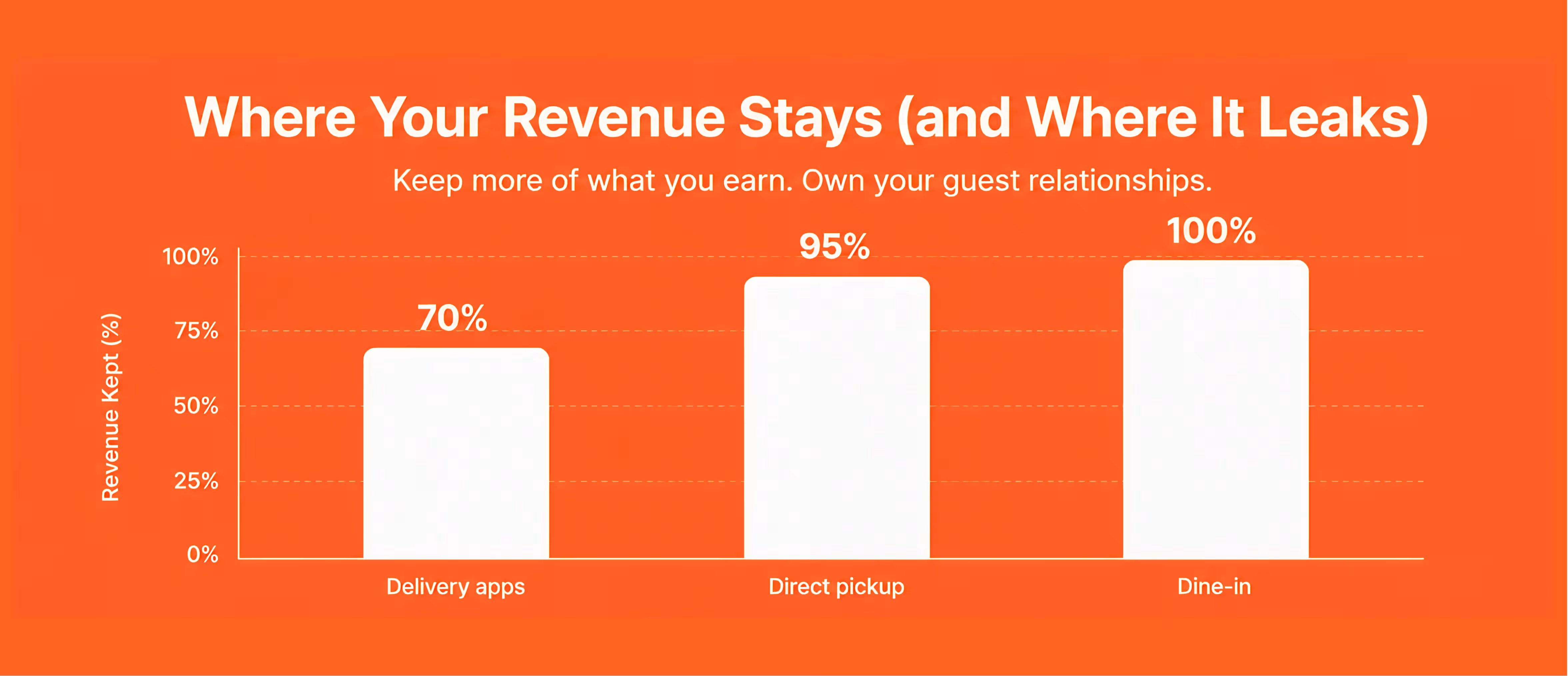
Food apps feel free until you do the math. A 25-30% commission on every order means your margin shrinks on every single sale. You have less money for staff, ingredients, and marketing. You are effectively paying digital rent just to access customers who may never know your restaurant name.
Consider the numbers: if you sell a meal for 500 INR or 20 USD and the app takes 25%, you are left with 375 INR or 15 USD before your own costs. A modest improvement in direct business compounds into significant profit over a full year.
- Higher commission rates erode margins on every sale, not just the big ones.
- Less retained revenue means less reinvestment into food quality, staff, and marketing.
- The customer data belongs to the platform, not to you.
You do not own the relationship
When someone orders via an app, you often do not get their full contact details, you have limited control over the experience (delivery time, packaging presentation, etc.), and if the platform changes its algorithm, you can disappear from search results overnight.
Food apps can still be useful, but they should be one of your channels, not the backbone of your business. The goal is to rebalance over time, not to abandon them overnight.
Make Your Restaurant the Obvious Choice Offline
Before digital tactics, your offline presence has to make people think: I should go there. Walk outside your door and ask: if I did not know this place, would I be curious?
Fix the basics guests actually see
- Is your signage clear and visible from the street? At night, is it well-lit and inviting?
- Can people quickly see what you serve and your price range?
- Is there a well-designed menu board near the entrance with 5-8 bestsellers?
Simple improvements have a disproportionate impact: a clean, clear sign with your name and what you are known for, warm lighting, and a glimpse of the inside (not hidden behind dark glass) can meaningfully increase walk-in rates.
Make the walk-in experience frictionless
When someone walks past and considers entering, your goal is to make sure nothing pushes them away. Check that someone is available to greet people quickly, that tables and visible surfaces are clean and organised, and that your menu is easy to understand rather than overwhelming.
If your dine-in experience feels more confusing or stressful than ordering on an app, most people will keep walking or stay home.
Win Local Search and AI Visibility: Google and Maps as Your New Apps
When people are not on food apps, they are still asking their phones where to eat: searching "pizza near me", "best breakfast in [city]", "veg restaurant near [area]", or asking AI assistants for recommendations. If you want more customers without apps, you must show up wherever local intent lives: Google Search, Google Maps, and AI-powered answers.
Optimize your Google Business Profile for humans and AI
Treat your Google listing like a mini-website and a core AI visibility asset. It is one of the first places search engines and AI systems look to understand who you are, where you are, and who you serve.
- Fill in everything: name, address, phone, opening hours, website, price range, and attributes like dine-in, takeaway, and delivery.
- Add high-quality photos of the front of your restaurant, inside ambience, your top dishes, and clear shots of menu pages.
- Choose accurate categories (South Indian restaurant, Pizza restaurant, Dessert shop) so you appear for the right queries.
- Write a short, clear description stating what you are known for and for whom: "Fast healthy lunches for the office crowd in [area]" or "Late-night pizza near [landmark]".
- Update regularly, especially hours, holiday schedules, and new photos, so both people and AI tools see that your information is current.
The clearer and more consistent this profile is, the easier it is for AI-driven search and map results to trust and surface your restaurant when someone nearby is hungry.
Encourage and respond to reviews to build trust and AI signals
App reviews help you rank inside apps. Google reviews help you rank everywhere else: in organic search, on Maps, and inside AI-generated local suggestions.
- Ask happy guests at the end of the meal: "Would you mind leaving us a quick Google review? It really helps us as a local business."
- Put a small QR code on receipts, tent cards, or the bill folder that leads directly to your review page.
- Reply to reviews thoughtfully, especially negative ones. Future customers and AI systems both see that you care about service and improvement.
A strong rating, a steady flow of recent reviews, and thoughtful responses make you the obvious choice when someone zooms in on your area in Google Maps, or when an AI assistant is deciding which options to recommend first.
Make sure people and AI can find your menu online
People often want to see your menu before deciding to visit or call, and AI tools increasingly pull menu details into their answers.
- Upload clear photos of your menu to Google and your website, focusing on bestselling items and signature dishes.
- Create a clean, mobile-friendly menu page on your site rather than relying on heavy PDFs that are harder to read on phones and harder for machines to process.
- Keep prices and items updated to avoid surprises. Outdated menus erode trust for both guests and AI systems that try to use that information.
Most restaurant owners assume they are already visible online until they see what AI tools and search engines are actually saying about them. To understand where your restaurant stands, we offer a free AI Visibility Audit for restaurants.
Turn First-Time Guests into Regulars You Own
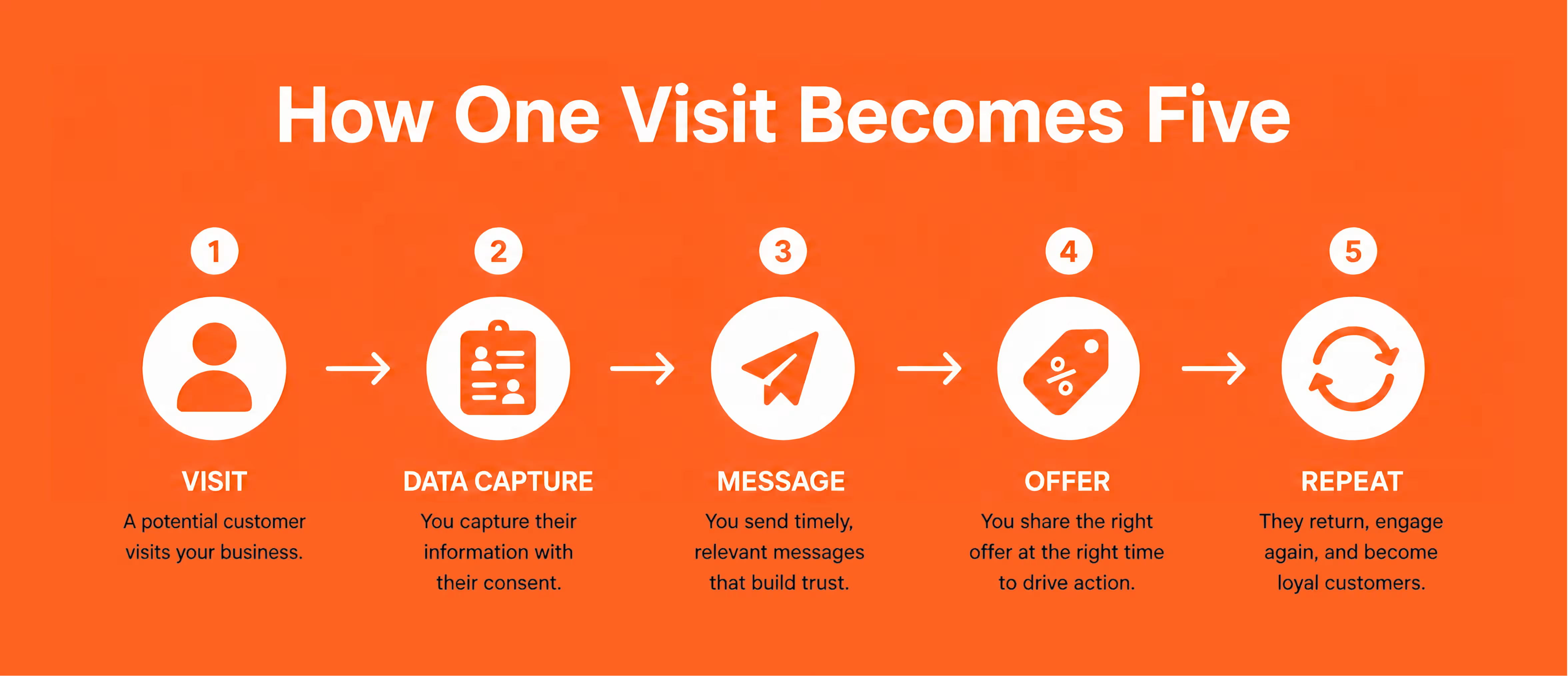
One-time visits are nice. Regulars are what keep a restaurant alive, and they are how you get customers without apps controlling the relationship long term.
Collect guest data in a simple, respectful way
You do not need a complicated CRM to start. Focus on collecting a name, phone or WhatsApp number, and optionally an email or a birthday. The simplest ways to do this:
- A digital Wi-Fi login page that requests basic details (with clear consent).
- A small "join our club" card at the table with a QR code linking to a simple form.
- During billing: "Would you like to get updates on offers and new dishes on WhatsApp?"
Always offer a reason to join: 10% off their next visit, first access to new items, or members-only specials. The incentive does not need to be expensive; it just needs to feel worth it.
Build simple follow-up flows
You do not need automation tools on day one. Even a weekly habit works. Each week, send a short message to recent guests: thank them for visiting, ask a quick question about their experience, and mention a weekday offer or a new dish they might like.
Over time, build consistent patterns that give guests a reason to return:
- Weekly specials (Tandoori Tuesdays, Pasta Wednesdays) announced to your list first.
- Birthday messages with a small complimentary item.
- Seasonal menus and festival specials announced directly to your regulars before going public.
Keep messages short, visual when possible, and not too frequent. You are building a friendly presence, not a spam channel.
Reward loyalty, not randomness
Apps reward customers for jumping between restaurants. You want to reward the opposite: staying with you.
- Stamp or QR card: "Get a free dessert after 5 visits" or "Every 6th coffee is on us."
- A members-only dish, off the regular menu, for regulars who show a code.
- Exclusive tasting nights or preview evenings for your top 50 repeat customers.
These do not need to be expensive. They just need to make regulars feel genuinely recognised.
Use Social Media to Drive Feet, Not Just Likes
Social media is not a replacement for apps, but used well, it sends people to your door or your own ordering channel rather than someone else's platform.
Choose one or two platforms and be consistent
You do not need to be everywhere. For most restaurants, Instagram and Facebook work well for visual storytelling. In some markets, short-video platforms like YouTube Shorts or TikTok extend reach further. Pick what you can maintain consistently and do it well.
Post types that actually move people to visit:
- Close-up shots or short clips of your bestselling dishes, ideally fresh and natural rather than over-styled.
- Behind-the-scenes content: prep, staff moments, chef stories, how you source key ingredients.
- Customer moments (with permission): birthdays, celebrations, groups enjoying themselves.
- Limited-time offers clearly tied to visit days: "This weekend only" or "Today's lunch special."
Every few posts, include a gentle, specific call to action: "Dine in at [area]", "Call or WhatsApp us for direct takeaway orders", or "No app fees, order directly from us."
Turn social followers into measurable visits
- "Show this post at the counter to get a free drink or dessert with your meal."
- Weekday offers announced only on social, creating a reason for followers to check your feed regularly.
- Collaborations with local creators who actually visit and show the real experience, not just tag you in a paid post.
Make sure your social bio always includes your address and area, opening hours, and a direct ordering link or phone number if you support your own delivery.
Get Restaurant Customers Without Apps Through Local Partnerships
Your best customers live or work near you. Instead of paying apps to reach everyone in the city, own your neighbourhood by building direct relationships with the people and businesses around you.
Partner with offices and workplaces
If there are offices, co-working spaces, or factories nearby, there is a ready-made opportunity for predictable, recurring revenue that bypasses delivery apps entirely.
- Offer employee lunch deals or corporate packages with a simple direct-billing arrangement.
- Drop off a sample platter with a printed menu and your direct contact for bulk orders.
- Propose special pricing for regular group orders (for example, every Friday team lunch) at a rate that works for both sides.
Collaborate with local businesses
Think about nearby gyms and fitness studios, salons and spas, cinema or event venues, and apartment complexes or residential societies. Cross-promotions work well when they feel natural and local:
- "Show your membership card or event ticket and get a complimentary item."
- "We cater society events; residents get a small dine-in discount."
- Joint events (open mic nights, quiz evenings, live music) hosted at your restaurant with a partner who brings their own audience.
Be present at local events and festivals
Set up stalls or pop-ups at local markets, college festivals, community fairs, and cultural celebrations. Always bring a clear sign with your name and area, and hand out cards with a simple message: "Order directly from us at [phone] / [WhatsApp] / [website]." Add a small incentive for first direct orders to give people a reason to act right away.
Build Your Own Direct Ordering Channel
You do not have to build a complex app to start moving orders off third-party platforms. Even a simple, well-communicated direct channel can meaningfully reduce your commission costs over time.
Start with call or WhatsApp ordering
In many markets, especially mobile-first countries, WhatsApp ordering feels very natural and requires almost no setup cost. Clearly advertise your number everywhere: "Order directly via WhatsApp or call: [number]." Use a simple menu image you can send quickly, and train staff to confirm orders, address, and payment in a consistent way. It is not as automated as apps, but you save commission and get direct contact with every customer.
Add a lightweight online ordering page
If possible, add a simple ordering page on your website with a clear menu broken into categories, the option to choose pickup or delivery, and integrated payment or cash-on-delivery depending on your model. Keep it mobile-friendly and fast. Test it yourself on a 4G connection to see whether it feels smooth.
Make sure people know this exists
Everywhere you show your restaurant, show your direct ordering option:
- Your Google Business Profile, prominently in the description and posts.
- Social media bios and pinned posts.
- Flyers, table tents, and the bill folder.
- In-store signage: "Next time, order direct and save."
90-Day Plan to Reduce App Dependence Without Losing Sales
You do not need to switch food apps off overnight, and doing so too quickly can harm your cash flow. Here is a practical approach to rebalancing gradually over three months.
Month 1: Fix Discovery and In-Store
Goals: Clean up your Google presence and strengthen offline signals.
- Clean up your Google Business Profile: location, hours, menu photos, and category accuracy.
- Refresh your storefront: signage, menu board, and lighting where needed.
- Create a simple "Why order directly from us?" message and place it on social media, in-store, and on the bill.
- Start capturing customer contact details with a basic incentive.
Month 2: Launch Direct Campaigns
Goals: Start communicating directly and building non-app demand.
- Begin sending weekly or bi-weekly messages to your growing list with offers and updates.
- Launch one or two social media campaigns with trackable "show this post" style offers.
- Approach three to five local offices or businesses with simple lunch or catering proposals.
- Set up or polish your direct ordering channel (call, WhatsApp, or a simple online ordering page).
Month 3: Shift More Demand to Direct
Goals: Build repeatable habits and measure the shift.
- For repeat customers, encourage direct ordering with clear, friendly messages: "Next time, order directly with us and get [benefit]."
- Add a small insert or sticker to app orders: "Save us the commission next time, order directly at [link] and get [perk]."
- Track your order mix weekly: apps vs direct vs dine-in. Even a 5-10% shift in the first 90 days is meaningful progress.
- Gradually reduce promotions on apps and invest that energy in your own channels instead.
The goal is not to reach zero app orders. It is to reach a healthier mix over time: for example, 40-60% direct and dine-in, 40-60% apps, and then push direct further as you build momentum.
Common Mistakes When Trying to Get More Customers Without Apps
Cutting apps off too fast
Turning everything off overnight can hurt your cash flow and staff morale badly. Use the 90-day approach to rebalance gradually. Apps are useful for discovery and filling quiet periods; the goal is to reduce your dependency on them, not to eliminate them on day one.
Copying large chains without their budgets
You do not need huge billboards or a complex custom app. For an independent restaurant, consistency and local relevance beat expensive but shallow campaigns every time. A well-managed Google profile and a weekly WhatsApp message to 200 loyal customers can outperform a paid campaign with no follow-through.
Ignoring the core experience
You can drive people to your door, but if the food or service is inconsistent, they will not come back. Every tactic in this guide works best when your core product is genuinely good and steadily improving. Direct marketing amplifies quality; it cannot compensate for a poor experience.
Conclusion: From App-Dependent to Community Favorite
If you have reached this point, you have walked through a full playbook for how to get more customers for your restaurant without food apps controlling the relationship.
You have seen how to:
- Make your restaurant stand out in real life, not just inside a feed.
- Turn Google and Maps into powerful free discovery channels that work around the clock.
- Turn first-time guests into a growing list of regulars you can talk to directly whenever you choose.
- Use social media and local partnerships to create steady, predictable demand that does not pass through a commission layer.
- Build a simple direct ordering system and shift more revenue away from app commissions over time.
None of this depends on trends that may vanish. You are investing in skills, systems, and relationships that will still matter whether food apps are booming, changing, or gone entirely.
Pick one thing from this guide you can implement in the next 48 hours: a better Google profile, a new "order direct from us" message, or a simple guest contact capture system. Once that is live, the momentum to tackle the rest becomes much easier to find.
The restaurants that thrive long term will not be the ones with the biggest app budgets. They will be the ones that own attention, trust, and the guest relationship.
To understand why showing up inside AI answers matters so much in the first place, read our complete guide to answer engine optimization.