If your tables are emptier than they should be, you do not have a food problem, you have a demand and visibility problem. In 2026, winning restaurants treat footfall like a system they can design: street-level appeal, search visibility, repeat-guest engines, and local partnerships, all working together to increase restaurant footfall and keep regulars coming back.
Below are 10 practical, non-gimmicky ways to increase restaurant customers quickly, grounded in how people actually choose where to eat today.
Executive Summary
How to Increase Restaurant Footfall Fast in 2026
The fastest way to increase restaurant footfall is not to chase every new marketing channel. It is to make your restaurant the obvious choice in the moments when people are deciding where to eat. That means winning three key decision points:
- When someone walks past your door and decides in three seconds whether to step inside.
- When they search on Google or Maps and your profile, photos, and reviews make the decision easy.
- When they are reminded by you directly, through a WhatsApp message or social post, that it is time to come back.
1. Fix the 3-Second Street Test
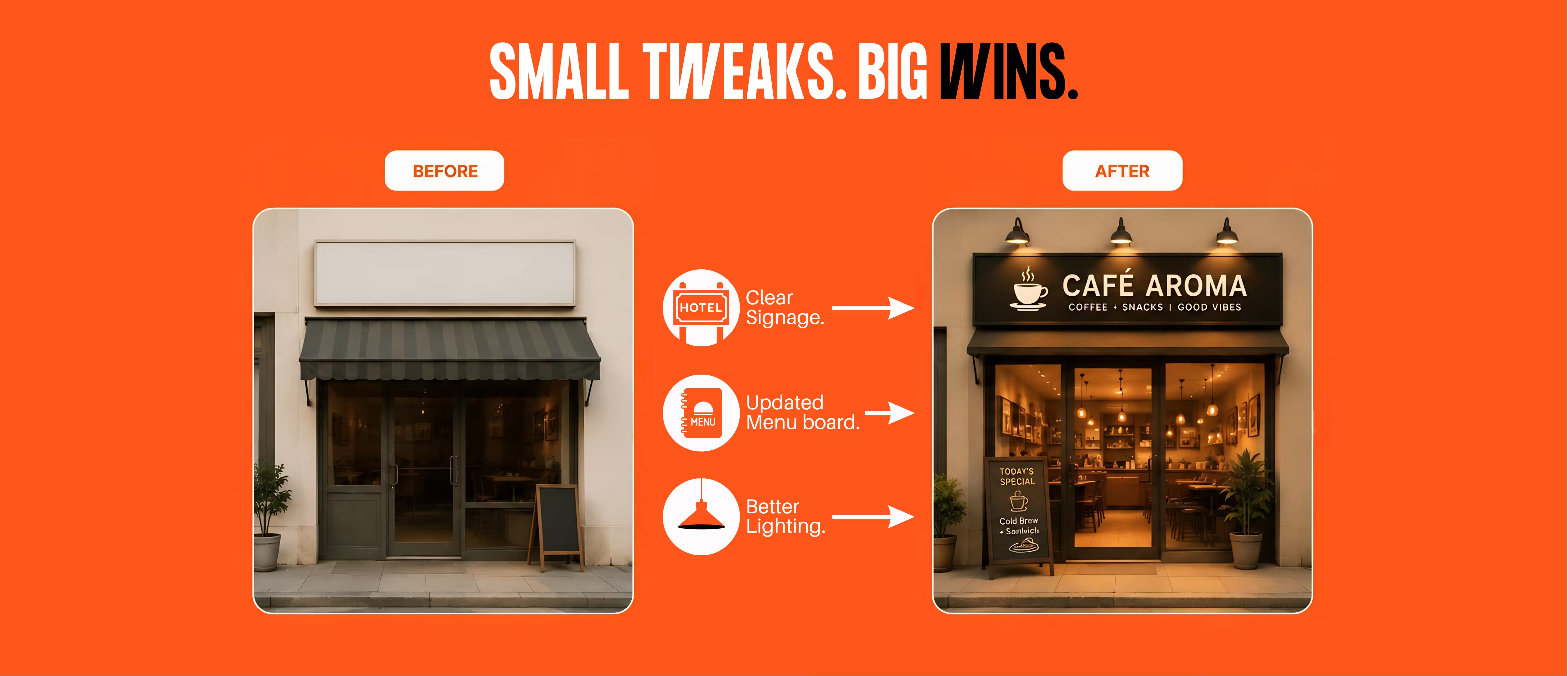
Before online tactics, your restaurant has to win the walk-by decision in three seconds. Someone passing by should instantly see what type of food you serve, an approximate price range, and whether the vibe fits them.
Make your storefront answer three questions
- What type of food do you serve? Clear, readable signage with cuisine: "Hyderabadi Biryani and Grill" or "Neapolitan Pizza and Pasta."
- What does it cost roughly? A clean menu board near the entrance showing 5-10 hero dishes with prices removes hesitation.
- Does the vibe fit me? Warm lighting and a glimpse of the inside. Avoid dark, closed-off fronts that make people feel uncertain.
These three signals cost very little to fix but directly affect how many passers-by convert into first-time guests every single day.
If you want to see how visible your restaurant currently is across local search and AI recommendation platforms, we offer a free AI Visibility Audit for restaurants.
2. Make Your Google Presence Irresistible
When people do not already know where to go, they search "cuisine near me" or "best restaurant in area." Winning that search is one of the fastest ways to increase restaurant footfall from people who are already hungry and ready to decide.
Optimize your Google Business Profile
Treat it like a mini website:
- Fill in every field: name, address, phone, hours, website, and price range.
- Add high-quality photos: outside, inside, your best dishes, and snippets of the menu.
- Choose accurate categories such as South Indian restaurant, Burger restaurant, or Dessert shop.
- Write a short description with a clear hook: "Fast, healthy lunches for the office crowd in [area]" or "Late-night comfort food near [landmark]."
Use reviews as a growth lever
Train staff to say, when dropping the bill: "If you enjoyed your meal, a quick Google review really helps us as a local business." Put a small QR code on the bill folder that opens your review page directly. Reply to every review, especially critical ones, with empathy and specifics. A steady flow of good, recent reviews and great photos can noticeably increase restaurant customers from Google and Maps alone.
3. Make One Time Slot Unmissable
You do not need to discount everything. You need one structured, recurring reason for people to think of you first on a specific day or at a specific time.
Own a time slot
- Tandoori Tuesdays: special platters or combos available only on Tuesdays.
- Pasta Wednesdays: mix-and-match combos for the office crowd at a fixed price.
- Family Sundays: kids eat free dessert, or a kids' menu with small activities at the table.
Keep it simple and profitable, not a loss-making gimmick. Promote it consistently across in-store signage, Google posts, social, and your WhatsApp list. Make it easy to remember: same day, same name, same promise. One strong signature slot can anchor your weekly footfall and smooth out slow days.
4. Turn First-Time Guests into Regulars (Without Fancy Tech)
It is much easier to increase restaurant footfall by getting existing guests to return than by constantly finding new ones. The math is simple: one guest who visits six times a year is worth three guests who only visit twice.
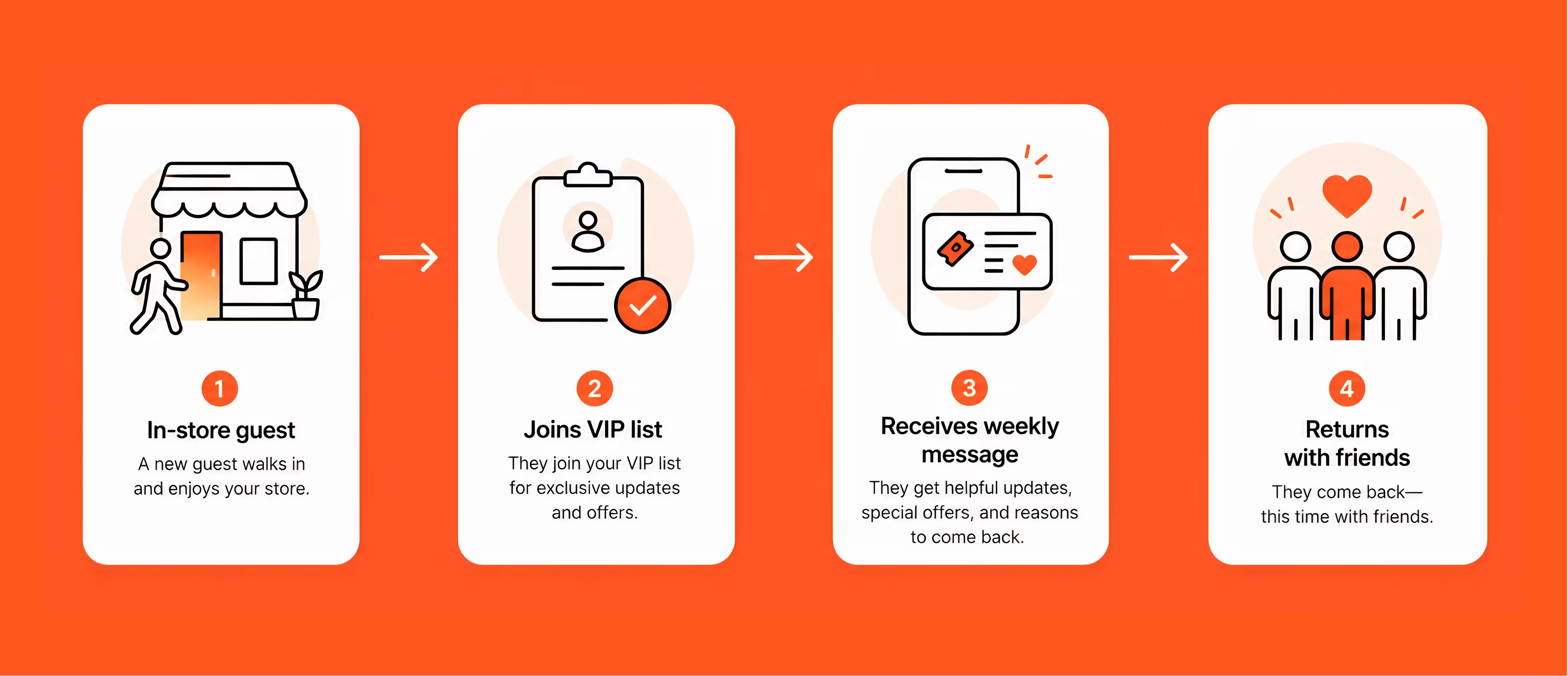
Collect guest details with a simple value exchange
You do not need a complex CRM to start. Focus on name plus phone or WhatsApp number. Ways to capture:
- A small flyer or table tent: "Get 10% off your next visit. Join our VIP list."
- A QR code to a simple form with name and phone.
- A Wi-Fi login page with opt-in: "Get updates and special offers."
Send useful, light-touch messages
Once a week or every two weeks, share one or two photos of a special, a new dish, or a running promotion. Mention any time-bound offer: "This weekend only" or "Today's lunch combo." Keep it short and visual. Even a small list of 200-500 people can noticeably increase traffic on slow days with one well-timed broadcast.
5. Use Social Media to Trigger Cravings, Not Just Likes
Social media does not replace your restaurant. It reminds people they are hungry and that you exist. The goal is not follower counts; it is feet through the door.
Post for appetite, not algorithms
Content that works:
- Close-up shots or short videos of your best-selling items being prepared or plated.
- Behind-the-scenes clips: the chef finishing a dish, staff getting ready before service.
- Today-only specials with clear photos and prices.
Add calls to action like: "Dine in at [area]," "Show this post at the counter for a free drink with your meal today," or "Tag who you would bring for this platter." This moves content from vanity metrics to measurable footfall.
Repost and reward user content
When guests tag you, repost to stories with permission. Occasionally surprise them with a free dessert or small perk next time they visit. This encourages guests to advertise you to their own followers, compounding your reach locally without any ad spend.
6. Partner with Offices and Workplaces Nearby
Your ideal customers are often sitting within one to three kilometers of your restaurant, bored of the same lunch or coffee options. A simple outreach to nearby offices can add reliable base volume to your weekdays.
Create simple, irresistible office deals
- Office Lunch Box packages with two or three price tiers.
- Pre-order forms for teams using a shared Google Form or a simple PDF menu with a WhatsApp number.
- Team lunch bundles for four to six people with a fixed per-head price.
Outreach that works
Drop a sample platter and menu to nearby offices at off-peak hours. Introduce yourself to office managers, HR staff, or admins and offer a trial discount. Follow up with a WhatsApp number or QR code for easy repeat orders. Even two or three recurring office clients can meaningfully lift your weekday covers.
7. Create Micro-Events That Turn Slow Nights Into Busy Ones
You do not need live bands every weekend. Small, consistent events give people a reason to choose you over staying home, and they can increase restaurant customers mid-week without heavy discounting.
- Quiz nights: teams register via WhatsApp with a food and drink minimum per table.
- Open mic or poetry nights: limited slots, promoted a week in advance.
- Board-game evenings or watch parties: easy to run for key sports games.
- Chef's special tasting night: a small, fixed-course menu that showcases seasonal produce.
Promote via in-store table tents and posters, your social and WhatsApp list, and local groups where your audience hangs out: college clubs, resident groups, or office community channels. Even if each event starts small, they build habit and loyalty.
8. Make It Ridiculously Easy to Find Your Menu and Book a Table
Confusion kills footfall. If people cannot quickly see what you serve or how to reserve a table, they will pick somewhere else. Removing that friction is free and often has an immediate effect.
Put your menu everywhere that matters
- Google Business Profile: upload clear photos or a link to a mobile-friendly menu page.
- Your website: avoid heavy PDFs if possible; use simple, scannable sections with prices.
- Social media highlights: a Menu highlight on Instagram or a pinned post on Facebook.
Keep prices updated. Nothing breaks trust faster than a large mismatch between what someone saw online and what they are charged at the table.
Offer low-friction table booking
- A clear "Call to reserve" button or link on your profile and website.
- A WhatsApp button for table bookings with simple instructions: "Message us here to reserve a table for four to six people."
The goal is to remove excuses: when a guest thinks "Let's go there tonight," the next step should be obvious and take less than ten seconds.
9. Use Flyers and Inserts Strategically, Not Randomly
Old-school tactics still work when they are targeted and trackable. Random flyer drops waste money. Focused drops to the right communities convert.
Be selective about where you drop flyers
- Nearby apartment complexes and housing societies.
- Gyms and fitness studios whose members match your ideal guest profile.
- Co-working spaces and colleges near your location.
Offer something specific and trackable
- "Show this flyer for a free dessert with any two main courses."
- "Residents of [society] get 10% off on weekdays."
Use distinct offers per location so you can track what is working and double down on the channels that send real guests through the door.
10. Fix the First 5 Minutes of the Guest Experience
The fastest way to sustainably increase restaurant footfall is to ensure that people who come once actually want to come back and tell others. Discounts and promotions get people in the door once. A great first experience is what builds a base.
Look at the first five minutes
- Are guests greeted quickly and warmly?
- Do they know how ordering works, whether it is counter service or table service?
- Is water offered or on the table quickly?
- Is the menu easy to navigate, with clear bestsellers highlighted?
Small service tweaks with outsized impact
- A short welcome script for staff so every guest gets a consistent first impression.
- A "New here? Try these" section on the menu or a verbal recommendation from staff.
- A quick check-in after food arrives: "Is everything okay, or can I fix anything for you?"
Delighted first-time guests are the cheapest marketing asset you will ever have. They come back, they bring people, and they leave the reviews that bring in the next wave.
Conclusion: Turn Footfall into a System, Not a Mystery
When you look at these 10 ideas together, a clear pattern emerges. You make it easy for people walking by and searching nearby to understand immediately why they should choose you. You give guests, offices, and communities simple reasons to return through recurring offers, micro-events, and a basic VIP list. And you remove friction wherever people make decisions, from seeing your menu, to reserving a table, to ordering and paying.
That is how you move from hoping it is busy to having a repeatable system to increase restaurant customers week after week.
Do not try all ten at once. Pick one walk-by improvement like a better menu board, one repeat-guest move like a WhatsApp list, and one recurring hook like a weekly special or event. Run those hard for the next 30 days, watch what changes, and then layer in the next tactic.
The restaurants that thrive long term will not be the ones with the biggest ad budgets. They will be the ones that own the street corner, the search result, and the guest relationship at the same time.
To understand why showing up inside AI answers matters so much in the first place, read our complete guide to answer engine optimization.