In 2026, the hotels that win are not just the ones with the nicest photos or lowest rates. They are the ones using AI marketing for hotels to understand guests better, personalize every touchpoint, and quietly push more bookings through their own channels.
Instead of guessing what campaigns might work, leading hotel teams plug in hotel AI marketing solutions that analyze guest data, automate pre-stay and post-stay journeys, optimize content and pricing, and make the hotel more visible in both search and AI-powered recommendations. This guide breaks down seven practical strategies any modern hotel can start using without needing a large tech team.
Executive Summary
How AI Marketing Helps Hotels Win in 2026
AI marketing for hotels is not about shiny chatbots on your website. It is about using data and automation to talk to the right guest, with the right message, at the right moment. When you implement smart hotel AI marketing solutions:
- You turn anonymous website visitors and OTA bookers into identified guests you can nurture directly.
- You send smarter, more personalized messages across email, SMS, and on-site experiences so campaigns feel helpful rather than generic.
- You grow direct revenue and repeat stays without needing a large marketing team, because AI handles the analysis and drafting while your team focuses on decisions and service.
1. Use AI to Understand Guest Segments (Not Just Business vs Leisure)
Most hotels still think in two or three broad segments, but AI can go much deeper by analyzing booking data, behavior, and spend patterns to reveal the actual groups your property attracts.
Move beyond basic segmentation
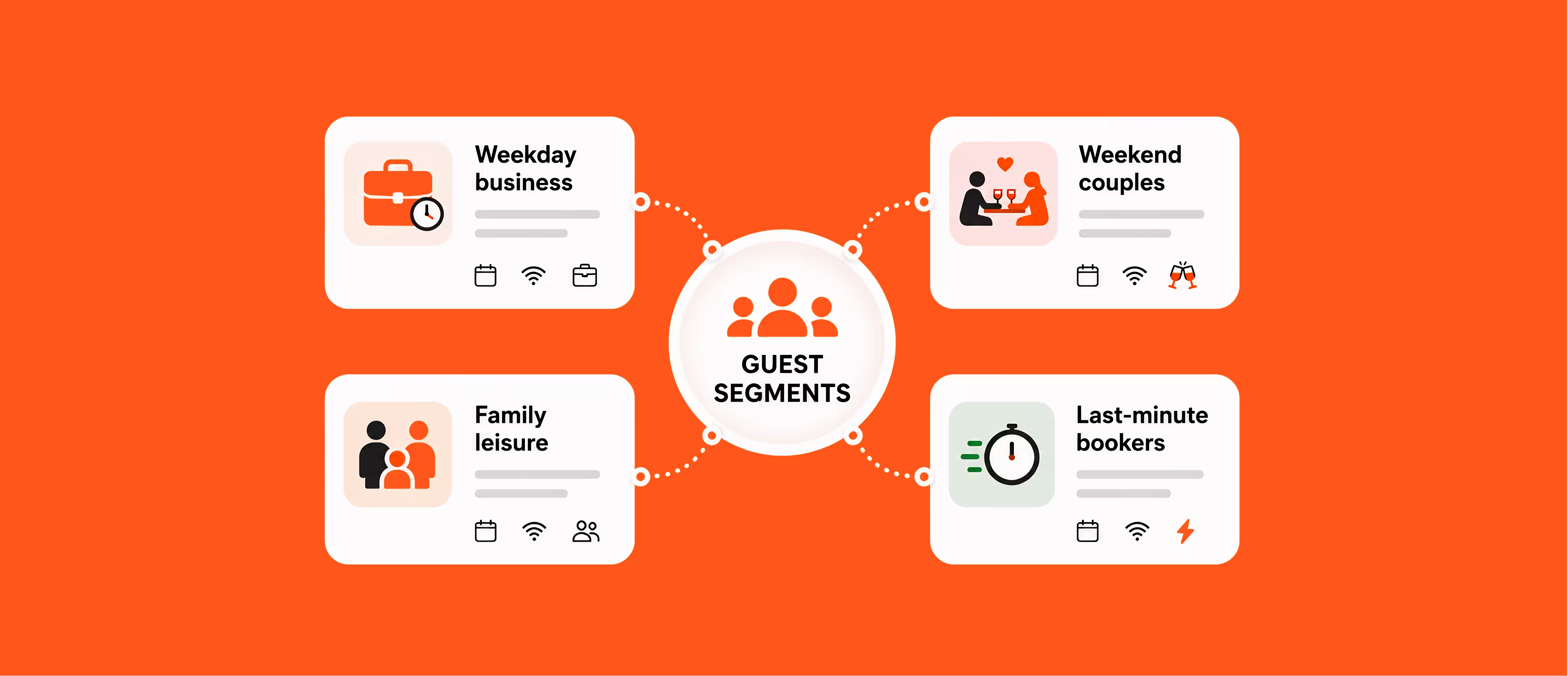
Instead of just business and leisure, AI can help you see patterns like:
- Weekday corporate travelers who book short stays and care about Wi-Fi, breakfast, and proximity to offices.
- Weekend couples looking for experiences and upsells: spa, dining, and late checkout.
- Price-sensitive guests who book early and rarely cancel.
- Last-minute bookers who care more about flexibility than rate.
These patterns are the foundation for all other AI marketing for hotels. If you do not know who you are talking to, nothing else works well.
Turn segments into actionable audiences
Once you have AI-derived segments, connect them to actual actions:
- Corporate travelers receive weekday business offers and loyalty-style direct booking perks.
- Couples receive weekend and holiday packages with experience bundles.
- Price-sensitive guests receive early-bird offers; last-minute bookers receive 48-hour deals.
You are no longer blasting the same email or ad to everyone. You are using AI to decide who should see what and when.
Want to see how visible your hotel currently is when travelers ask AI assistants for recommendations? Get your free AI Visibility Audit for Hotels.
2. Personalize Pre-Stay and Post-Stay Journeys at Scale
Most hotels send the same pre-stay and post-stay messages to everyone. AI lets you tailor those touchpoints automatically, making each guest feel like the communication was written specifically for them.
Smarter pre-stay emails and upsells
AI-powered tools can look at guest data and suggest relevant upsells automatically: airport transfer, breakfast, late checkout, spa, and dining. They can also adjust subject lines and message content to match segments and channels, and time messages optimally based on length of stay and travel purpose.
- Business traveler: offer early breakfast, a quiet room location, and meeting room slots.
- Family guest: offer an extra bed, kids' activities, and family dining options.
- Couple on a weekend break: offer a spa credit, dining reservation, and late checkout bundle.
This is where hotel AI marketing solutions start to feel like a smart digital receptionist working alongside your team, not a replacement for it.
Post-stay: turn one visit into a relationship
AI can trigger tailored thank-you messages and feedback requests that reference the type of stay, route highly satisfied guests toward review platforms and loyalty sign-ups, and identify guests most likely to return and add them to win-back or VIP campaigns. Instead of treating each stay as a one-off, you are using AI to automatically plant the seeds for the next visit.
3. Use AI Chat and Messaging to Capture More Direct Bookings
Guests do not just browse your site. They have questions. If they cannot get answers quickly, they bounce back to OTAs where the booking friction is lower and your commission cost is higher.
AI chat as a first-line receptionist
A good AI chat solution on your website or messaging channels can answer common questions around the clock: parking, check-in times, pet policy, facilities, and distance to landmarks. It can suggest room types or packages based on a few simple questions and hand over to a human agent smoothly when queries become complex. The goal is not to hide your staff. It is to let AI handle repetitive queries so humans can focus on high-value conversations and closing.
Turn conversations into bookings
- Connect chat with your booking engine so the bot can send deep links to pre-filtered availability.
- Let guests transition from Q and A to booking in a couple of clicks without leaving the conversation.
- Create CRM leads with consent from conversations so you can follow up with tailored offers if they do not book immediately.
This turns your website and messaging channels into real direct booking engines, not just digital brochures. Every unanswered question is a booking that goes elsewhere.
4. Use AI for Smarter Content, SEO, and AI Visibility
Content still matters, but AI can make it much easier to produce and optimize, and critically, to show up in AI-driven search layers where a growing share of travel decisions are now made.
Create and optimize content at scale
AI can help your marketing team generate first drafts of blogs, landing pages, and local guides, suggest structure and headings that match search intent for local travel queries, and localize and adapt content for different markets or languages. You still need human editing for tone, accuracy, and brand voice, but AI handles the initial heavy lifting so your team is not starting from a blank page.
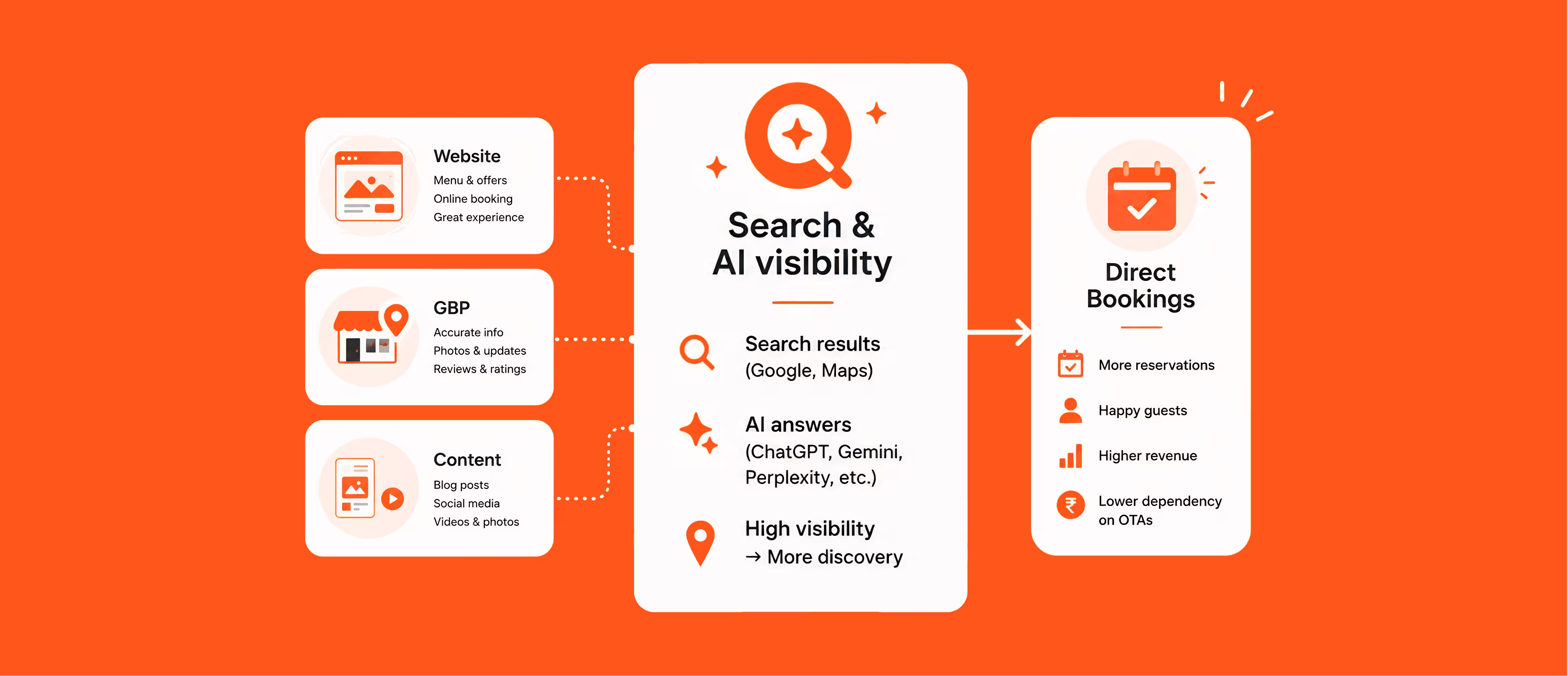
Improve AI visibility with structured information
Beyond classic SEO, hotels now need to think about how AI systems see and represent them:
- Ensure your website clearly states location, property type, and who you are ideal for: business guests, families, couples, or events.
- Use structured data (schema markup) to mark up your hotel, amenities, and key pages so AI can parse them reliably.
- Keep your Google Business Profile and main directories updated and consistent across every platform.
AI assistants increasingly pull from structured and semi-structured information when recommending hotels. The better your structure, the more likely your brand appears in AI answers instead of just OTA lists. Most hotels do not realize how invisible they are in AI search until they actually test it. A quick AI visibility audit usually reveals missing entity signals, weak positioning, and inconsistent data across platforms.
5. Run AI-Powered Pricing and Offer Experiments
Pricing is a core piece of hotel AI marketing solutions. It is not just revenue management; it is also how offers are packaged and presented to convert the right guest at the right time.
Dynamic pricing with guardrails
AI-assisted pricing tools can analyze demand patterns, local events, and competitor behavior, suggest price adjustments by date, room type, and channel, and keep rates within defined rules so you do not compromise rate parity or brand positioning.
Offer testing without guesswork
AI can also help you test offer structures and understand what actually converts:
- Compare performance of 15% off versus free breakfast plus late checkout versus a dining credit for different guest segments.
- Predict which offers are most likely to convert specific segments at certain times: shoulder seasons, weekends, and local events.
Instead of one generic promotion, you run smaller, smarter treatments driven by real behavior, not intuition alone.
6. Use AI to Predict Churn and Trigger Save-the-Stay Campaigns
Another powerful angle for AI marketing for hotels is predicting which guests are unlikely to return and intervening early, before they have mentally moved on to a competitor.
Identify at-risk guests
By analyzing past stays and gaps since last visit, feedback scores and review sentiment, and booking channel shifts from direct to OTA or vice versa, AI models can flag guests who are unlikely to return without some form of intervention.
Trigger targeted retention campaigns
- If a high-value guest has not stayed in several months, send a personalized reconnect offer with a specific reason to return.
- If someone left lukewarm feedback, send an apology with a second-chance package or small perk that acknowledges the issue.
- If a direct booker switches to booking via OTA, highlight the direct booking benefits and invite them back with a modest incentive.
Retention is almost always cheaper than acquisition. AI makes it much easier to do retention intentionally and systematically rather than accidentally stumbling into it.
7. Use AI to Turn Data into Simple Dashboards and Decisions
Finally, AI can transform overwhelming marketing data into clear stories and decisions that your leadership team can actually act on without needing a data analyst in every meeting.
Natural-language dashboards
Instead of digging through spreadsheets and BI tools, AI-assisted analytics can answer questions like:
- Which campaign brought the most direct bookings last month?
- How did our direct versus OTA mix change in the last quarter?
- Which guest segments are responding best to our weekend offers?
The system presents human-readable summaries and simple visuals so decisions are faster and grounded in actual data.
Close the loop between marketing and operations
AI-generated insights can also show when your lobby or restaurant will likely be busiest based on arrival patterns, which upsells are consistently accepted or ignored, and where marketing promises and on-property realities might be misaligned. This makes hotel AI marketing solutions not just a marketing tool, but a bridge between marketing, revenue, and operations, helping everyone work from the same picture of what is actually happening.
Conclusion: Start with One AI Strategy and Layer from There
AI will not magically fix bad products, inconsistent service, or unclear positioning. But if your hotel already delivers a solid guest experience, these seven AI marketing for hotels strategies can amplify what is working and expose opportunities you have been leaving on the table.
You do not need to implement everything at once. A practical approach:
- Start with one core area: often segmentation plus personalized journeys, or AI chat plus direct booking tools.
- Add one hotel AI marketing solution at a time, making sure it connects to your CRM, PMS, or website instead of living in isolation.
- Review results every 30 to 90 days, then layer in the next strategy where you see the most momentum.
Over time, you will move from scattered tactics to a coherent AI-powered engine that understands your guests, talks to them like individuals, and quietly increases direct bookings and repeat stays in the background, while your team focuses on delivering great hospitality in the foreground.
The hotels that will win the next decade are not the ones with the biggest marketing budgets. They are the ones that know their guests the best and show up visibly wherever those guests are looking, including inside AI platforms.
To understand why showing up inside AI answers matters so much in the first place, read our complete guide to answer engine optimization.