If your hotel is overly dependent on OTAs, you are effectively renting your guests from third-party platforms at 15-25% commission every time. In 2026, the properties that win are the ones that turn OTAs into a top-of-funnel discovery channel and then systematically pull guests into direct relationships, so they can book again without intermediaries.
This guide is a full playbook on how to increase hotel bookings without OTAs while still using them strategically, and how to consistently get direct hotel bookings from new and past guests.
Executive Summary
The Direct Booking Playbook in One Look
In simple terms, increasing bookings without OTAs means:
- Making your own website and booking engine the easiest place to book.
- Creating offers and experiences that are best (or only) available directly.
- Using email, CRM, and remarketing so every OTA guest becomes a future direct guest.
- Being visible where modern travelers search (Google, metasearch, AI assistants) but routing them to your own engine.
If you implement the steps in this guide over the next 90 days, you will reduce OTA share, increase net revenue per booking, and build an asset: a guest database you control.
Why Relying on OTAs Is So Expensive
The hidden cost of OTA-heavy business
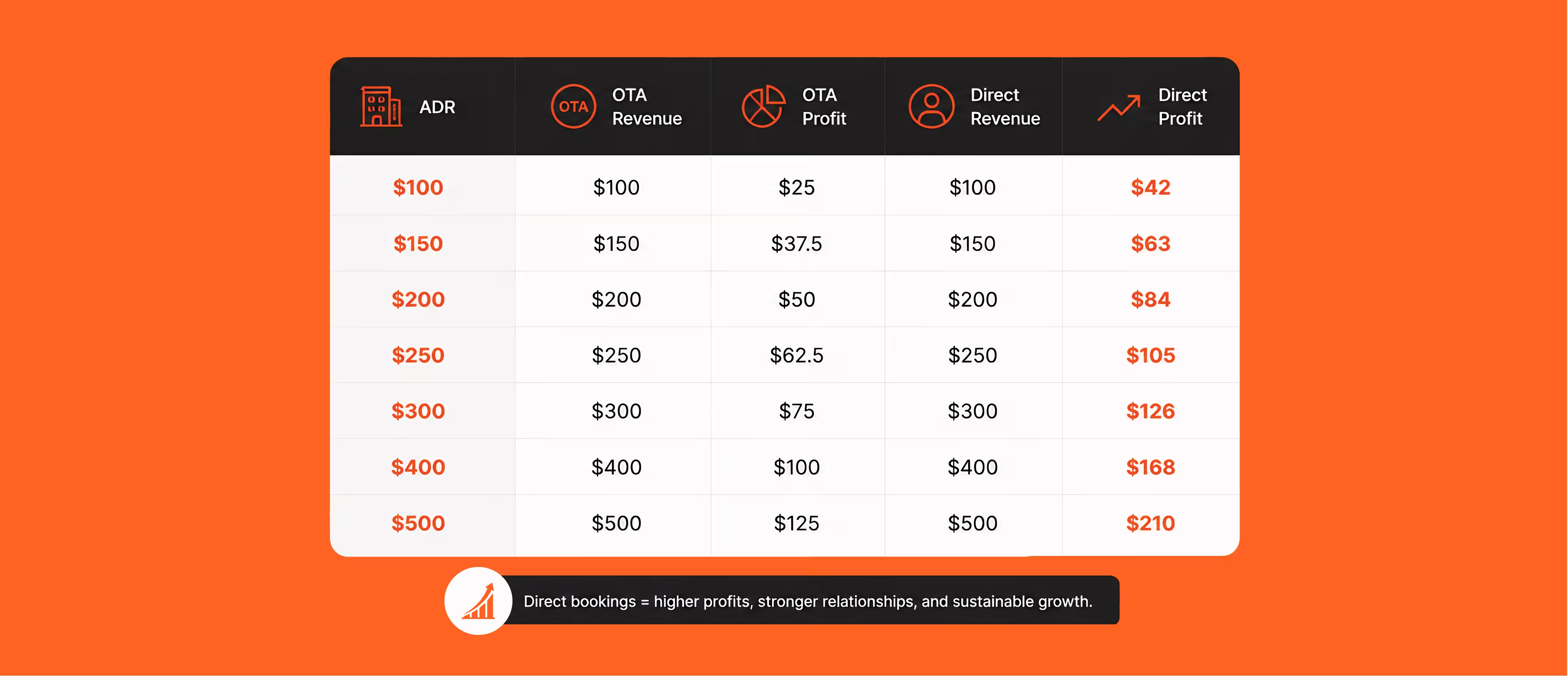
OTAs can absolutely help you with reach and occupancy. The problem is margin and control. If a booking comes in at $100 and you pay 20% commission, your net is $80. To get the same net profit from a direct booking, you could discount the rate by 10% and still make more money, while owning the guest relationship long term.
Think of it this way:
- OTA booking: higher rate, but 15-25% commission.
- Direct booking: potentially slightly lower rate, but no commission and full guest data.
The more volume you push through your own channels, the more budget you can reinvest into your brand, staff, and guest experience instead of commission.
Risk: when OTAs control your demand
If 70-90% of your occupancy comes from OTAs, you are exposed to:
- Sudden changes in commission structure.
- Changes in ranking algorithms that push you down overnight.
- OTA-driven messaging that may not fit your brand.
The goal is not to cut OTAs off completely. It is to treat them as one channel among many and design a system that steadily increases your share of direct bookings every quarter.
Foundations: Make Your Direct Channel Frictionless
Before you think about campaigns, you must ensure your direct channel deserves the booking. If your website is slow, unclear, or your booking engine feels sketchy, guests will default to OTAs.
Make your website feel like the official source of truth
Your website should immediately answer:
- Where is this property?
- Why should I stay here instead of somewhere else?
- What will my stay actually feel like?
- How do I check availability and price right now?
Practical checks:
- Mobile-first: most guests discover and research on phones.
- Clear "Check availability" or "Book now" button on every key page.
- No intrusive pop-ups blocking the main content (especially on mobile).
- Fast load times, particularly for image-heavy gallery pages.
Simplify the booking engine experience
Your booking engine is where many direct bookings die. It should:
- Show real-time availability and rates without needing account creation.
- Display all taxes and fees early to prevent shock at the last step.
- Offer multiple secure payment options.
- Make it obvious that guests will receive confirmation instantly.
Walk through your own booking engine on a phone as if you are a guest. If it feels slow, confusing, or untrustworthy, fix that before spending money on traffic.
Use trust signals like OTAs do
Guests book OTAs because they trust them. Mirror that trust on your site:
- Prominently display recent reviews (from Google, TripAdvisor, etc.).
- Add badges or short snippets like "Trusted by 3,500+ guests each year".
- Show clear policies (cancellation, check-in/out, deposits) in plain language.
- Add a clear "Secure booking powered by [payment provider]" note near the payment section.
Craft Direct-Only Offers Guests Actually Want
If rate parity rules are in play, you often cannot undercut OTAs dramatically on base rates. But you can make booking direct obviously better through value-adds and smart packaging.
Stop competing on price alone
Most guests don't wake up wanting the absolute lowest possible rate; they want the best value for their trip. Rather than 10% off direct, think more value direct:
- Free late checkout for direct bookings (subject to availability).
- Free breakfast or parking if booked directly.
- Room-upgrade priority (when available) for direct guests.
- Welcome drink, spa credit, or small gift for direct reservations.
Make these benefits visible: on your homepage, on your booking engine page, and on your FAQs.
Build direct-only packages around real guest journeys
Look at your main guest segments and build packages that OTAs don't offer or can't present well:
- Business bundle: flexible cancellation, express check-in, workspace access, and early breakfast.
- Romance package: room upgrade, late checkout, bottle of wine, and local experience voucher.
- Family stay: discounted second room or rollaway bed, kid-friendly welcome kit, and local attraction tickets.
Then communicate these bundles as: Only available when you book with us directly.
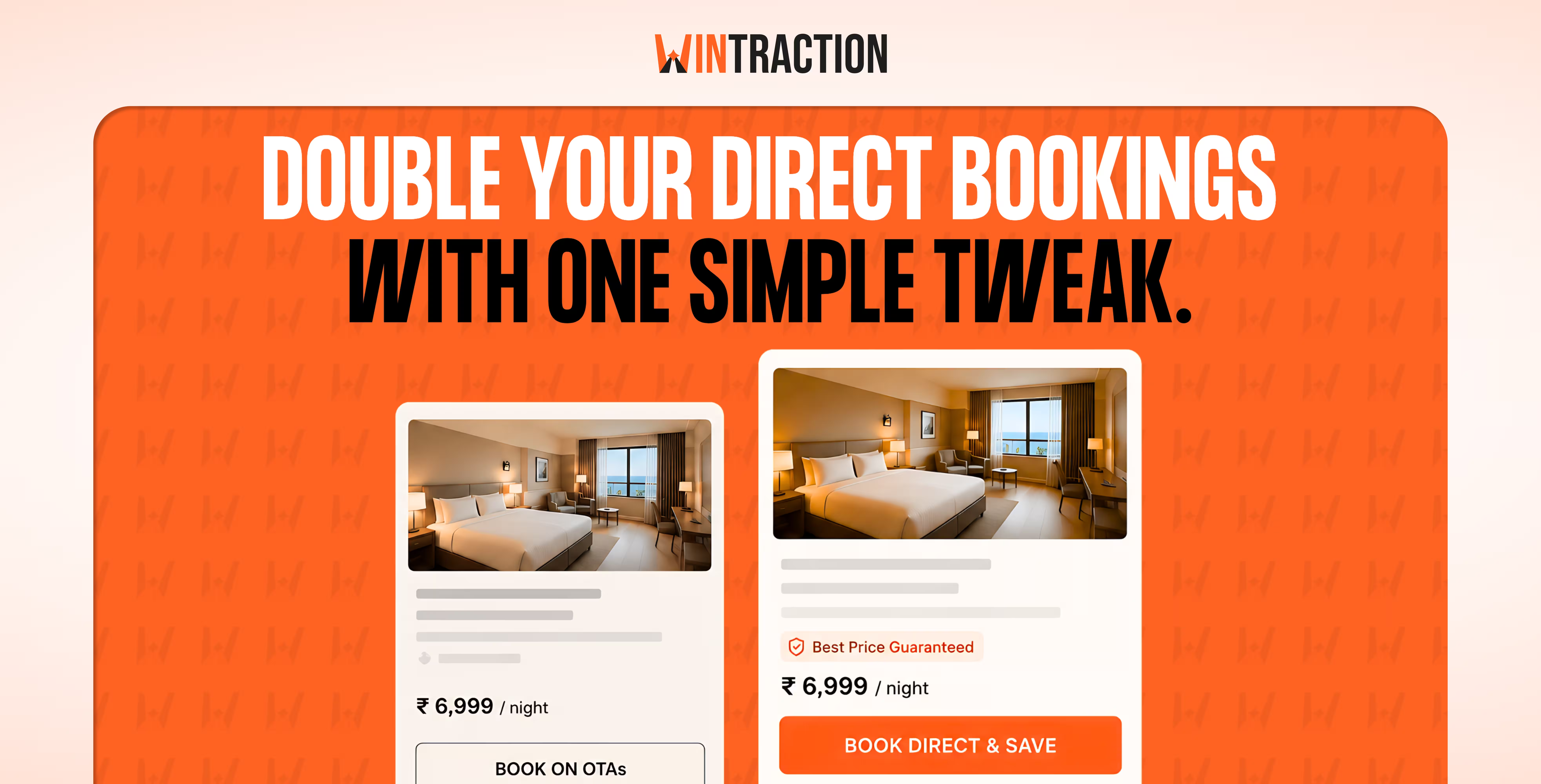
Why book direct?
- Best available rates for your dates
- Exclusive packages and perks
- Flexible changes and full support from our team
- No hidden commissions or booking fees
Turn Every OTA Guest into a Future Direct Guest
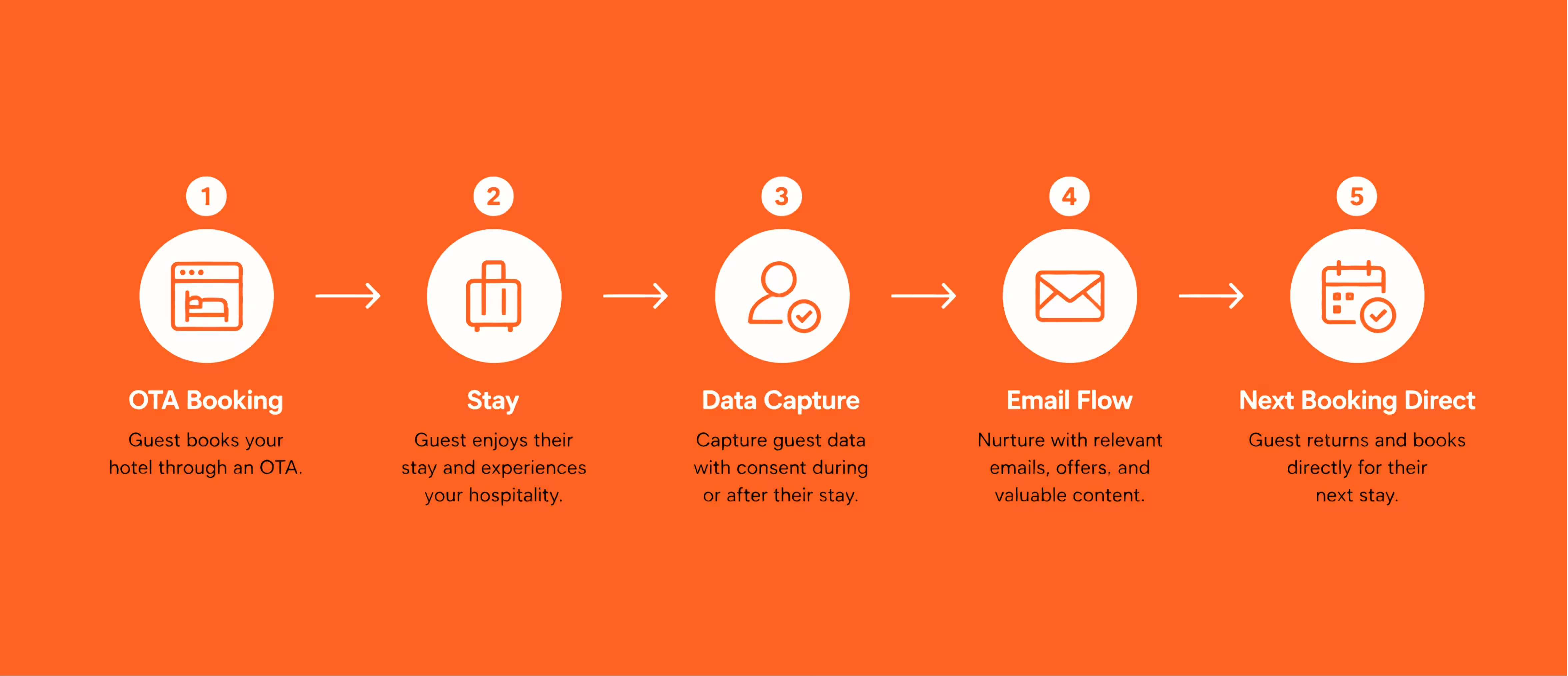
The biggest missed opportunity in hospitality is treating OTA guests as OTA's guests instead of yours. In reality, every OTA guest is a lead for future direct bookings.
Capture guest data (legally and usefully)
Within privacy and OTA policy boundaries, aim to collect:
- Email addresses during check-in or via pre-arrival forms.
- Phone numbers where appropriate (for WhatsApp or SMS updates).
- Trip purpose (business, leisure, event, etc.).
- Stay dates, room type, and spend.
You can collect this via pre-arrival registration forms, digital check-in links, Wi-Fi login pages (with clear consent), and in-stay surveys.
Nail the post-stay sequence
A simple but powerful sequence for OTA guests:
- Thank you email (1-2 days after checkout): thank them, ask for a review, mention that booking direct next time unlocks perks.
- Value email (2-4 weeks later): share useful content, softly remind them that direct bookings include specific benefits.
- Offer email (when relevant): seasonal promotion or early-bird rate for their next likely stay, with a clear Book Direct button.
Over time, this is how you get direct hotel bookings from people who originally came via OTAs.
Build segments and personalize
- Business guests: weekday offers, meeting space bundles.
- Couples: weekend packages, romantic add-ons.
- Families: school holiday deals, multi-room offers.
Send fewer, more targeted emails. This increases response rates and reduces unsubscribes.
Use Search, Metasearch, and AI to Get Direct Hotel Bookings
Direct bookings are not just about your own site; they are about how travelers discover you across the wider web.
Optimize your presence on Google and maps
Many travelers now type hotel-related queries into Google or directly search on Maps. Key steps include:
- Fully optimize your Google Business Profile with up-to-date photos (rooms, amenities, common areas), a clear description that matches your positioning, and current contact details.
- Encourage guests to leave Google reviews and respond thoughtfully to all of them.
- Use Google Posts to highlight direct-booking perks and packages.
Use metasearch without surrendering bookings
Metasearch (Google Hotel Ads, TripAdvisor, Trivago, etc.) compares prices across OTAs and your direct channel. Done well, it can surface your direct rates and push more clicks to your site.
- Ensure your direct rate is competitive (or at least equal) to OTAs.
- Highlight direct perks in your ad copy and landing pages.
- Send metasearch traffic to a clean, focused direct-booking landing page, not your generic homepage.
Think about AI and conversational travel planning
Travelers increasingly ask AI tools things like "Where should I stay in [city] near [landmark]?" or "Find me a boutique hotel for a work trip with good Wi-Fi." To influence these responses:
- Make sure your site and profiles clearly mention location (near which landmarks, business districts, attractions) and key features travelers care about (Wi-Fi quality, breakfast, parking, meeting spaces).
- Create content that answers specific planning questions (e.g., "Where to stay in [city] if you're here for a conference at [venue]").
- Maintain consistent information and brand naming across all platforms so AI can recognize you as a single, trusted entity.
Many hotels are already optimizing for Google rankings, but very few are optimizing for how AI tools discover and recommend properties. That gap is becoming a competitive advantage.
If you want to see how visible your hotel currently is across AI-driven search and conversational platforms, we're offering a free AI Visibility Audit for hotels.
Website Content That Sells Stays (Not Just Rooms)
Most hotel sites are either too generic ("luxury in the heart of the city") or too focused on amenities. To increase direct bookings, your content must reduce uncertainty and increase desire.
Tell a clear story for each main guest type
Create dedicated pages or sections for:
- Business travelers.
- Couples and weekend escapes.
- Families or groups.
- Long-stay or digital nomads (if relevant).
On each, clearly show why your property is ideal for that use case, what the experience feels like, and what packages direct bookers get.
Add helpful, search-friendly resource content
Instead of blog posts that could fit any city, focus on specific, helpful topics:
- "3 Perfect Weekend Itineraries in [City] Starting at Our Hotel"
- "How to Choose a Hotel Near [Conference Center] Without Overpaying"
- "Family-Friendly Guide to [City]: What to Do Within Walking Distance of Our Hotel"
This content attracts organic traffic from people in planning mode, positions your property as the expert local base, and gives you internal links to funnel people toward your booking engine.
Use visuals that reduce risk
People book when they can imagine themselves in your hotel. Use images and short videos that:
- Show real, unstaged views of rooms, bathrooms, and common spaces.
- Show your staff interacting warmly with guests.
- Highlight unique angles (rooftop, neighbourhood streets, nearby parks).
Avoid over-using generic stock photos; they reduce trust.
90-Day Action Plan to Reduce OTA Dependence
Month 1: Fix the Basics
Goals: Clean direct channel, clear value proposition.
- Audit your website and booking engine on mobile: speed, clarity, trust.
- Add or refine your "Why book direct?" messaging across key pages.
- Define 2-3 direct-only perks and update your site and booking engine to display them.
- Fully update your Google Business Profile and main review sites.
- Implement basic email capture for all guests (OTA and direct) at check-in or via pre-arrival.
Month 2: Launch Direct-First Offers and Content
Goals: Make direct obviously better and start organic discovery.
- Create 2-3 direct-only packages around key guest segments.
- Design a direct-booking-focused landing page to send paid or metasearch traffic to.
- Publish 3-5 highly relevant resource articles (itineraries, event-based guides, neighbourhood guides).
- Add a clear comparison block (Book with us vs. book via OTAs) highlighting perks and flexibility.
Month 3: Turn Demand and Data into Repeat Direct Bookings
Goals: Build repeatable systems for retention and demand capture.
- Set up simple email sequences for new direct guests and new OTA guests (to convert them next time).
- Run a small test campaign: metasearch ads or targeted social ads pointing to your direct landing page.
- Track % of total bookings that are direct vs. OTA, net revenue per booking type, and repeat booking rate over 3-6 months.
Aim for small but real wins (e.g., shift 5-10% of OTA volume into direct) in the first 90 days, then repeat and scale.
Common Mistakes Hotels Make When Trying to Cut OTAs
Trying to switch off OTAs overnight
Going cold turkey can hurt occupancy and revenue badly. Instead, treat this as a gradual rebalancing: keep OTAs as discovery and filler channels, and set internal targets to increase direct share quarter by quarter.
Offering the same thing everywhere
If your rates, packages, and messaging are identical on OTAs and your own site, guests have no reason to change behaviour. Give them a reason:
- Better flexibility directly.
- Extra perks directly.
- More transparent information directly.
Ignoring follow-up and retention
If you are not systematically collecting guest data and inviting them back, you're rebuilding your occupancy from scratch every month. The real upside of direct bookings is lifetime value, not just one stay.
Conclusion: The Hotels That Win Will Own the Guest Relationship
The future of hotel growth is not about eliminating OTAs; it is about making sure they are not the only engine driving your business.
The hotels that grow sustainably over the next few years will be the ones that:
- Use OTAs strategically for discovery.
- Build strong direct booking systems.
- Capture and retain guest relationships.
- Become visible where modern travelers search, including Google, metasearch, and AI-driven travel discovery.
Every direct booking does more than save commission. It gives you better margins, more control over the guest experience, first-party guest data, higher repeat booking potential, and a stronger brand that compounds over time.
Guests are increasingly discovering, comparing, and choosing hotels through AI recommendations, conversational search, maps, reviews, and personalized planning experiences. Properties that position themselves early will have a significant advantage.
You do not need to reduce OTA dependence overnight. Even shifting a small percentage of bookings into your direct channel can dramatically improve profitability over time. The hotels that win in 2026 will not simply be the ones with the biggest marketing budgets. They will be the ones that own attention, trust, and the guest relationship.
To understand why showing up inside AI answers matters so much in the first place, read our complete guide to answer engine optimization.