
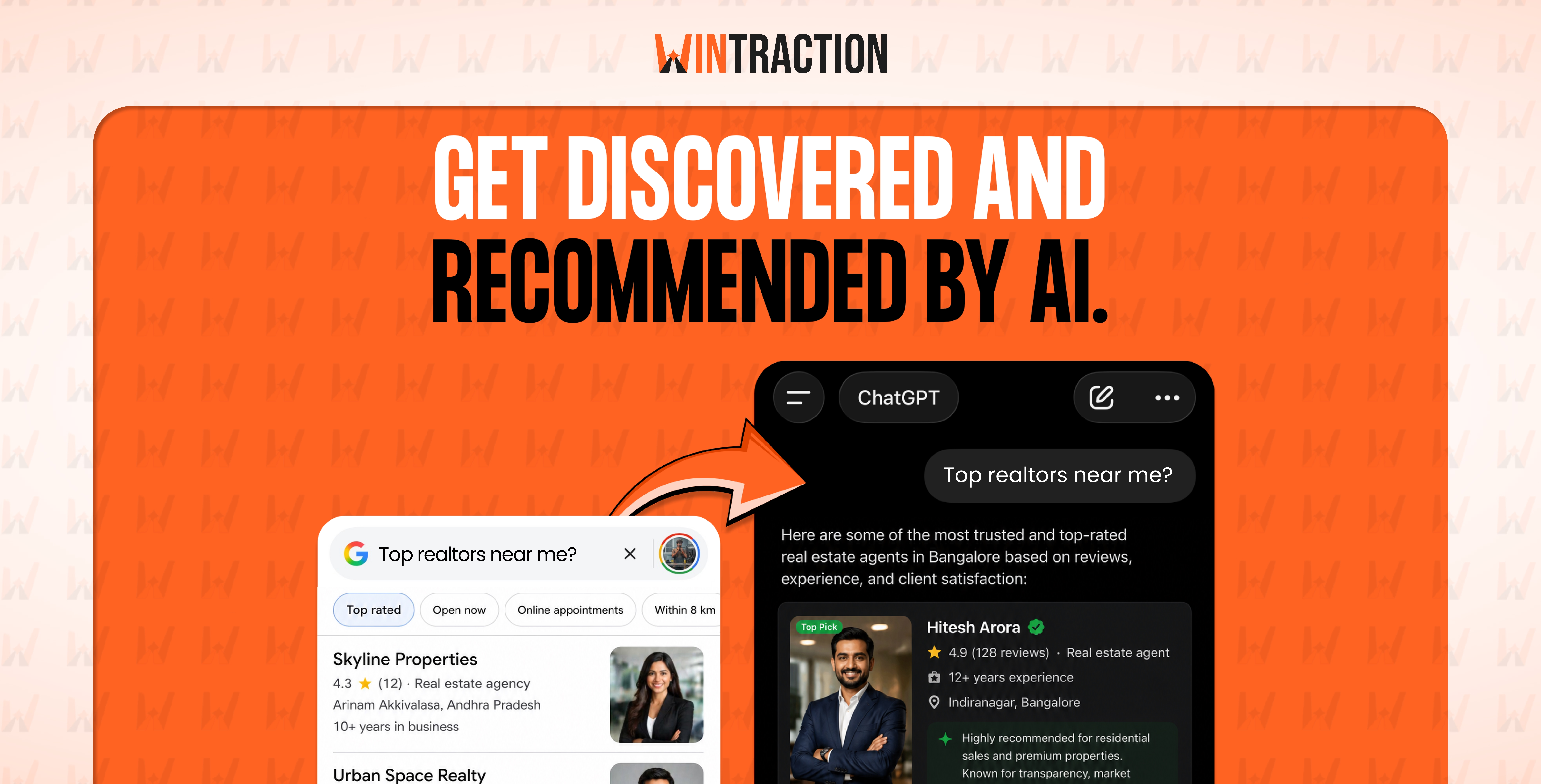
What Is AI Visibility?
AI Visibility is a brand's ability to appear, get cited, and get recommended in AI-generated answers from platforms like ChatGPT, Perplexity, Gemini, Claude AI, Microsoft Copilot, and Google AI Overviews.
If someone asks an AI assistant, "What's the best CRM for startups?" and your company appears in the answer, that's AI Visibility.
If Perplexity cites your research when answering a question, that's AI Visibility.
If Gemini recommends your product while comparing alternatives, that's AI Visibility.
In simple terms, AI Visibility measures whether AI systems recognize your business as a trustworthy answer to relevant customer questions.
For years, online visibility was largely determined by search rankings. Businesses competed to appear at the top of Google's search results. The higher a page ranked, the more clicks and traffic it typically received.
That model is starting to change.
Today, consumers increasingly turn to AI assistants for answers, recommendations, and comparisons instead of reviewing dozens of websites on their own.
A few years ago, someone looking for project management software might have typed:
"Best project management software"
into Google, then opened multiple websites, read reviews, compared features, and evaluated different options.
Today, that same person might ask:
"What's the best project management software for a 20-person marketing agency?"
Instead of presenting a list of links, an AI assistant can analyze information, compare solutions, and provide a direct recommendation in seconds.
The customer gets an answer faster.
The decision-making process becomes shorter.
And the way brands get discovered changes dramatically.
In this new environment, being visible isn't just about ranking on a search results page. It's about being recognized, understood, and recommended by AI systems when potential customers ask questions related to your products, services, or expertise.
That's why AI Visibility is becoming an increasingly important part of modern digital marketing.
The question is no longer: "How do I rank higher?"
The question is now: "How do I become one of the brands AI recommends?"
As AI assistants become a common starting point for research, recommendations, and purchasing decisions, visibility depends on more than traditional search rankings. Brands must earn recognition from the systems generating the answers.
This guide will help you understand how that works.
We'll explore:
- Why AI Visibility matters
- How consumer search behavior is changing
- How AI search engines work
- How AI systems decide which brands to mention
- Why some businesses consistently appear in AI-generated answers while others don't
- What strong AI Visibility looks like in practice
- How to improve, track, and measure your own AI Visibility
Before diving into optimization strategies, it's important to understand the shift that made AI Visibility necessary in the first place.
Let's start with how search behavior is changing in the age of AI.
Why AI Visibility Matters More Than Ever
The Internet Is Moving From Search To Recommendations
For decades, discovering information online followed a familiar process.
Someone had a question. They opened Google, searched for an answer, clicked a website, compared options, and eventually made a decision.
Today, that process increasingly looks different.
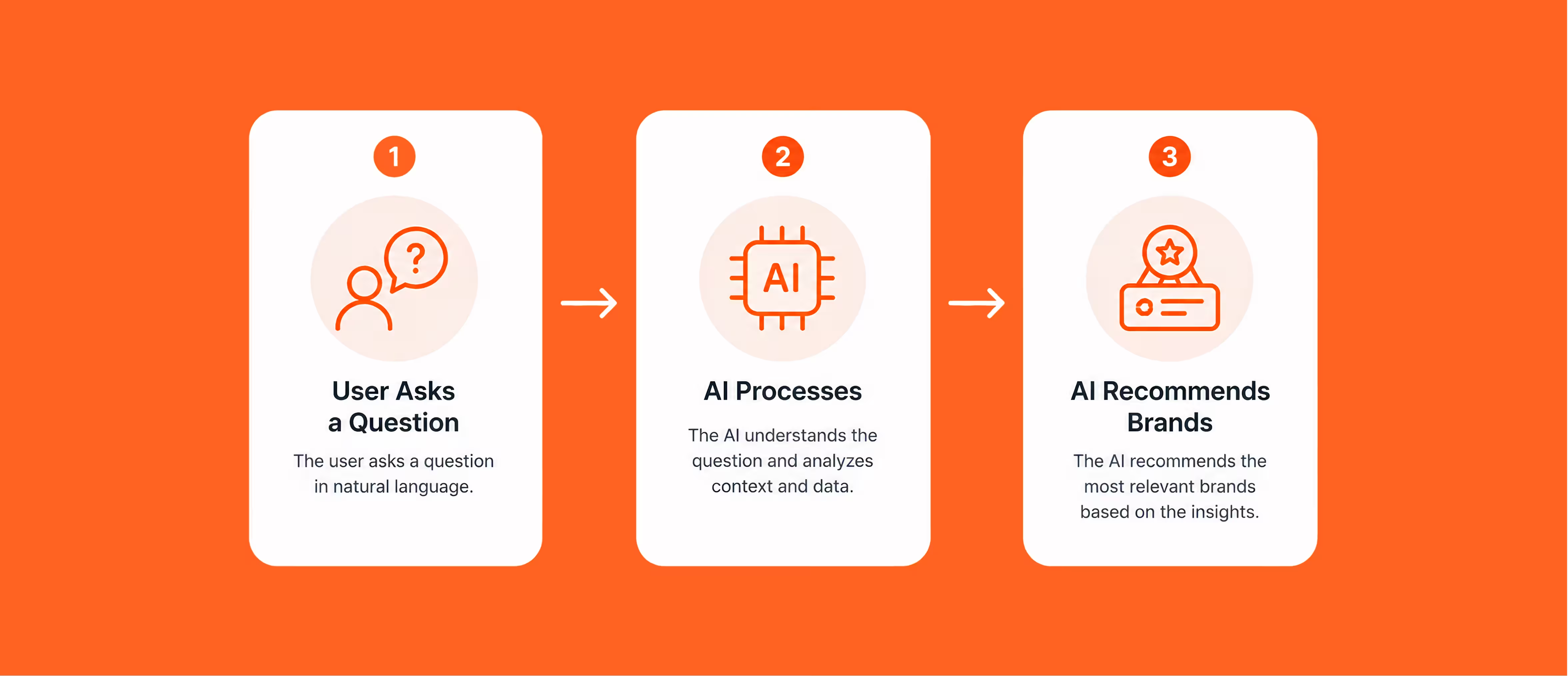
A user opens ChatGPT, Perplexity, or Gemini and asks a question. The AI evaluates information, recommends answers, and often provides enough context for the user to move forward without visiting multiple websites.
This may sound like a small change.
In reality, it represents one of the largest shifts in digital discovery since the invention of search engines.
The Rise of Zero-Click Search
One reason AI Visibility matters is the continued growth of zero-click search.
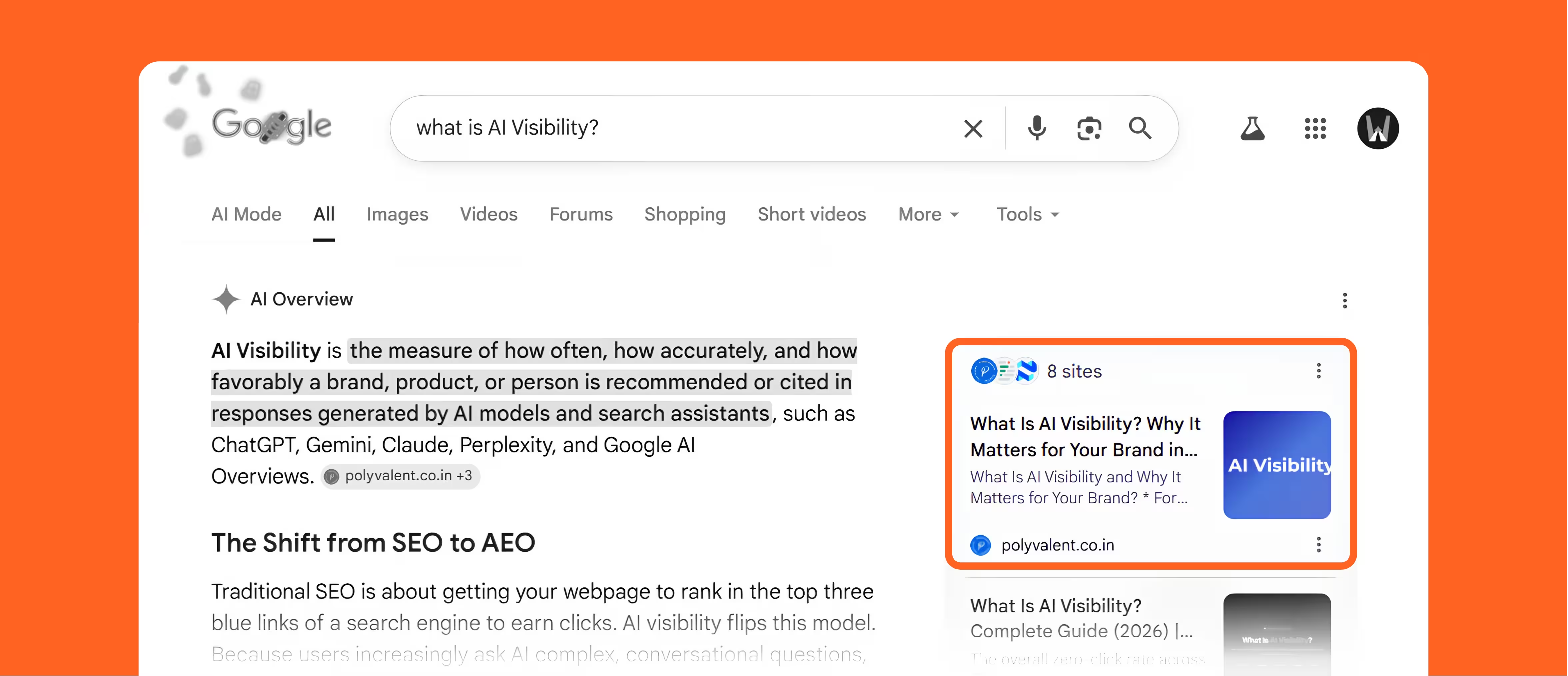
Zero-click search occurs when users receive the information they need without visiting another website.
For example, someone searches:
"What is EBITDA?"
Google displays the answer, and no click occurs.
Or someone asks ChatGPT:
"What are the best accounting platforms for freelancers?"
The AI provides recommendations. Again, no click occurs.
In both cases, the answer satisfies the user's need without requiring them to visit a website.
Historically, businesses measured visibility through rankings, clicks, and traffic.
Today, another metric matters:
Are AI systems mentioning your brand when customers ask relevant questions?
If AI answers the question before users reach your website, being included in the answer becomes a competitive advantage.
This shift is explored more deeply in our guide on what zero-click search is and why it matters, but for now it's important to understand the bigger picture:
The answer is increasingly replacing the click.
Imagine two software companies.
Company A ranks fourth in Google, while Company B ranks ninth.
In a traditional search environment, Company A would likely receive more visibility and traffic.
But now imagine ChatGPT consistently recommends Company B because it has stronger reviews, clearer positioning, and more authoritative mentions across the web.
In that scenario, the business appearing in the recommendation may gain more attention than the business ranking higher in search results.
That's why AI visibility matters.
It doesn't replace SEO. Instead, it changes how SEO creates value.
Businesses still need discoverable content, but they also need the credibility, authority, and contextual signals that AI systems can trust when generating answers.
- 65–69% of searches now end without a click.
- More than 2 billion people actively use generative AI tools.
- AI Overviews now appear across a significant percentage of informational searches.
What it means: Businesses can no longer rely solely on website traffic as a measure of visibility.
How Consumers Search Using AI Today
Most business owners assume AI search is primarily used for simple questions.
The reality is far more interesting.
Consumers increasingly use AI throughout the entire buying journey, not just at the beginning and not just at the end. They use it to research problems, compare solutions, evaluate alternatives, and make purchasing decisions.
Understanding this behavioral shift is one of the most important concepts in AI Visibility.
AI Is Becoming The New Discovery Layer
Imagine someone planning to buy project management software.
Ten years ago, they might search:
"Best project management software"
Today, they increasingly ask:
"What project management software is best for a remote marketing team with 20 employees?"
Notice the difference.
The second question is conversational, specific, and contextual.
Users increasingly treat AI assistants like advisors rather than search engines. Instead of searching for information and evaluating options themselves, they ask for recommendations tailored to their situation.
As a result, AI is becoming a new discovery layer between consumers and businesses.
As AI adoption grows, its role extends far beyond helping users discover new brands.
Consumers increasingly use AI throughout the entire buying journey. They use it to explore options, research solutions, compare alternatives, and make final decisions.
This shift matters because AI Visibility is no longer just about appearing during the first search. Brands can gain or lose visibility at multiple points along the customer journey.
Let's look at how AI influences each stage.
Discovery
Questions often begin with exploration.
A potential customer might ask:
- What are the best CRM tools for startups?
- What accounting software should freelancers use?
- Which hotels are best for families in Goa?
At this stage, AI introduces brands.
If your company isn't visible, customers may never learn you exist.
Research
Once users identify options, they begin researching.
Questions become more detailed:
- Is HubSpot better than Salesforce for small businesses?
- What are the disadvantages of QuickBooks?
- Which hotel offers the best family amenities?
At this stage, AI compares options and highlights strengths and weaknesses.
Comparison
As users move closer to a decision, they increasingly use AI to compare alternatives directly.
- HubSpot vs Salesforce
- ClickUp vs Asana
- Shopify vs WooCommerce
Rather than opening ten browser tabs, users ask AI to summarize the differences and help them evaluate their options.
Decision
Finally, users seek recommendations.
Questions become highly specific:
- Which CRM should I choose if I have five employees?
- Which accounting platform is easiest for beginners?
- Which marketing automation software offers the best value?
At this stage, recommendations carry enormous influence.
The brands that appear most frequently become familiar. And the brands that become familiar are more likely to be considered.
Why This Behavioral Shift Matters
Traditional search distributed attention across an entire page of results.
AI concentrates attention into a much smaller set of recommendations.
In traditional search, ten companies might receive visibility. In AI search, three companies may dominate the answer. Sometimes, only one.
That concentration creates a new competitive landscape.
Brands that become trusted recommendation candidates gain disproportionate visibility, while brands that fail to establish authority may struggle to appear at all.
This naturally leads to an important question:
How do AI systems actually decide which brands deserve to appear in their answers?
- 35% of consumers use AI during product discovery.
- More than 30% use AI to research and compare solutions.
- B2B buyers increasingly use AI for vendor evaluation before contacting sales teams.
What it means: AI is influencing decisions long before customers reach your website.
How AI Search Works
Many people assume AI search is simply Google with a chatbot interface.
It isn't.
While both help users find information, they work in fundamentally different ways.
Recognizing this difference is one of the most important steps in understanding AI Visibility.
Before you can become visible in AI-generated answers, you need to understand how those answers are created in the first place.
AI Search Doesn't Just Find Information - It Creates Answers
Traditional search engines are designed to help users discover information.
AI search engines are designed to help users understand information.
That may sound like a small distinction. In practice, it's a massive difference.
Imagine you're planning a vacation and ask Google:
"What are the best family-friendly hotels in Goa?"
Google gives you a page of links - travel websites, review platforms, hotel directories, and blog posts.
The information exists, but you still need to evaluate it yourself.
Now ask an AI assistant the same question.
Instead of a list of websites, you might receive recommended hotels, a comparison of amenities, family-specific suggestions, and explanations for why each hotel was selected.
The AI does much of the research for you.
This is why AI search often feels less like using a search engine and more like speaking with an advisor.
The advisor isn't simply finding information. It's helping interpret that information.
The Three Layers Behind Every AI Answer
Although different AI platforms work differently, most AI-generated answers follow a similar process.
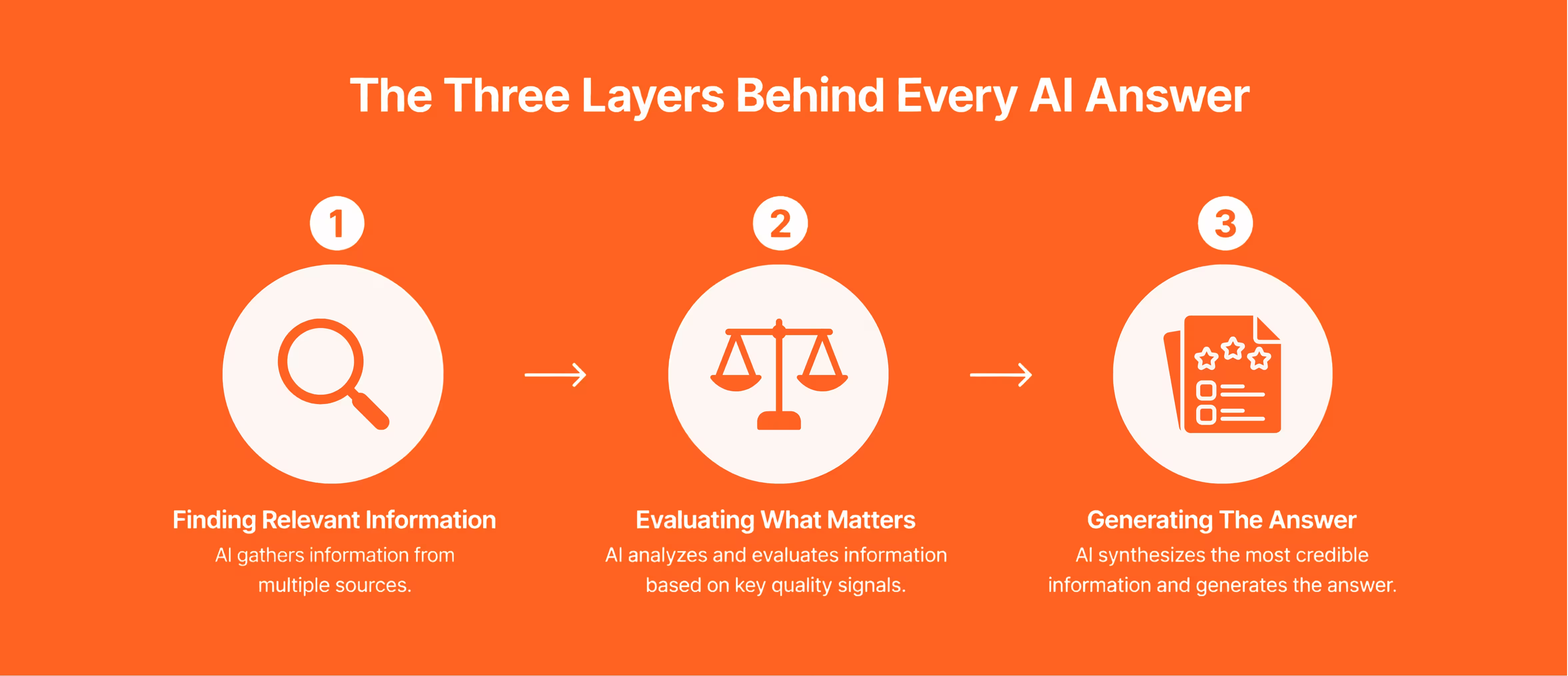
Layer 1: Finding Relevant Information
Before an AI can answer a question, it needs information.
This information may come from:
- Training data
- Live web results
- Knowledge databases
- Documents
- Structured information sources
Think of this stage as gathering evidence.
The AI is collecting potentially useful information related to the user's question.
If someone asks:
"What are the best CRM platforms for startups?"
The system begins gathering information about CRM software, startup requirements, reviews, comparisons, and expert recommendations.
This is the discovery phase.
Layer 2: Evaluating What Matters
Not all information is equally useful.
The next step is determining which information deserves attention.
This is where concepts such as:
- relevance
- expertise
- authority
- trustworthiness
- recency
become important.
For example, if dozens of websites mention a particular software platform, AI systems may view that as evidence. If respected publications consistently discuss a brand, that becomes another signal. If customers leave thousands of positive reviews, that contributes additional context.
As these signals accumulate, the AI begins building confidence around certain answers.
This helps explain why some brands appear repeatedly across AI platforms while others rarely show up at all.
The AI isn't just looking for information. It's evaluating which information appears most credible.
Layer 3: Generating The Answer
Once enough evidence has been gathered and evaluated, the AI generates a response.
Instead of presenting raw information, it creates a synthesized answer.
This answer often includes:
- recommendations
- comparisons
- summaries
- explanations
- citations
This is the stage users see.
But most of the important work happened before the answer was generated.
The recommendation itself is usually the result of hundreds or thousands of signals being evaluated behind the scenes.
Why Different AI Platforms Give Different Answers
One question people often ask is:
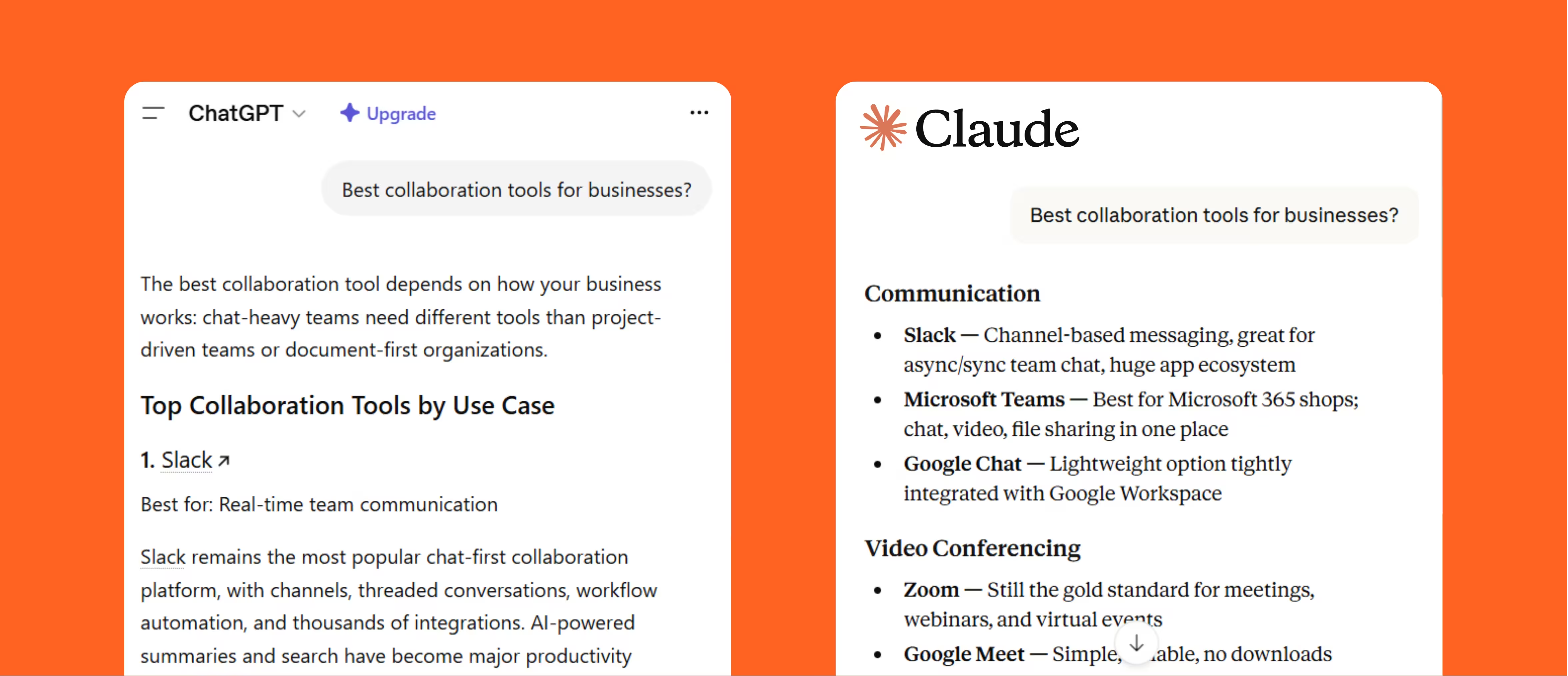
"Why does ChatGPT give a different answer than Perplexity?"
The reason is simple.
Different AI systems gather and evaluate information differently.
Ask five people for restaurant recommendations and you'll probably receive five different lists. Not because any of them are wrong, but because each person values different evidence.
AI systems behave similarly.
For example, one platform may prioritize authoritative publications, while another emphasizes recent information. Some rely heavily on web citations, while others generate answers from a broader mix of sources.
As a result, the same question can produce different recommendations depending on where it's asked.
This is why businesses increasingly monitor visibility across multiple AI platforms rather than focusing on only one.
Appearing in ChatGPT does not automatically mean you'll appear in Gemini, and appearing in Gemini does not guarantee visibility in Perplexity.
Each system builds confidence differently.
AI Search Is Built Around Confidence
The easiest way to understand AI search is to think about confidence.
Traditional search engines rank pages. AI systems evaluate confidence.
Before recommending a company, product, or service, the AI is essentially asking:
"Do I have enough evidence to confidently include this in my answer?"
The stronger the evidence, the easier it becomes for the AI to make a recommendation. The weaker the evidence, the less likely a brand is to appear.
This explains why visibility in AI search often feels different from traditional SEO.
Being discoverable is no longer enough. You also need to be trustworthy, recognizable, and easy for AI systems to understand.
That raises an important question: If AI search works differently than traditional search, what exactly are the biggest differences businesses need to understand?
AI Search vs Traditional Search
By now, you've seen that AI search doesn't work the same way as traditional search.
But understanding how it works is only part of the story.
The bigger question for businesses is: What actually changes when consumers move from search engines to AI assistants?
The answer is simple. The user journey becomes shorter, the decision-making process becomes faster, and visibility becomes more concentrated.
This is one of the biggest reasons AI Visibility is becoming a competitive advantage.
Traditional Search Helps Users Research
For more than two decades, search engines were built around discovery.
A user entered a query, the search engine returned a list of relevant pages, and the user did the work. They compared options, evaluated sources, and ultimately made the final decision.
For example, if someone searched "Best project management software" they might receive results from:
- Asana
- ClickUp
- Monday.com
- Trello
- Smartsheet
The search engine's job was to organize information.
The user's job was to decide what to trust.
This model created visibility opportunities for many brands. Even businesses ranking fifth or sixth could still receive meaningful traffic because users explored multiple options.
AI Search Helps Users Decide
AI assistants change that process.
Instead of presenting information, they synthesize information. Instead of asking users to compare options themselves, they often provide recommendations.
Imagine asking "What's the best project management software for a remote marketing team with 20 employees?"
Rather than displaying ten websites, an AI assistant might recommend:
- ClickUp
- Asana
- Monday.com
along with explanations for why each option was selected.
The AI is no longer acting as a directory. It's acting as a decision assistant.
This may seem more convenient for users, but it creates a new challenge for businesses.
Visibility becomes concentrated among a smaller group of brands.
The Biggest Differences Between AI Search and Traditional Search
Although the two systems often use similar information sources, their outputs are very different.
| Traditional Search | AI Search |
|---|---|
| Returns links | Returns answers |
| User researches | AI researches |
| User compares options | AI summarizes options |
| Many visible results | Few visible recommendations |
| Rankings drive visibility | Confidence drives visibility |
| Clicks are the goal | Recommendations are the goal |
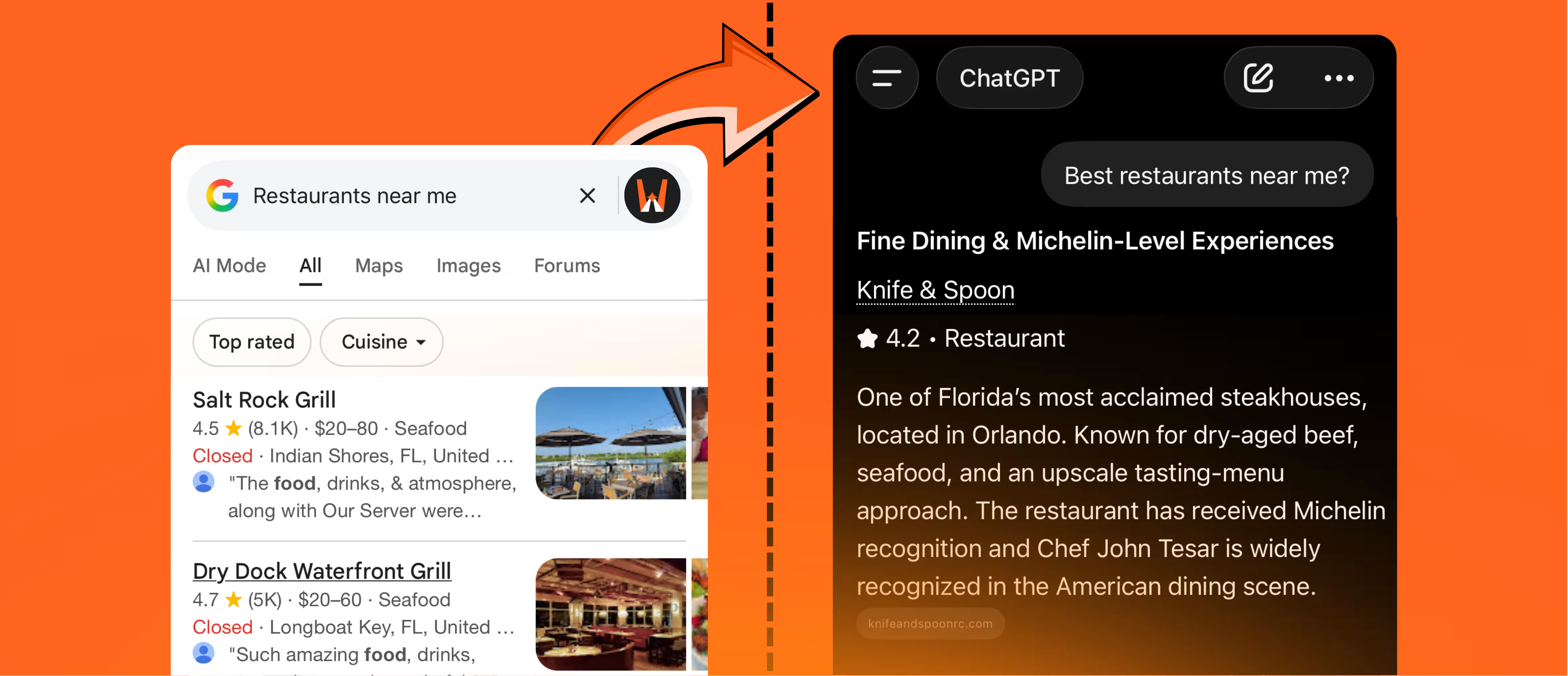
This shift may appear subtle.
But it changes how businesses compete for attention.
In traditional search, success often meant being discoverable.
In AI search, success increasingly means being recommendable.
Why Rankings Alone Are No Longer Enough
Many businesses assume that ranking highly in Google automatically guarantees visibility in AI-generated answers.
Sometimes that's true. Often it's not.
Imagine two companies.
The first ranks #2 for an important keyword. The second ranks #8.
Traditionally, the higher-ranked company would almost always receive more visibility.
But AI systems don't simply copy search rankings. They evaluate a much broader set of signals.
For example, they may consider:
- Is the brand consistently mentioned?
- Is it discussed by experts?
- Do customers trust it?
- Is there evidence supporting its expertise?
- Is information about the company consistent across the web?
A company with stronger evidence can sometimes appear more prominently in AI-generated answers than a company with stronger rankings.
This is why many organizations are beginning to treat AI Visibility as a separate discipline rather than simply an extension of SEO.
SEO Still Matters More Than Most People Think
Whenever a new technology appears, people rush to declare the old one dead.
That usually turns out to be wrong.
AI Visibility is not replacing SEO. It's building on top of SEO.
Think about SEO as the foundation. Without discoverable content, authoritative pages, and trusted information, AI systems have less evidence to work with.
Many of the signals that help businesses rank also help businesses get recommended. The difference is that AI systems evaluate those signals differently.
Traditional SEO asks:
"Can users find this content?"
AI Visibility asks:
"Can AI confidently recommend this brand?"
The two disciplines overlap, but they are not identical.
The businesses that perform best are increasingly learning how to do both.
The New Visibility Equation
Historically, visibility was largely determined by rankings.
Today, visibility is increasingly determined by confidence.
A useful way to think about it is:
Visibility = Discoverability + Credibility
Search engines reward discoverability.
AI systems reward discoverability and credibility together.
That's why some brands consistently appear in AI-generated answers while others struggle to gain visibility.
How do AI systems actually decide which brands deserve to be mentioned in the first place?
How AI Chooses Which Brands to Mention
If AI search is built around confidence, then the next logical question is:
“How does AI decide which brands deserve that confidence?”
Why does ChatGPT recommend one CRM platform instead of another?
Why does Gemini mention certain software companies repeatedly?
Why does Perplexity cite some sources while ignoring others?
Many people assume AI recommendations are random.
They aren't.
AI systems don't pull brand names out of thin air. Before recommending a company, product, or service, they look for evidence.
The stronger the evidence, the easier it becomes for AI to include a brand in its answer. The weaker the evidence, the more likely the brand is to be overlooked.
Think of it this way.
Imagine you're hiring someone for an important role. You wouldn't make a decision based on a single piece of information. Instead, you'd look at factors such as:
- Experience
- References
- Reputation
- Reviews
- Expertise
- Consistency
AI systems evaluate brands in a surprisingly similar way.
- Studies consistently show that AI systems favor:
- Relevant expertise
- Strong authority signals
- Trusted mentions
- Consistent entity recognition
What it means: Being the loudest brand matters less than being the most credible brand.
It Starts With Understanding Entities
One of the most important concepts in AI Visibility is the entity.
An entity is simply something AI can clearly identify and understand.
Examples include:
- A company
- A person
- A product
- A location
- An organization
For humans, understanding entities is easy.
If someone mentions Nike, most people immediately associate it with athletic apparel.
If someone mentions Airbnb, people think about accommodations and travel.
If someone mentions HubSpot, people associate it with CRM and marketing software.
AI systems work similarly.
They build relationships between entities and topics. Over time, they learn what a brand does, what problems it solves, which industries it belongs to, who its competitors are, and which topics it is associated with.
The clearer these relationships become, the easier it is for AI to understand when a brand is relevant.
Imagine asking: "What is the best CRM for small businesses?"
If AI strongly associates HubSpot with CRM software, small businesses, and marketing automation, it becomes a natural candidate for recommendation.
A brand with weak entity recognition may never enter the conversation - not because it's a bad company, but because the AI lacks confidence in what that company represents.
Authority Signals Tell AI Who Deserves Attention
Understanding what a brand is isn't enough.
AI also needs evidence that the brand deserves attention.
This is where authority signals become important.
Authority signals are pieces of evidence that suggest expertise, credibility, or trustworthiness.
Examples include:
- Industry mentions
- Expert-written content
- Original research
- Reviews
- Case studies
- Citations from trusted sources
- Media coverage
Think about how people make recommendations.
If ten respected professionals consistently mention the same software platform, you're more likely to trust it.
AI systems often interpret these patterns in similar ways. When a brand appears repeatedly across trustworthy sources, it becomes easier to recommend.
Authority isn't created by claiming expertise. It's created when other sources validate that expertise.
This is one reason businesses publishing original research often perform well in AI-generated answers. Research creates evidence, evidence strengthens authority, and stronger authority increases the likelihood of being recommended.
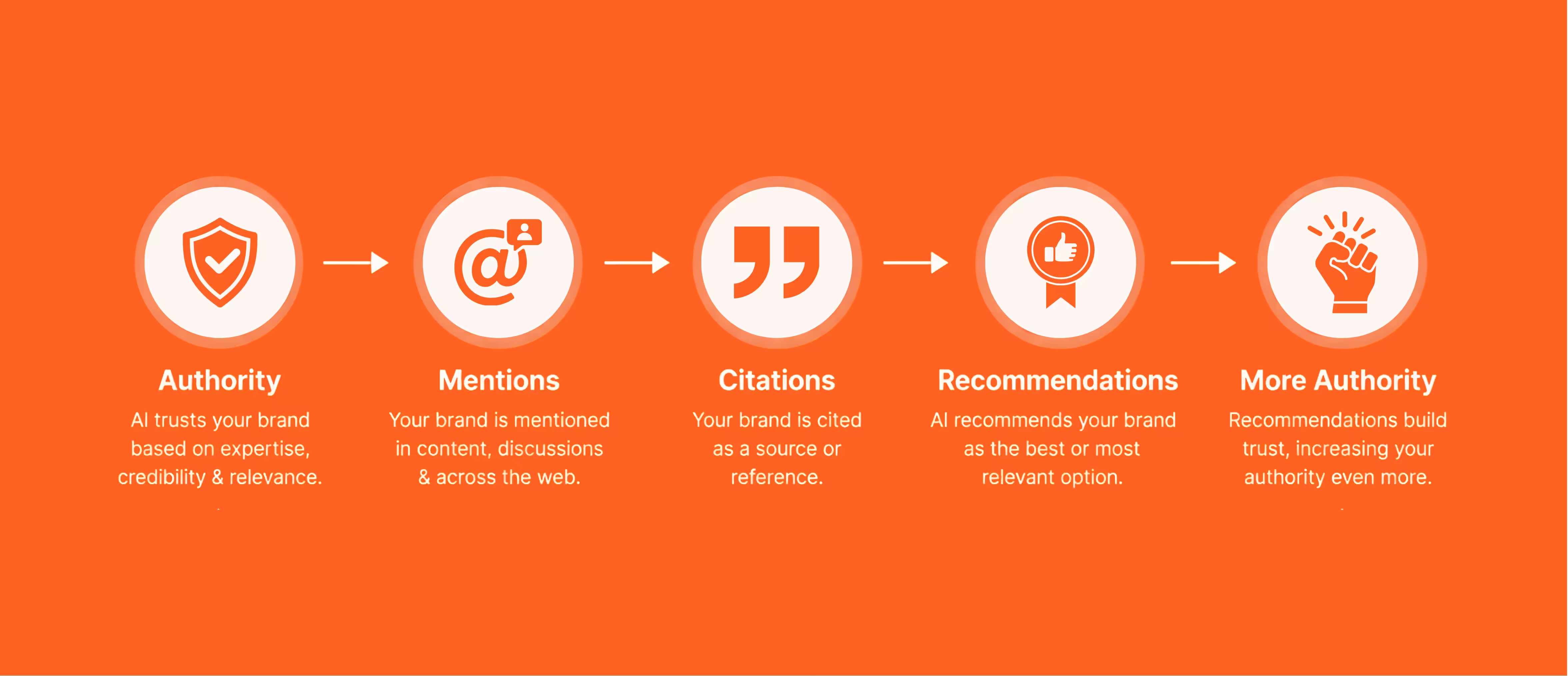
Trust Signals Help AI Reduce Risk
Recommendations carry risk.
Whenever an AI suggests a company, product, or service, it is effectively saying: "I believe this option deserves consideration."
To make that recommendation, AI systems look for trust signals.
Trust signals can include:
- Positive reviews
- Consistent brand information
- Third-party validation
- Expert endorsements
- Strong reputation
- Reliable content
Imagine searching for a hotel.
One hotel has:
- Thousands of reviews
- Consistent ratings
- Mentions across travel publications
Another has:
- Almost no reviews
- Little information available
- Few external references
Which option feels safer?
Most people would choose the first.
AI systems often reach similar conclusions. The more evidence supporting a brand's credibility, the easier it becomes to recommend.
Why Brand Mentions Matter More Than Most Businesses Realize
Many marketers focus exclusively on their own website.
AI systems often look far beyond it.
A brand's digital footprint extends across:
- News articles
- Industry publications
- Podcasts
- Forums
- Reviews
- Directories
- Social platforms
- Research reports
Every mention contributes additional context.
Think of brand mentions as votes of recognition.
A single mention rarely changes anything. Hundreds of relevant mentions across trusted sources create a much clearer picture.
This helps explain why some smaller specialist brands outperform larger competitors in AI-generated answers. They may have fewer resources, but they often have stronger topical authority within a specific niche.
AI tends to reward expertise more than size.
AI Doesn't Look For The Most Popular Answer - It Looks For The Most Defensible Answer
This is where many businesses misunderstand AI recommendations.
The goal isn't always popularity. The goal is confidence.
Imagine someone asks:
"What is the best project management software for a remote agency?"
There may not be one universally correct answer.
The AI evaluates the available evidence and selects options it can justify. In other words, the recommendation becomes less about popularity and more about defensibility.
Can the recommendation be supported? Can it be explained? Can it be backed by evidence?
The stronger the evidence, the easier the recommendation becomes.
This is why AI Visibility is ultimately an evidence game.
Brands that provide clear evidence are easier to recommend, while brands that provide weak evidence are harder to recommend.
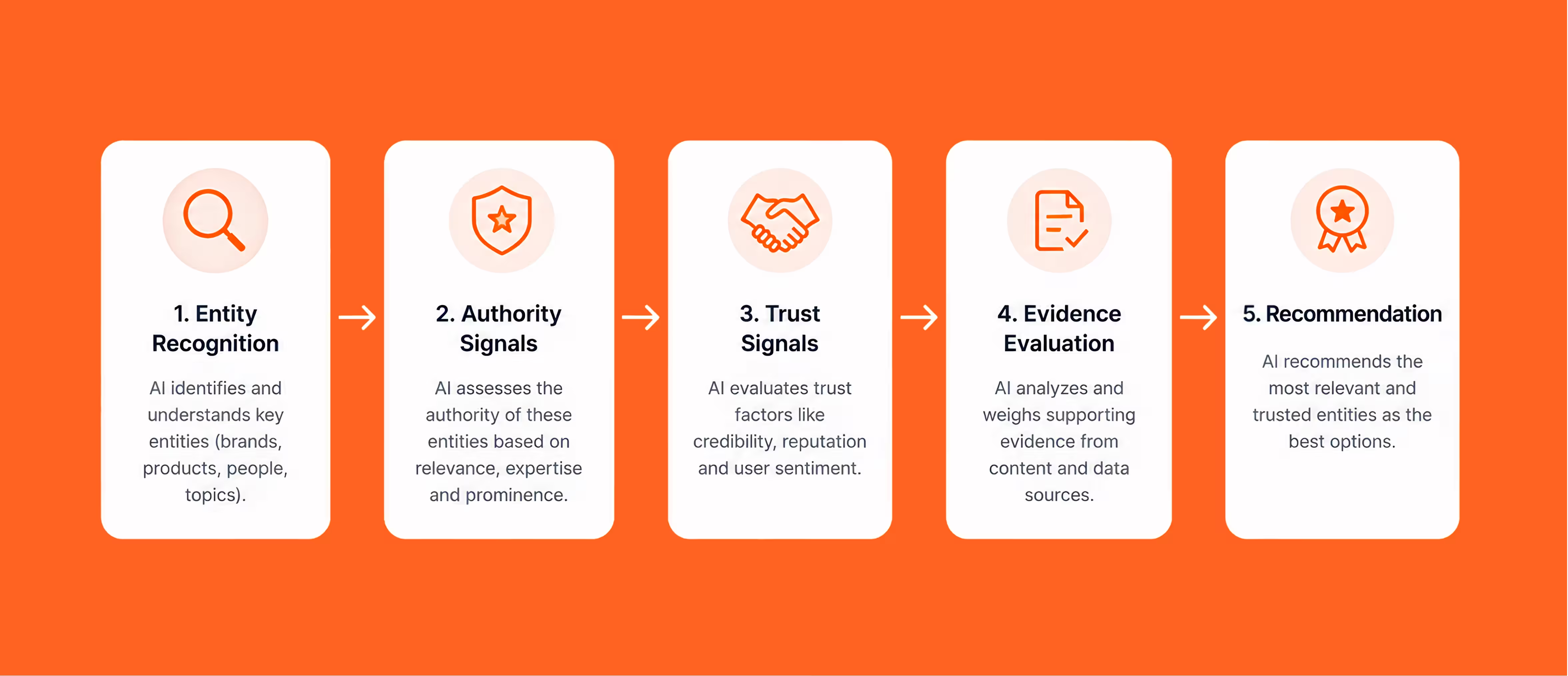
The AI Recommendation Framework
A useful way to visualize the process is:
Before a brand appears in an answer, it usually passes through some version of this process.
Not literally, and not identically across every platform.
But conceptually, this is how recommendation confidence is built.
The recommendation is the output.
Evidence is the input.
Why Some Brands Appear Everywhere
Once a brand establishes strong entity recognition, authority, and trust, something interesting happens.
Recommendations begin to compound.
The brand appears more often, more people discuss it, more sources mention it, and more evidence accumulates. As a result, future recommendations become easier.
This helps explain why certain brands seem to appear repeatedly across AI-generated answers.
That visibility wasn't created by a single piece of content. It was created by an ecosystem of evidence.
Understanding that ecosystem also explains why many businesses struggle to appear in AI answers at all.
In most cases, the problem isn't that AI is ignoring them. The problem is that AI doesn't have enough evidence to confidently recommend them.
Let's look at why that happens.
Why Your Brand Isn't Showing in AI Answers
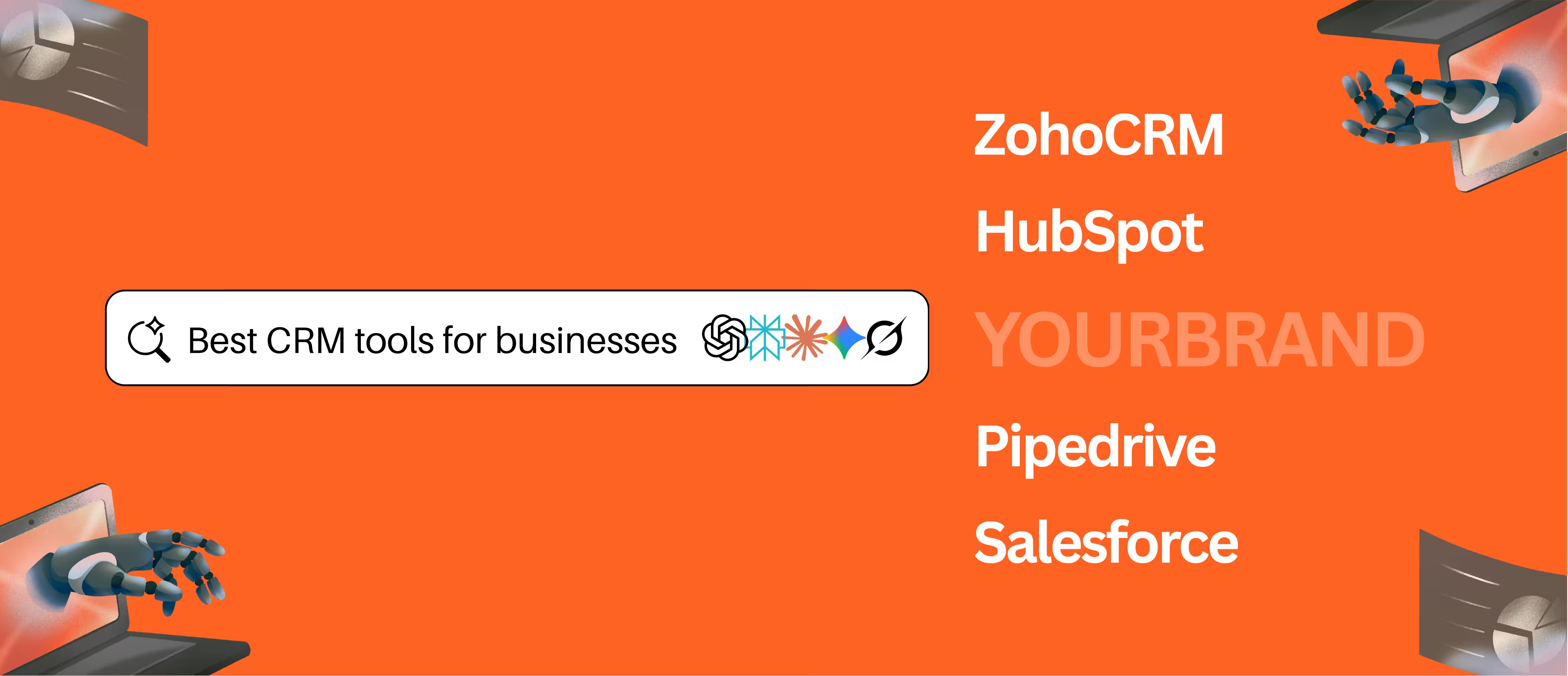
By this point, many business owners start asking the same question:
"If AI is constantly looking for evidence, why isn't my brand appearing?"
It's a fair question.
After all, many businesses have websites. They publish content, invest in SEO, and some even rank well in Google.
Yet when they ask ChatGPT, Perplexity, Gemini, or Claude AI about their industry, competitors appear while they remain invisible.
The frustrating part is that AI rarely explains why.
It simply generates an answer.
To understand what's happening, you need to think differently about visibility.
Most businesses assume they have a visibility problem.
In reality, they usually have an evidence problem.
AI systems don't intentionally ignore brands. They recommend the brands they understand best and trust most.
When enough evidence is missing, confidence drops.
And when confidence drops, recommendations disappear.
The Visibility Gap Most Businesses Don't Realize They Have
Imagine asking an AI assistant:
"What are the best accounting platforms for freelancers?"
The AI recommends three brands.
Now imagine your company offers a genuinely great solution but doesn't appear.
The issue isn't necessarily product quality. The issue may be that the AI lacks sufficient evidence to justify including you.
Think of AI recommendations like a courtroom.
Your brand is making a claim:
"We are one of the best options."
The AI acts like a judge.
Before accepting that claim, it wants evidence. If the evidence is weak, inconsistent, or incomplete, the recommendation becomes difficult.
This difference between what a business knows about itself and what AI can verify is often called a visibility gap.
And most businesses have more visibility gaps than they realize.
Weak Entity Recognition
One of the most common reasons brands fail to appear in AI answers is weak entity recognition.
Earlier, we discussed entities as the digital identities AI uses to understand the world.
The clearer your entity is, the easier it becomes for AI to understand who you are, what you do, who you serve, and which problems you solve.
Many businesses accidentally make this difficult.
Their website describes them one way. Their LinkedIn page describes them another. Industry directories use different wording, while review platforms tell a different story.
To humans, these differences may seem minor.
To AI systems, inconsistency creates uncertainty.
Imagine meeting someone who introduces themselves differently every time you speak to them. Eventually, you'd become unsure about who they actually are.
AI experiences a similar problem.
Brands with consistent positioning are easier to understand. Brands with inconsistent positioning are harder to recommend.
Lack of Authority Signals
Another common issue is insufficient authority.
Many businesses publish content. Far fewer create evidence.
There's a difference.
A generic blog post may add information. Original research adds authority.
An opinion may attract attention. Data creates credibility.
Authority signals often include:
- Industry mentions
- Expert commentary
- Research studies
- Case studies
- Media coverage
- High-quality citations
- Independent references
When AI evaluates recommendations, these signals help answer an important question:
"Why should I trust this brand?"
If that question is difficult to answer, recommendations become less likely.
This is one reason specialist brands often outperform larger competitors. They may have fewer resources, but they frequently produce deeper expertise within a specific topic.
And expertise tends to generate authority.
Poor Content Structure
Many businesses focus heavily on what they say.
Few focus on how easily AI can understand it.
Imagine two websites.
The first contains:
- Clear headings
- Direct answers
- Structured information
- FAQ sections
- Consistent terminology
The second contains:
- Long paragraphs
- Vague messaging
- Buried information
- Inconsistent language
Which website is easier to interpret?
Humans usually prefer the first.
AI systems do too.
This doesn't mean content should be written for machines. It means important information should be easy to extract.
The easier your expertise is to understand, the easier it becomes to reuse. And the easier it becomes to reuse, the easier it becomes to recommend.
Limited Third-Party Validation
Businesses naturally talk about themselves.
AI systems care about what others say.
This is why third-party validation plays such a significant role in visibility.
Examples include:
- Reviews
- Industry publications
- News mentions
- Podcasts
- Expert recommendations
- Community discussions
- Professional directories
These external signals help AI determine whether a brand's claims are supported by independent evidence.
Think of it this way.
Anyone can claim they're the best.
It's far more convincing when other people say it.
The same principle applies to AI recommendations.
No Original Insights Worth Citing
One of the fastest ways to become visible in AI-generated answers is to create information worth citing.
Unfortunately, most businesses publish the same content as everyone else.
Search almost any marketing topic and you'll find hundreds of articles saying nearly identical things.
From an AI perspective, that creates a problem.
If every source says the same thing, which source deserves recognition?
Original insights solve this.
Examples include:
- Research reports
- Industry surveys
- Benchmark studies
- Proprietary data
- Expert analysis
- Unique frameworks
These assets give AI something valuable to reference.
And sources that provide valuable evidence often earn more citations over time.
The Difference Between Being Mentioned and Being Recommended
This is one of the most misunderstood concepts in AI Visibility.
Many businesses celebrate when AI mentions their brand.
The problem is that mentions don't always create influence.
Consider these two examples.
Mention: "Company X is a project management software platform."
The AI recognizes the company exists.
Nothing more.
Recommendation: "For remote agencies, Company X is a strong project management platform because it combines collaboration, reporting, and workflow automation."
Now the AI is actively endorsing relevance.
The difference is enormous.
One creates awareness.
The other creates consideration.
This distinction explains why some brands appear in AI-generated answers but still generate little business impact.
They are being identified, but not recommended.
The goal isn't simply to appear.
The goal is to become part of the answer.
The Warning Signs of Low AI Visibility
If you're trying to evaluate your current position, several warning signs often indicate visibility gaps:
- Competitors appear more frequently than you
- AI can describe your brand but not recommend it
- Your company is absent from comparison queries
- Industry leaders dominate recommendation prompts
- AI struggles to explain your expertise clearly
- Your brand appears inconsistently across platforms
None of these issues are permanent.
But they do indicate that AI lacks sufficient confidence.
And confidence is ultimately what drives recommendations.
Why This Is Actually Good News
At first glance, these visibility gaps may seem discouraging.
They're not.
In fact, they're opportunities.
Unlike traditional rankings, which can be heavily influenced by competition, many AI visibility problems are directly within a business's control.
Entity clarity can improve, authority can grow, reviews can accumulate, mentions can increase, research can be published and trust can be strengthened.
The brands appearing most frequently in AI-generated answers didn't get there by accident.
They built ecosystems of evidence over time.
And when businesses start closing visibility gaps, something interesting happens.
AI begins recognizing them more often. Citations increase. Recommendations become more frequent. Visibility starts compounding.
The next step is understanding what that looks like in practice.
Because the easiest way to understand AI Visibility is to see it happening in real-world examples.
What AI Visibility Looks Like in the Real World
Up to this point, we've discussed AI Visibility as a concept.
We've explored how AI search works, examined how AI systems evaluate brands, and identified the reasons many businesses fail to appear in AI-generated answers.
But theory only goes so far.
The easiest way to understand AI Visibility is to see it in action.
Because once you start looking at real AI answers, certain patterns become impossible to ignore.
Certain brands appear repeatedly.
Certain sources get cited consistently.
Certain companies dominate recommendations.
And most of the time, it isn't accidental.
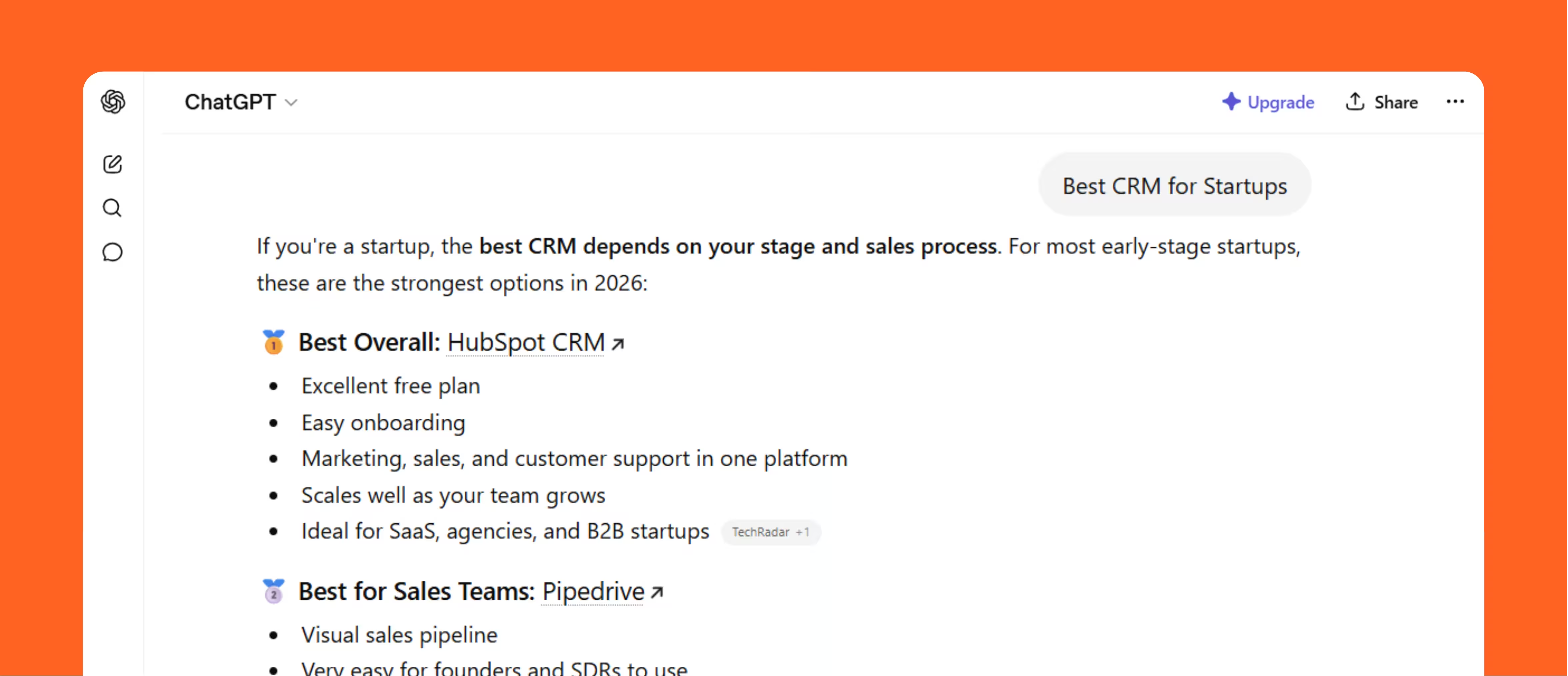
Example 1: Best CRM for Startups
Imagine a founder asks ChatGPT: "What's the best CRM for a startup with fewer than 20 employees?"
The answer may include recommendations such as:
- HubSpot
- Pipedrive
- Zoho CRM
Along with explanations about ease of use, affordability, and scalability.
Most people look at this answer and focus on the recommendations.
A more useful question is:
Why did these brands appear?
When you analyze them closely, you'll usually find common patterns:
- Strong brand recognition
- Extensive online mentions
- Large volumes of reviews
- Consistent positioning
- Industry authority
- Abundant educational content
The recommendation is simply the visible outcome.
The real story is the evidence behind it.
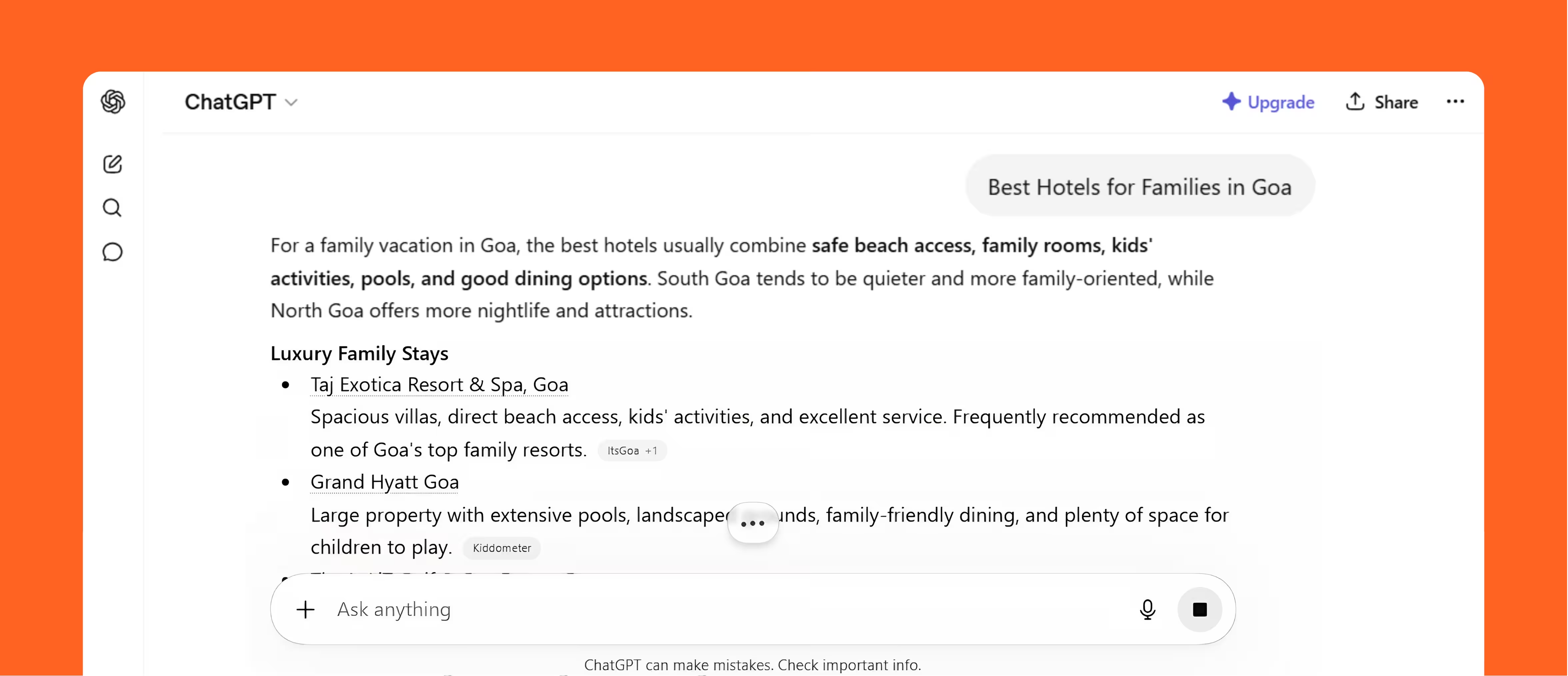
Example 2: Best Hotels for Families in Goa
Now imagine someone asks: "What are the best family-friendly hotels in Goa?"
An AI assistant might recommend several hotels while explaining:
- Family amenities
- Location advantages
- Guest reviews
- Child-friendly activities
Again, the recommendation isn't random.
AI systems typically draw confidence from:
- Travel review platforms
- Hospitality websites
- Guest ratings
- Consistent mentions across travel publications
Notice something important.
The AI isn't recommending the hotel with the best website.
It's recommending the hotel supported by the strongest collection of evidence.
That's a critical distinction.
Many businesses focus exclusively on their own website.
AI often evaluates the broader ecosystem surrounding a brand.
Why Some Brands Appear Everywhere
Once you begin testing prompts across ChatGPT, Perplexity, Gemini, Claude AI, and Google AI Overviews, you'll notice a recurring pattern.
Some brands seem to appear everywhere.
Others rarely appear at all.
This isn't because AI has favorites.
It's because AI has confidence thresholds.
Brands that consistently demonstrate expertise, authority, recognition, and trust tend to cross those thresholds more easily.
Think about Nike.
If someone asks for running shoes, AI systems already understand what Nike is, what products it offers, how consumers perceive it, and what experts say about it.
The amount of evidence available makes recommendation easier.
Smaller brands can absolutely compete.
But they must provide enough evidence to earn similar confidence.
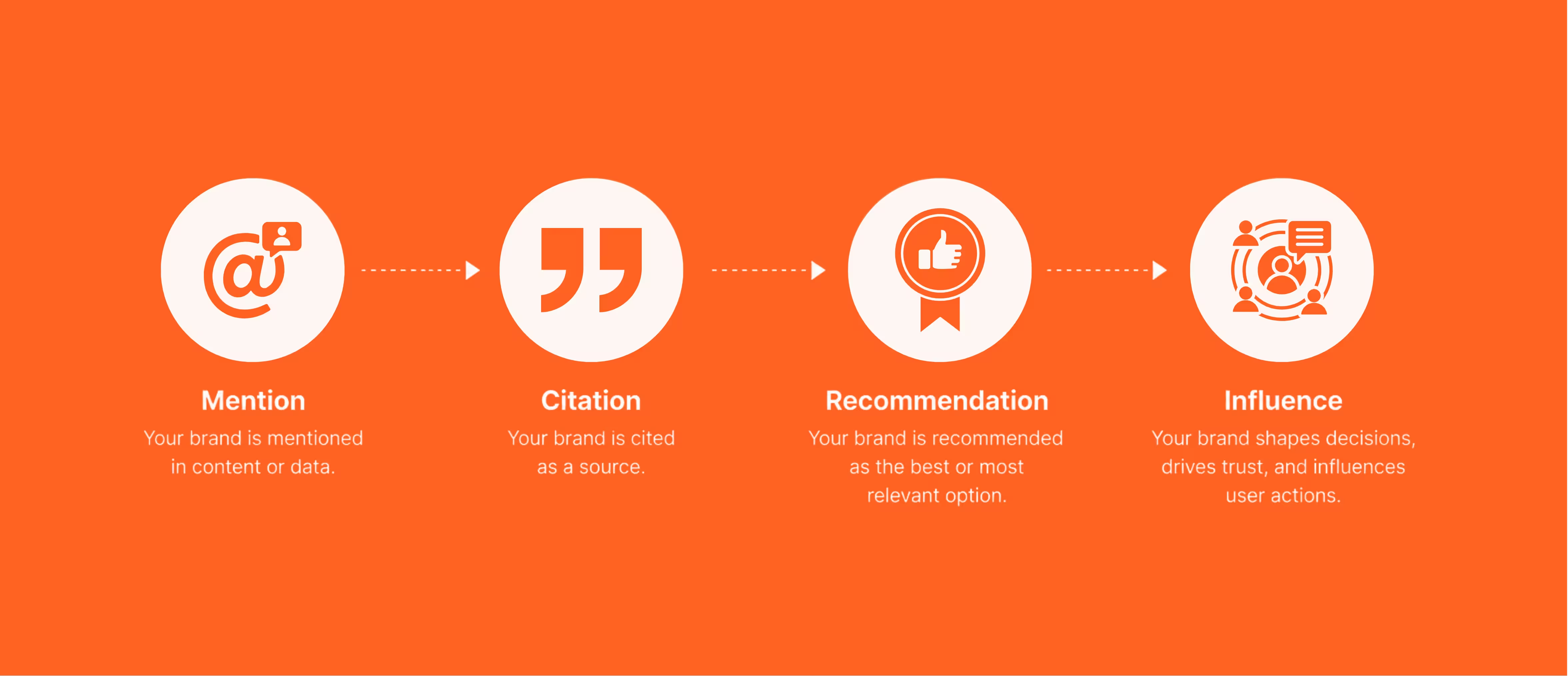
The Difference Between Mentions, Citations, and Recommendations
This is where many businesses misunderstand AI Visibility.
Not every appearance carries the same value.
There are three distinct levels of visibility.
Level 1: Mentions
A mention simply acknowledges that a brand exists.
Example: "Company X is a project management platform."
The AI recognizes the entity.
Nothing more.
Level 2: Citations
A citation uses a source as supporting evidence.
Example: "According to Company X's industry report..."
The source contributes information.
This creates trust.
But not necessarily influence.
Level 3: Recommendations
A recommendation positions a brand as a solution.
Example: "For remote marketing teams, Company X is a strong choice because..."
This is where business impact happens.
Recommendations influence decisions.
Recommendations shape consideration.
Recommendations drive demand.
A Simple Test You Can Run Today
Open ChatGPT.
Open Perplexity.
Open Gemini.
Then ask a question your ideal customer might ask.
For example:
- Best accounting software for freelancers
- Best CRM for startups
- Best digital marketing agencies for SaaS
- Best project management tools for remote teams
As you review the answers, write down:
- Which brands appear
- Which brands get cited
- Which brands get recommended
- Which brands never show up
You'll start seeing patterns immediately.
The exercise is often eye-opening.
Many businesses discover competitors they rarely think about are dominating AI-generated answers. Others realize their own brand is being mentioned but not recommended.
These insights become the starting point for improving visibility.
What These Examples Teach Us
When you examine enough AI-generated answers, a consistent pattern emerges.
AI recommendations tend to favor brands that have:
- Strong entity recognition
- Trusted authority signals
- Positive reviews
- Consistent positioning
- Third-party validation
- Clear expertise
The recommendation itself is only the final output.
Everything else happens beforehand.
Which means improving AI Visibility isn't about manipulating AI. It's about building the evidence AI uses to make decisions.
And that's where the real opportunity begins.
Because once you understand how recommendations work, the next question becomes:
What happens when your brand starts appearing consistently in AI-generated answers?
What impact does that visibility actually have on business growth?
The Business Impact of AI Visibility
At this point, you might be wondering: This is interesting, but does AI Visibility actually impact business growth?
The short answer is yes.
But not always in the way most people expect.
Many businesses approach AI Visibility as a traffic problem. They assume the goal is to generate more clicks from ChatGPT, Perplexity, Gemini, or Google AI Overviews.
Traffic certainly matters.
But focusing only on traffic misses the bigger opportunity.
The real value of AI Visibility comes from influence.
Because AI increasingly shapes decisions before users ever visit a website.
AI Is Becoming The First Touchpoint
Traditionally, customers discovered businesses through:
- Search engines
- Social media
- Advertising
- Word of mouth
Today, AI assistants are becoming an additional discovery layer.
Consider someone searching for: "What's the best CRM for a startup?"
The recommendation they receive becomes their starting point.
The AI has already narrowed the field.
The customer isn't evaluating every option anymore. They're evaluating the options the AI selected.
That distinction is important.
The brands appearing in AI answers often enter the buying journey earlier than competitors.
And entering earlier usually creates an advantage.
Visibility Influences Discovery
Discovery is where AI Visibility often creates its biggest impact.
Many consumers don't know which brands exist. They simply know they have a problem.
For example, a founder may know they need accounting software, but they don't necessarily know which platforms to consider.
An AI assistant helps bridge that gap.
The brands recommended during this stage gain exposure before competitors even enter the conversation.
This creates what marketers call consideration set advantage.
If your brand never appears, you may never be considered. If your brand consistently appears, you're automatically part of the evaluation process.
In other words, before customers choose a solution, they first choose which solutions deserve attention.
AI increasingly influences that choice.
Visibility Influences Research
The impact doesn't stop at discovery.
AI is becoming a research assistant.
Customers ask questions such as:
- Is HubSpot better than Salesforce?
- What are the disadvantages of QuickBooks?
- Which project management platform is easiest for beginners?
These aren't discovery questions.
They're evaluation questions.
The customer already has options.
Now they're seeking confidence.
Brands appearing during this stage gain something incredibly valuable, that is trust.
Not because the AI says they're perfect, but because it repeatedly includes them in relevant conversations.
Familiarity creates credibility.
And credibility influences decisions.
Visibility Influences Decisions
This is where AI Visibility becomes especially powerful.
Imagine a customer has narrowed their choices to three options.
They ask:
"Based on my budget and team size, which one should I choose?"
The AI provides a recommendation.
At that moment, the AI isn't simply providing information. It's helping shape a decision.
This is why recommendation visibility matters more than mention visibility.
Mentions create awareness.
Recommendations create preference.
And preference often leads to action.
The Compounding Effect of AI Visibility
One of the most interesting aspects of AI Visibility is that it can compound.
Think about how reputation works in the real world.
The more people trust you, the more opportunities you receive. The more opportunities you receive, the more trust you build.
The cycle reinforces itself.
AI Visibility often follows a similar pattern.
A brand receives mentions, those mentions generate awareness, awareness generates additional discussions, and those discussions create more evidence.
As more evidence accumulates, recommendation likelihood increases. More recommendations create more visibility, and the cycle continues.
The businesses dominating AI-generated answers rarely achieved visibility through a single tactic.
They accumulated evidence over time.
Why Smaller Brands Can Still Win
At this point, it may sound like only large companies can succeed.
Fortunately, that's not true.
In many industries, specialist brands outperform larger competitors in AI-generated recommendations.
Why?
Because AI often values expertise more than size.
A smaller company with deep subject knowledge, strong research, clear positioning, and trusted mentions can outperform a larger company with weaker topical authority.
Imagine two businesses.
The first is large but generic.
The second is smaller but highly specialized.
When someone asks a highly specific question, AI frequently prefers the specialist.
This creates opportunities for challenger brands.
Businesses no longer need the biggest budget.
They need the strongest evidence.
AI Visibility Is Not Just a Marketing Metric
Many organizations initially treat AI Visibility as a marketing KPI.
In reality, it affects much more.
AI Visibility influences:
- Brand awareness
- Market perception
- Lead generation
- Customer acquisition
- Competitive positioning
As AI becomes more integrated into discovery and decision-making, recommendation visibility becomes a business asset.
The brands consistently appearing in AI-generated answers are increasingly shaping market conversations.
They're influencing who gets considered, who gets researched, and ultimately, who gets chosen.
The New Visibility Equation
Historically, digital visibility was measured by:
Rankings → Traffic → Conversions
Today, another layer exists:
Recommendations → Consideration → Conversions
Traffic still matters.
SEO still matters.
But recommendations are becoming part of the buying journey.
The brands that understand this shift early have an opportunity to build advantages before AI-driven discovery becomes even more competitive.
And that's where the conversation naturally shifts from opportunity to execution.
Because once you understand why AI Visibility matters, the next question becomes:
How do you actually improve it?
What can businesses do to increase the likelihood of being cited, mentioned, and recommended by AI systems?
How to Improve AI Visibility
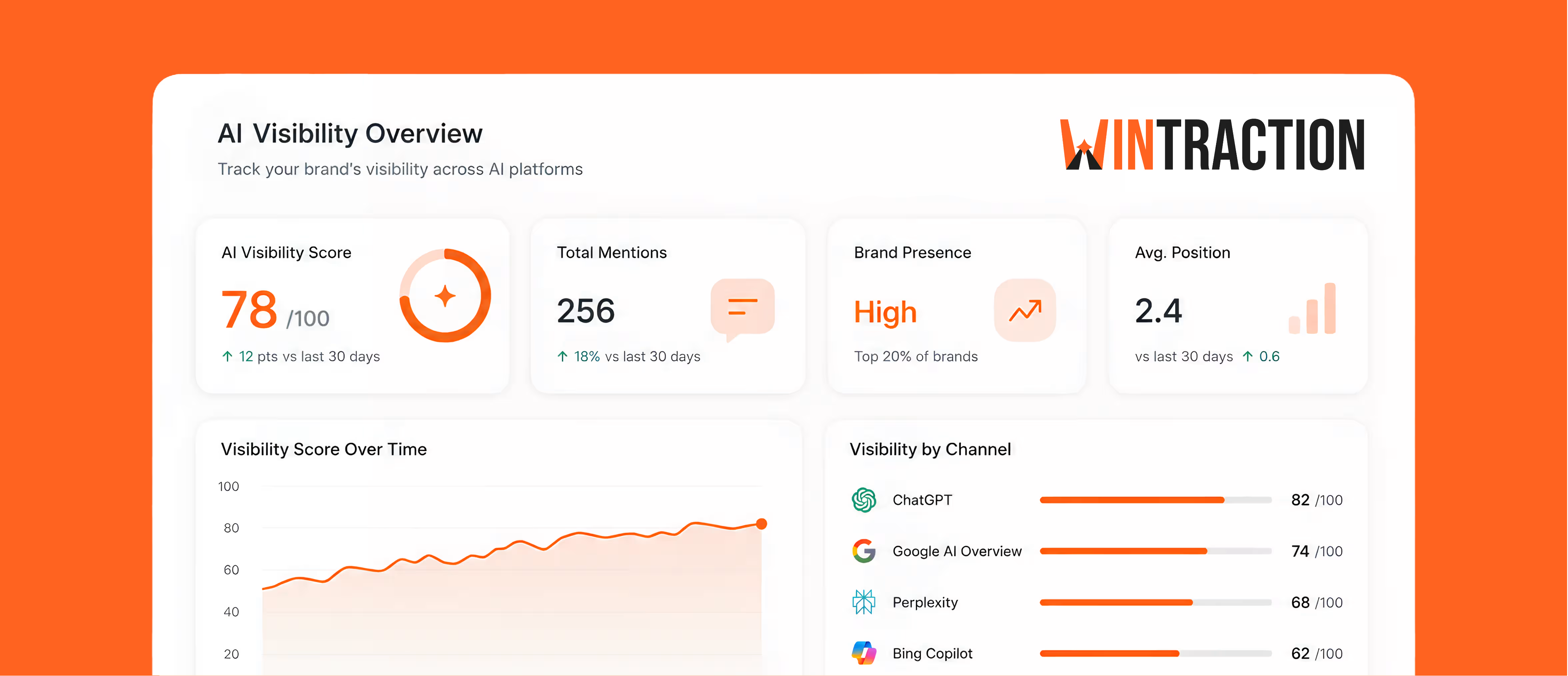
By now, one thing should be clear:
AI Visibility isn't something you buy.
It isn't something you unlock with a plugin.
And it isn't something you achieve by stuffing your content with AI-related keywords.
AI Visibility is the outcome of becoming easier for AI systems to understand, trust, and recommend.
The good news is, most of the factors influencing AI Visibility are within your control.
The challenge is knowing where to focus.
Many businesses approach AI optimization the wrong way. They look for shortcuts.
AI systems, however, are increasingly rewarding the same qualities that have always built trust:
- Expertise
- Authority
- Credibility
- Consistency
- Evidence
The difference is that AI systems evaluate those qualities differently than traditional search engines.
Let's look at the signals that matter most.
Build Stronger Entities
Earlier, we discussed entities as the way AI understands brands, people, products, and organizations.
The stronger your entity, the easier it becomes for AI to understand:
- Who you are
- What you do
- Who you serve
- What topics you're associated with
Many businesses accidentally weaken their entity by describing themselves differently across platforms.
For example:
- Your website says: "AI Visibility platform for restaurants."
- Your LinkedIn profile says: "Marketing consultancy."
- A directory listing says: "SEO agency."
- A review platform says: "Digital marketing company."
Individually, these differences seem harmless.
Collectively, they create confusion.
The strongest entities are remarkably consistent.
When AI encounters the same positioning repeatedly, confidence increases.
Action Steps you should take:
- Use consistent brand descriptions across platforms
- Clarify your primary expertise
- Maintain accurate business information
- Strengthen author profiles
- Create clear service and product pages
The easier it is for AI to understand your identity, the easier it becomes to recommend you.
Publish Original Research and Insights
One of the fastest ways to improve AI Visibility is to become a source rather than a commentator.
Most content online summarizes existing information.
Very little content creates new information.
AI systems constantly need evidence.
Original research provides that evidence.
Examples include:
- Industry studies
- Benchmark reports
- Surveys
- Proprietary data
- Trend analysis
- Experiments
- Case studies
Imagine two marketing agencies.
Agency A publishes: "10 SEO Tips for Beginners."
Agency B publishes: "Analysis of 10,000 AI Citations Across ChatGPT, Gemini, and Perplexity."
Which one provides stronger evidence?
Which one is more likely to be cited?
The answer is obvious.
Original insights create authority.
Authority creates citations.
Citations increase visibility.
Why Research Matters
When AI systems need evidence, they often prefer sources that contribute something unique.
This is why companies like HubSpot, Ahrefs, Similarweb, Gartner, and Salesforce frequently appear in industry discussions.
They don't just discuss topics.
They create data.
Earn High-Authority Mentions
AI doesn't only evaluate your website.
It evaluates the broader web.
This means external mentions matter.
A lot.
When trusted websites discuss your brand, they create additional evidence.
Examples include:
- Industry publications
- News sites
- Podcasts
- Interviews
- Guest contributions
- Community discussions
- Research citations
Think of mentions as references on a resume.
One reference helps.
Dozens of credible references create confidence.
Practical Examples:
- A cybersecurity company mentioned by leading technology publications gains stronger authority signals.
- A restaurant featured in respected travel publications gains stronger authority signals.
- A SaaS company discussed by industry experts gains stronger authority signals.
The source matters.
The context matters.
And consistency matters.
Improve Content Extractability
AI systems don't consume content the same way humans do.
Humans can interpret ambiguity.
AI systems prefer clarity.
The easier your content is to extract and understand, the more likely it is to be reused.
This doesn't mean writing for machines.
It means organizing information effectively.
Characteristics of AI-Friendly Content:
- Clear headings
- Direct answers
- Logical structure
- Defined terminology
- FAQ sections
- Comparison tables
- Statistics
- Supporting evidence
For example, compare these two approaches.
Weak: "Many businesses may experience challenges with visibility in modern digital ecosystems."
Strong: "AI Visibility is a brand's ability to appear and get recommended in AI-generated answers."
The second version is easier for humans.
It's also easier for AI.
Clarity improves extractability.
Extractability improves visibility.
Strengthen Reviews and Reputation
Reviews have always influenced purchasing decisions.
They also influence AI confidence.
Imagine asking: "What is the best accounting software for freelancers?"
AI systems often evaluate:
- Review volume
- Review quality
- User sentiment
- Third-party validation
Brands with stronger reputation signals generally have stronger recommendation potential.
This is particularly important for:
- SaaS companies
- Hotels
- Healthcare providers
- Agencies
- Local businesses
Reviews act as external proof.
And external proof creates trust.
Action Steps you should take:
- Encourage authentic customer reviews
- Respond to feedback
- Maintain active profiles on trusted platforms
- Improve customer experience
The goal isn't collecting reviews.
The goal is creating evidence of trust.
Expand Beyond Your Website
Many businesses still think content marketing ends when an article is published.
In reality, distribution is becoming increasingly important.
AI systems discover information across:
- Websites
- Social platforms
- Communities
- Industry forums
- Podcasts
- Video platforms
- News publications
The more places your expertise appears, the more opportunities AI has to understand and validate your brand.
This doesn't mean publishing everywhere.
It means being present where your industry conversations happen.
For example:
A B2B software company might focus on:
- Industry publications
- Podcasts
- Research reports
A local hospitality brand might focus on:
- Reviews
- Travel publications
- Local directories
- Tourism websites
Visibility grows when expertise becomes discoverable across multiple channels.
Focus on Becoming the Best Answer
This is perhaps the most important principle in AI Visibility.
Many businesses ask "How do I optimize for AI?"
A better question is "How do I become the most defensible answer?"
Because that is ultimately what AI systems seek.
Not the loudest answer, not the most promotional answer.
The most defensible answer.
The answer supported by:
- Expertise
- Authority
- Reviews
- Research
- Mentions
- Consistency
The stronger the evidence, the easier the recommendation.
The easier the recommendation, the greater the visibility.
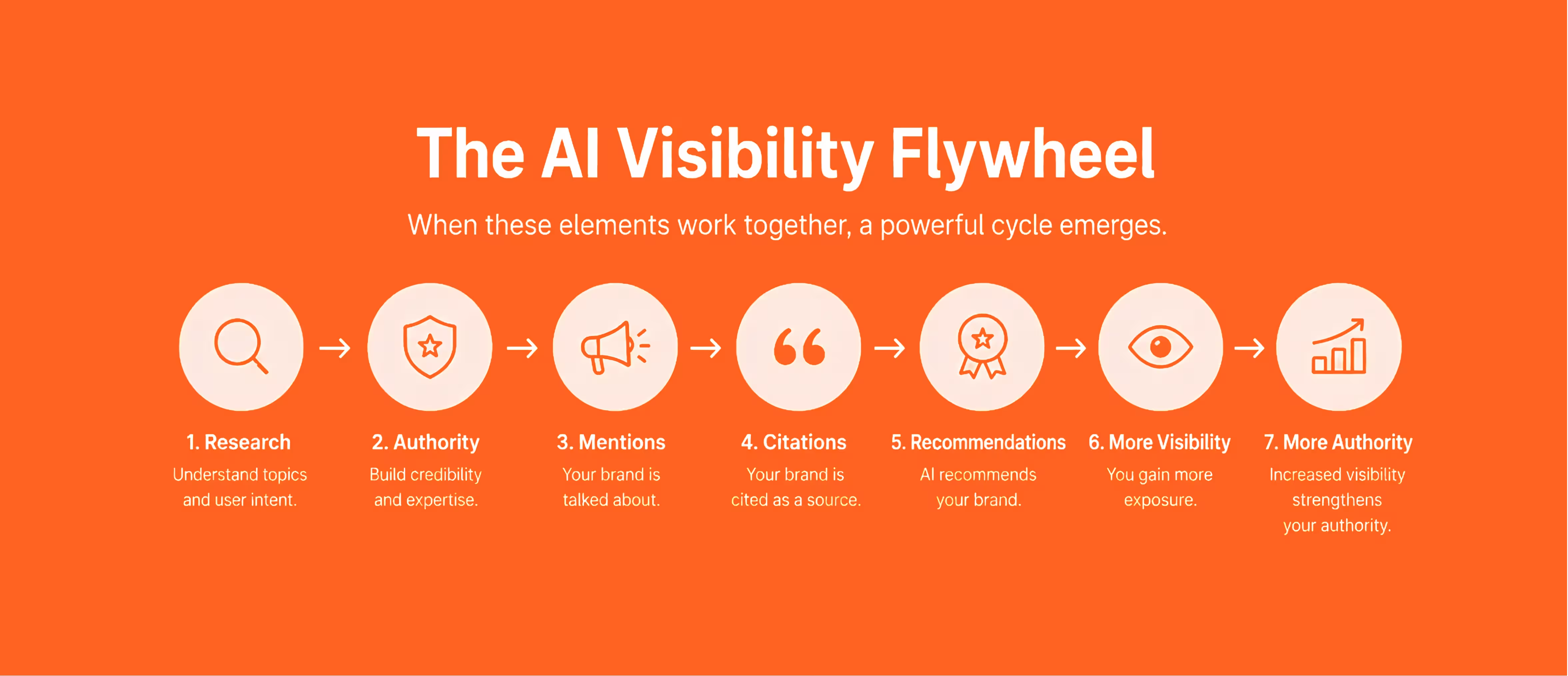
The AI Visibility Flywheel
When these elements work together, a powerful cycle emerges.
This is why AI Visibility often compounds over time.
The strongest brands aren't winning because of a single tactic. They're winning because they've built an ecosystem of trust.
And once that ecosystem exists, recommendations become easier to earn.
The next challenge is understanding whether your efforts are actually working.
Because if visibility is becoming a new competitive advantage, businesses need a way to measure it.
So how do you know whether your AI Visibility is improving?
How to Measure AI Visibility
One of the biggest challenges with AI Visibility is that it's easy to misunderstand.
A business asks ChatGPT about its industry. The brand appears, and everyone celebrates.
But here's the problem.
Being visible isn't the same as being influential.
A brand can appear in AI-generated answers and still generate very little business impact. Another brand can appear less frequently but receive stronger recommendations and generate significantly more demand.
This is why measurement matters.
If AI Visibility is becoming part of modern discovery, businesses need a way to understand whether they're actually making progress.
The challenge is that traditional SEO metrics don't tell the full story.
Rankings, impressions, and traffic remain important.
But AI Visibility introduces a new layer of measurement - one focused on recommendations rather than clicks.
Why Traditional Metrics Are No Longer Enough
Historically, digital visibility was measured through:
- Rankings
- Organic traffic
- Click-through rates
- Conversions
These metrics still matter.
But they don't answer important questions such as:
- How often does AI mention my brand?
- How often does AI cite my content?
- How often does AI recommend my company?
- How visible am I compared to competitors?
A business might be losing organic traffic while simultaneously becoming more visible in AI-generated answers.
Another business might receive mentions but never recommendations.
Without measuring the right signals, it's difficult to know what's actually happening.
This is why new AI Visibility metrics are emerging.
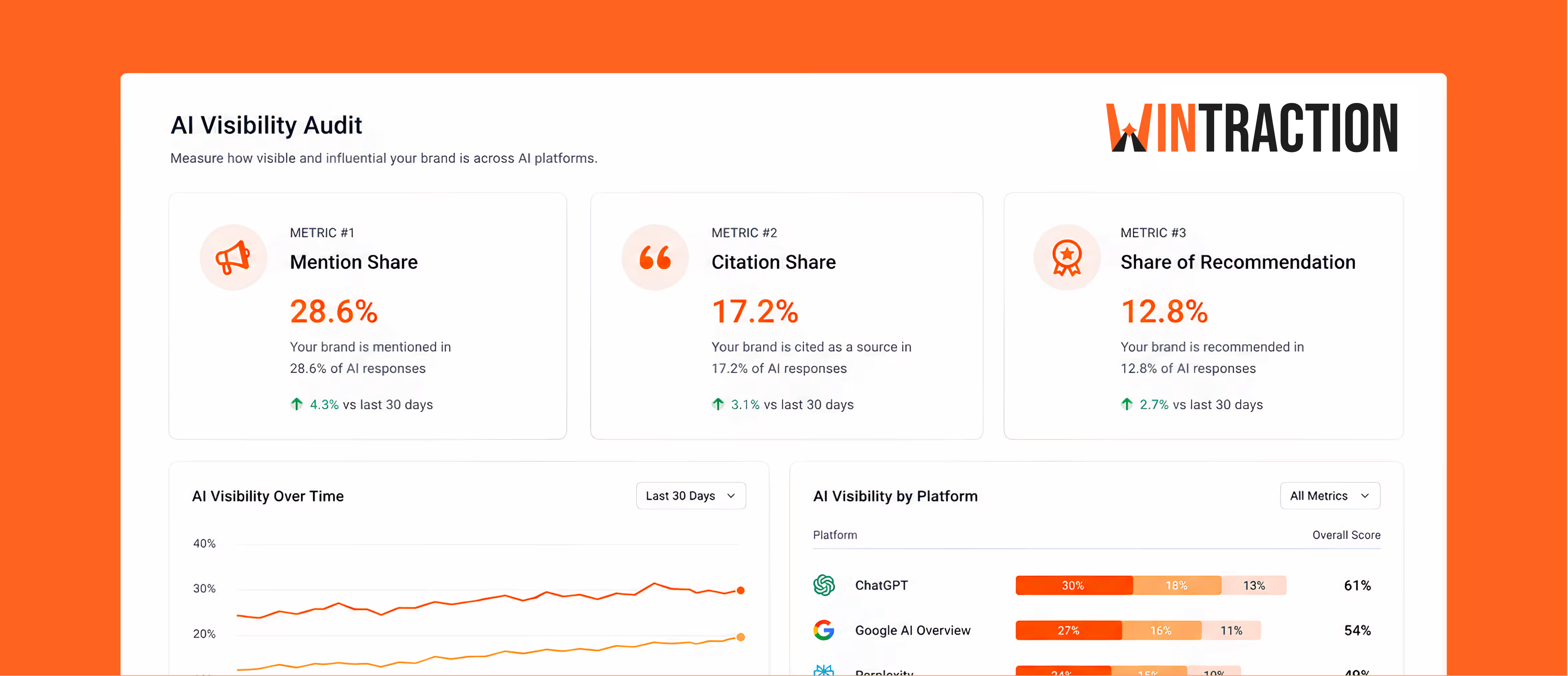
Metric #1: Mention Share
Mention Share measures how often your brand appears across AI-generated answers.
Think of it as awareness.
If someone asks: "What are the best CRM platforms for startups?" and your company appears in the response, that counts as a mention.
If your competitor appears more often across hundreds of prompts, their Mention Share is higher.
Mention Share helps answer a simple question: "How visible is my brand?"
It's useful, but it's not enough.
Because visibility alone doesn't guarantee influence.
Imagine testing 100 relevant prompts.
Your brand appears 40 times.
Competitor A appears 65 times. Competitor B appears 20 times.
At first glance, the picture seems clear.
From a visibility perspective, Competitor A is winning.
But visibility is only the first layer.
Metric #2: Citation Share
Citation Share measures how often your brand or content is used as supporting evidence.
Think of it as trust.
A mention says: "This brand exists."
A citation says: "This brand helped support the answer."
For example: "According to research published by Company X..."
This creates a stronger signal than a simple mention because it indicates the AI views the source as useful and credible.
Citations often reveal something important: whether your brand is contributing evidence.
Businesses that publish research, data studies, benchmarks, and expert analysis often generate more citations.
And citations frequently become the foundation for future recommendations.
Metric #3: Share of Recommendation
This is where things become truly interesting.
Share of Recommendation measures how often AI actively recommends your brand as a viable solution.
Not just mentions it, not just cites it.
Recommends it.
This is arguably the most important metric in AI Visibility.
Because recommendations influence decisions.
Consider these two examples.
Mention is like: "Company X is a project management software platform."
The AI recognizes the brand. Nothing more.
Recommendation is like: "For remote agencies, Company X is a strong project management solution because it combines reporting, collaboration, and automation."
Now the AI is positioning the brand as an answer.
The business impact is dramatically different.
This is why many AI Visibility professionals increasingly view Share of Recommendation as the "money metric."
Mentions indicate awareness.
Recommendations indicate influence.
Imagine testing 100 prompts.
Your brand appears 50 times, gets cited 25 times, and gets recommended 12 times.
Most businesses focus on the 50 mentions.
The smarter businesses focus on the 12 recommendations.
Because recommendations are what move customers toward action.
Understanding AI Visibility Indexes
As AI Visibility becomes more important, several companies have begun developing visibility scoring systems.
These scores attempt to measure overall AI presence.
Often combining factors such as:
- Mentions
- Citations
- Recommendations
- Positioning
- Sentiment
- Competitive visibility
The exact methodology varies by platform, but the goal remains the same: to provide a snapshot of how visible a brand is across AI-generated experiences.
Think of these indexes as the equivalent of domain authority for the AI era.
They're directional rather than definitive. They won't tell you everything about your visibility, but they can help identify trends, benchmark competitors, and reveal whether your presence is improving over time.
For many businesses, these measurements become the first indication that visibility gaps exist. A brand may appear far less often than expected, receive fewer citations than competitors, or struggle to earn recommendations despite strong search performance.
That's why regularly auditing AI Visibility can be valuable. Before you can improve visibility, you need to understand how AI systems currently perceive your brand.
A Simple AI Visibility Audit You Can Run Today
Open:
- ChatGPT
- Gemini
- Perplexity
Then create a list of questions your customers might ask.
Examples:
- Best CRM for startups
- Best accounting software for freelancers
- Best marketing agency for SaaS companies
- Best project management platform for remote teams
Record:
- Which brands appear
- Which brands get cited
- Which brands get recommended
- Which competitors dominate
Patterns emerge quickly.
You'll often discover:
- Competitors appearing more frequently than expected
- Brands getting cited but not recommended
- Visibility differences across platforms
- Gaps in your own presence
This simple exercise often provides more insight than months of assumptions.
What Success Actually Looks Like
Many businesses enter AI Visibility with the wrong goal.
They want mentions.
The stronger goal is recommendations.
Success isn't simply that an AI knows your brand exists. Success is when the AI believes your brand deserves consideration. Those are very different outcomes.
The first creates awareness. The second creates demand.
As AI becomes more integrated into discovery, research, and decision-making, the businesses that consistently earn recommendations will gain an increasingly powerful advantage. Recommendation visibility doesn't just increase exposure. It influences which brands enter the buying journey, which brands get evaluated, and ultimately which brands get chosen.
That's why AI Visibility is ultimately not about algorithms.
It's about trust.
The brands that build the strongest evidence, authority, and credibility become easier for AI systems to understand, cite, and recommend. Over time, those recommendations create more visibility, more recognition, and more opportunities to build additional evidence.
And that's what makes AI Visibility so powerful.
The brands that become easiest to recommend often become easiest to discover. The brands that become easiest to discover gain more opportunities to be researched, considered, and chosen.
In the end, AI Visibility is not a competition for mentions. It's a competition for trust. The businesses that consistently earn trust become the businesses AI can recommend with confidence. And in an increasingly AI-driven world, those recommendations are becoming one of the most valuable forms of visibility a brand can achieve.
Conclusion - The Future of Visibility
For decades, digital visibility was measured by rankings.
Today, visibility is increasingly influenced by recommendations.
Search engines helped people find answers. AI systems increasingly help people evaluate options and choose answers.
That shift changes how businesses earn attention online.
The companies that thrive won't necessarily be the ones producing the most content. They'll be the ones creating the strongest evidence, building the strongest authority, and demonstrating the clearest expertise.