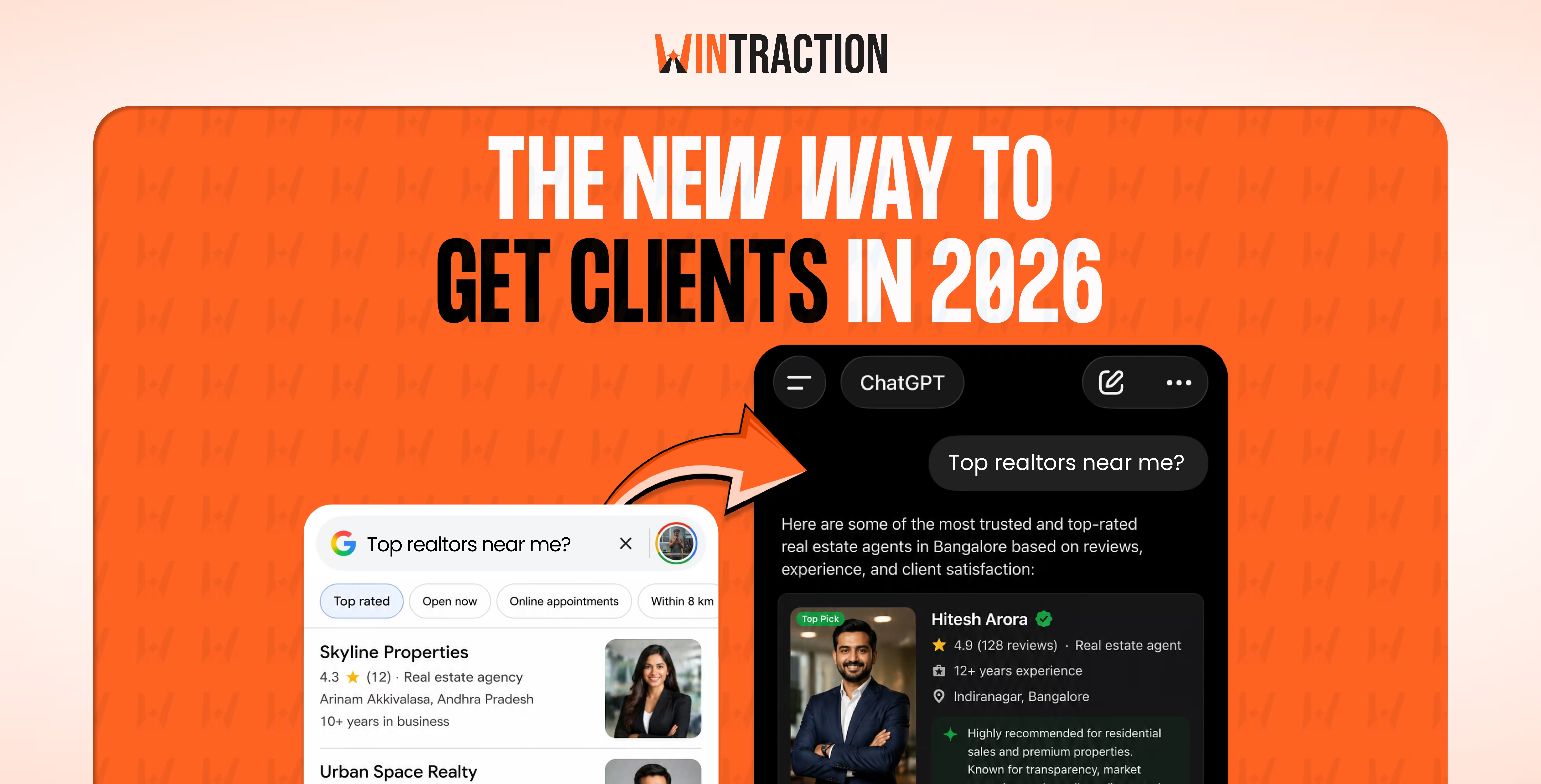
If you are still thinking in terms of ranking on Google instead of being recommended by AI assistants, you are already behind. In 2026, the fastest-growing agents are the ones who treat AI visibility for real estate agents as a core channel: they design their online presence so tools like ChatGPT, Perplexity, Gemini, and AI Overviews can easily find, understand, and recommend them to buyers and sellers.
In this guide, you'll learn exactly what AI visibility is, how AI search optimization in real estate works, and how to build a 90-day plan to become the default local agent AI tools mention when people ask for help.
Executive Summary
How AI Visibility Gets You Clients
In 2026, AI visibility means becoming the agent AI tools trust enough to recommend when someone asks "Who's the best realtor near me?" It's the sum of all the signals about you: website, listings, reviews, profiles, local content, and schema that AI systems can read, verify, and rank.
When you get AI visibility right:
- You show up inside AI answers, not just on traditional search result pages.
- Your profiles and listings become machine-readable proof of your local expertise.
- More of the people who find you through AI assistants are serious, ready-to-act buyers and sellers.
What AI Visibility Actually Means for Real Estate Agents
AI visibility is not just doing SEO with AI tools. It is the ability of AI systems to discover you, understand you, and confidently recommend you as the right agent for a specific user and location.
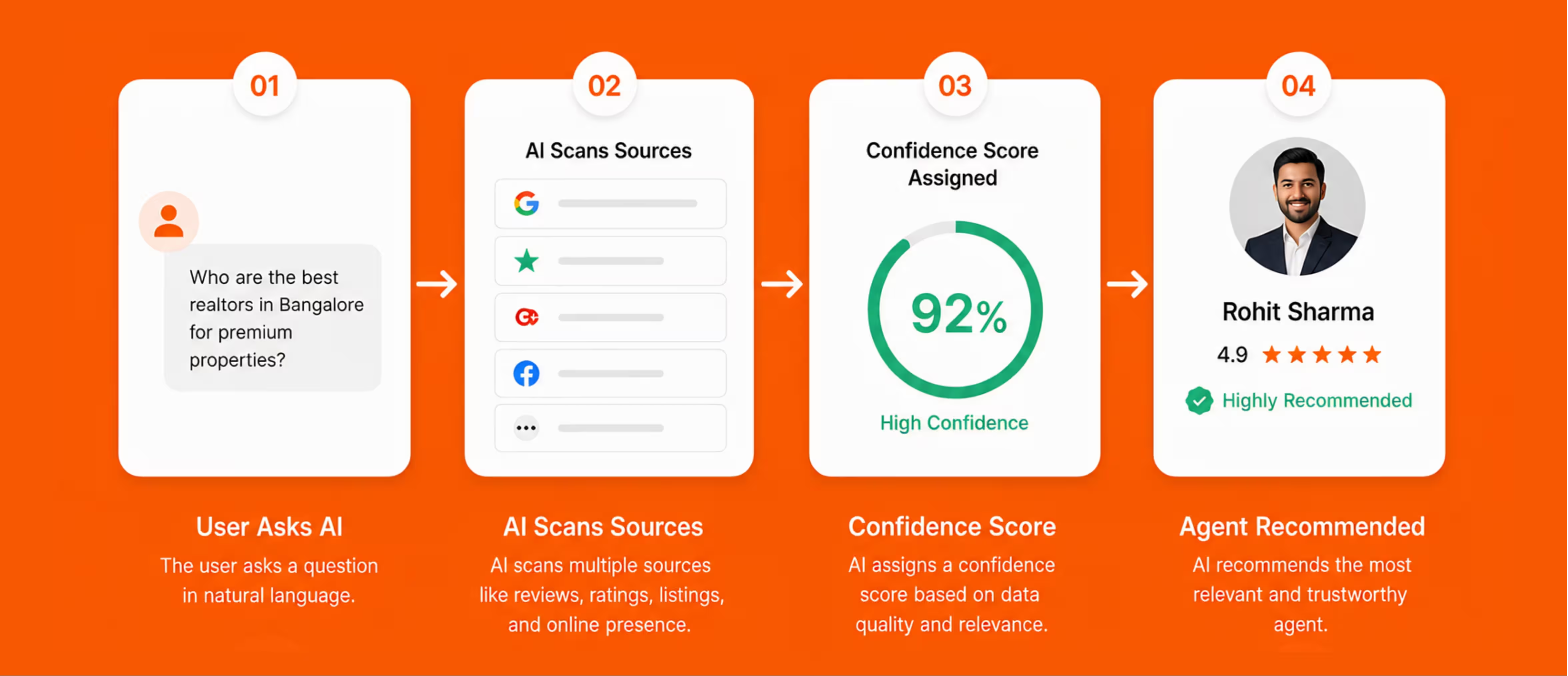
When a buyer types or speaks "Who is the best real estate agent to buy a condo in [your city]?" into an AI assistant, that assistant pulls from multiple sources: your website, Google Business Profile, big portals, social proof, and any authoritative articles where you are mentioned.
From rankings to recommendations
Traditional SEO was about ranking pages on the first page of Google for a single keyword. AI-driven discovery is different: the assistant synthesizes information from many sources and rarely shows a full list of ten links.
Instead, it tries to give one or a few high-confidence answers, which means:
- Being in the top handful of trustworthy entities for your local niche matters more than ranking for hundreds of random keywords.
- Structured data, consistent profiles, and clear expertise signals matter more than clever headline copy alone.
How AI assistants decide which agents to trust
AI models look for patterns and cross-checks: are you consistently described the same way across trusted platforms, do your reviews and transaction history match your claimed expertise, and does your content clearly show deep knowledge of a specific area or property type?
They also rely heavily on:
- Structured data and schema (so the system can see you as an Agent entity tied to locations and listings).
- Authority sources like major portals, local media, and strong Google Business Profiles.
- User engagement signals such as reviews, click-throughs, and dwell time on your content.
Why Most Agents Are Invisible to AI in 2026
Most agents still optimize for human eyes only: glossy websites, generic "I love helping families" copy, and random blog posts with no clear topic strategy. To an AI system, that looks like unclear noise.
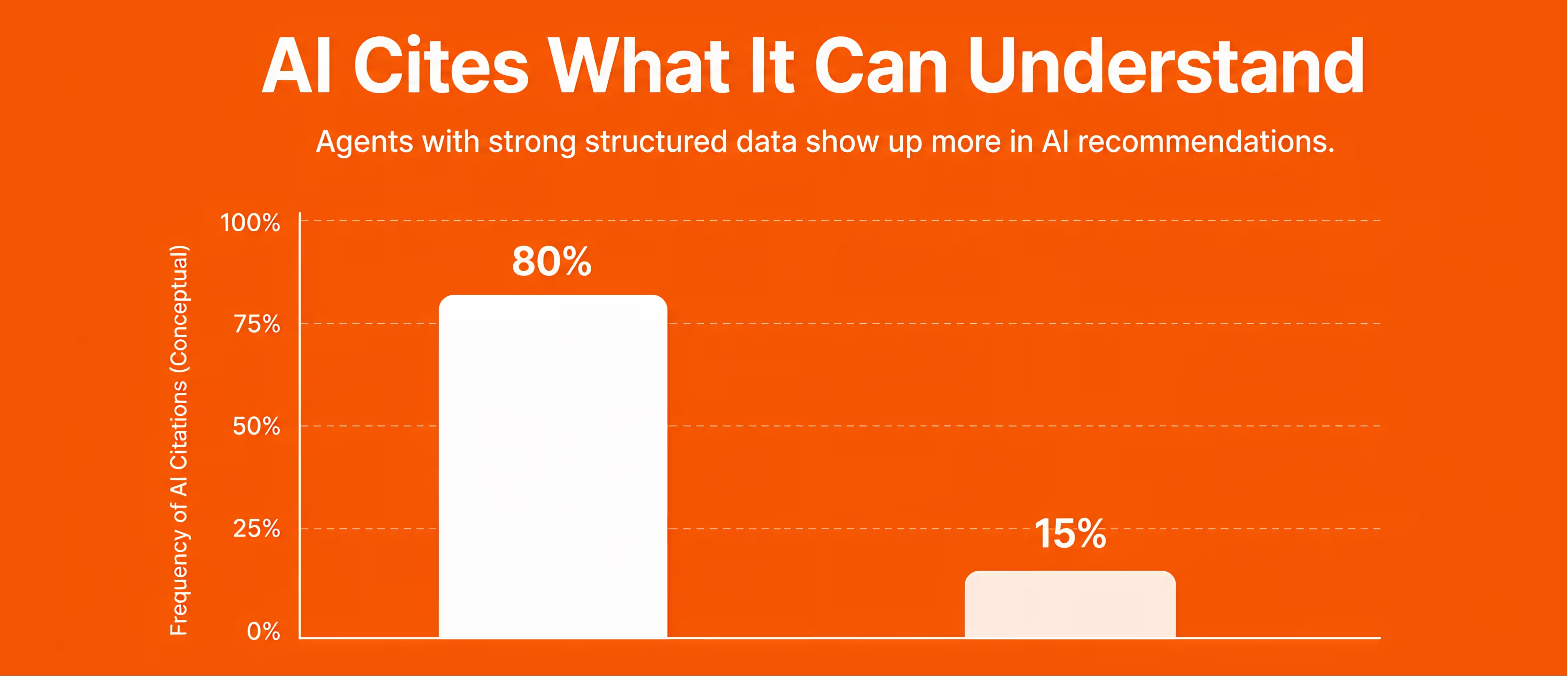
A recent industry analysis found that a large majority of agents have little or no structured data, thin content, and inconsistent profiles, making it hard for AI systems to interpret them as credible entities.
Fragmented online footprint
If your name, brand, phone number, and areas served look different on each site (Google, Zillow, Magicbricks, Realtor.com, Instagram, your own site), AI systems have a harder time connecting them to a single reliable identity.
Typical red flags:
- Different variations of your name or team name.
- Old phone numbers or emails still live across directories.
- Mixed or outdated service areas, making you look unfocused.
No machine-readable proof of expertise
Even when an agent genuinely dominates a neighborhood, AI systems will not magically know that; they need structured signals.
Missing pieces often include:
- No Agent or LocalBusiness schema on your website.
- Listings without structured data for address, price, property type, and neighborhood.
- No structured FAQs or how-to content answering buyer and seller questions.
Generic content that answers nothing
Copy-pasted "Top 10 tips for buying a home" articles might look useful, but if they could apply to any city, they don't really show what you're uniquely good at or help AI understand your expertise.
AI is looking for specific, local, and contextual signals such as:
- "Best neighborhoods for families in [specific suburb] with great schools."
- "Step-by-step process to sell a townhouse in [your city] with an HOA."
- "Monthly condo market report for [one or two zip codes]."
Foundations of AI Visibility for Realtors
Before chasing advanced tactics, you need solid infrastructure that makes it easy for AI systems to interpret who you are, where you operate, and what you are known for.
Build a clean, structured website
Your website is still your home base, but now it must be built as much for machines as for humans. That does not mean making it ugly; it means making information explicit and structured.
Key elements:
- One clear H1 per page, with headings reflecting real questions buyers and sellers ask.
- Fast, mobile-friendly design with no intrusive popups blocking content.
- Simple URL structure: /neighborhood-guides/[area-name], /sell/[city-name]-home, /buy/[city-name]-condos.
Schema markup for agents, listings, and reviews
Add JSON-LD markup so AI systems can quickly understand your role and relationships.
At minimum, implement:
- RealEstateAgent or LocalBusiness schema for your brand and profile.
- Offer, Product, or Residence schema for listings (with price, location, property type).
- Review schema for testimonials on your site.
Clarify your local entity signals
AI systems treat agents and teams as entities tied to locations and topics, similar to how they treat restaurants or doctors. Clear, consistent entity data helps you win.
Make sure:
- Your Name, Address, Phone (NAP) are identical across all major platforms.
- Your service areas are clearly described (cities, neighborhoods, zip codes) on your site and profiles.
- You avoid listing 15 different cities; focus on the ones where you truly want AI visibility.
Optimize major platforms for AI discovery
Portals and profiles are often the first places AI systems look for evidence.
Critical profiles to optimize:
- Google Business Profile
- Zillow and/or your main local portal
- Realtor.com
- Facebook Page and Instagram business profile
- At least one or two reputable directories (Yelp, local business chambers)
For each:
- Use keyword-rich but natural descriptions ("real estate agent helping first-time buyers in [area]" instead of generic taglines).
- Maintain regular posts or updates to show you are active.
- Encourage detailed, specific reviews that mention neighborhoods, property types, and outcomes.
This is the backbone of AI search optimization in real estate, because it turns your site into a structured database AI can query, not just a brochure.
Content That AI Loves: Becoming the Local Authority
Once your structure is in place, you need content that proves you are a true expert in specific local problems, not just a generalist who can work anywhere.
The goal is to create topical authority clusters around a few high-value themes and locations so AI systems consistently see you as the best match for related questions.
Build hyperlocal content clusters, not random posts
Pick 1-3 core topics based on your business focus, such as:
- First-time buyers in a specific city or suburb.
- Upsizing families in two or three school-district-driven neighborhoods.
- Condo or townhouse specialists in a defined urban area.
For each topic, create a cluster:
- A pillar page (e.g., "Complete Guide to Buying Your First Home in [City] in 2026").
- Several supporting articles (neighborhood spotlights, school guides, cost breakdowns, closing process, inspection red flags).
- A FAQ section written in real questions your clients ask, with concise answers.
This structure mirrors how AI systems expect information to be organized and makes it easy for them to pull accurate snippets and recommendations.
Answer real buyer and seller questions directly
AI assistants love concise, direct answers framed around explicit questions.
On your pillar pages and FAQs:
- Use headings like "How long does it take to sell a home in [city] right now?"
- Answer with 2-4 crisp sentences, then expand with more detail below.
- Clarify numbers and ranges ("Most listings in [area] sell within X-Y days if priced correctly") where possible.
This helps you show up both in traditional featured snippets and in AI-generated overview boxes.
Create market reports and neighborhood guides AI can quote
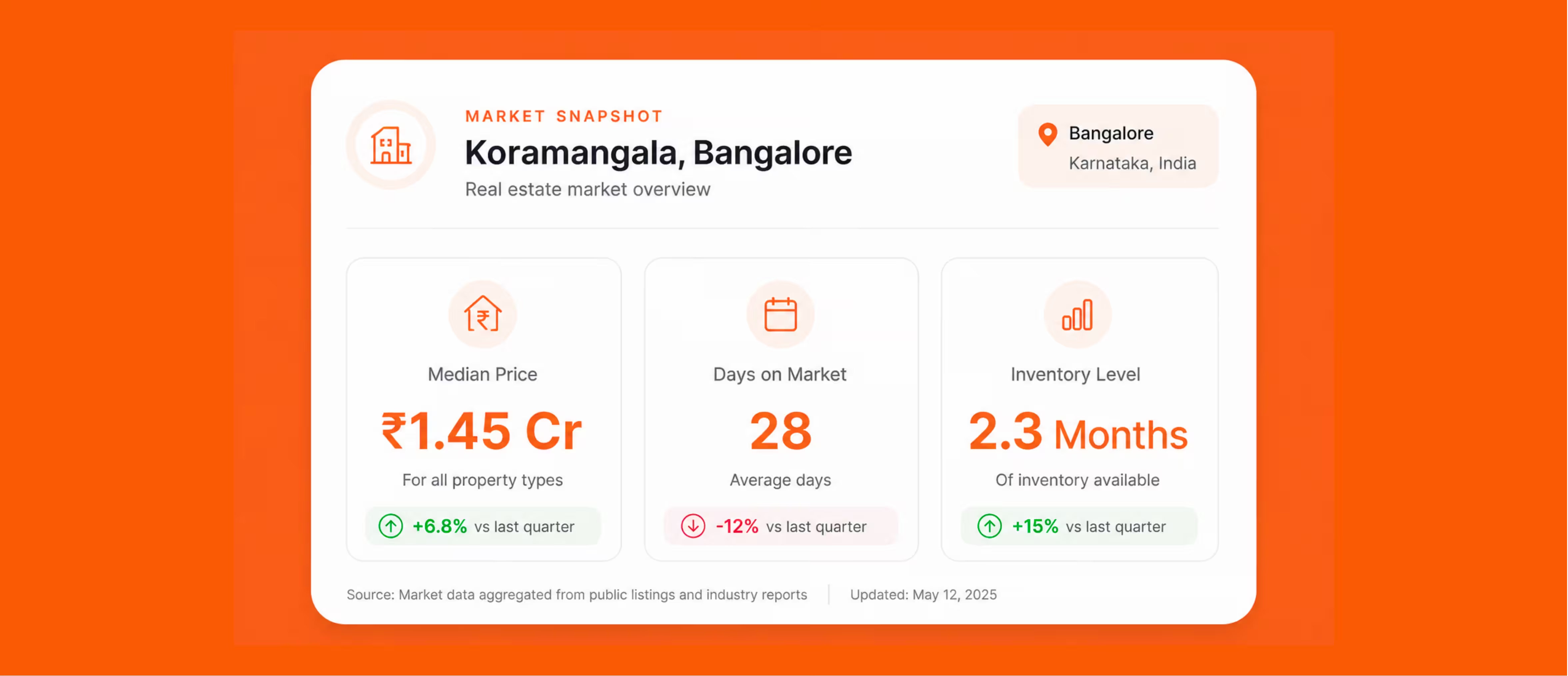
Monthly or quarterly market snapshots and neighborhood mini-guides are gold for AI systems because they often answer data-driven queries like "Is now a good time to buy in [area]?"
For each area you want to own:
- Publish regular updates on price trends, inventory, days on market, and notable changes.
- Highlight who each neighborhood is best for (young professionals, families, downsizers) with concrete examples.
- Include tables or bullet lists summarizing key points so AI can extract them easily.
Step-by-Step AI Search Optimization for Real Estate
This is where you turn strategy into a repeatable process, so your AI visibility for real estate agents is not a one-off project, but an ongoing advantage.
Step 1 - Audit your current AI visibility
Before making changes, see how AI tools already see you.
Ask ChatGPT, Perplexity, and other assistants:
- "Who are the top real estate agents for [area]?"
- "Which realtor should I work with to sell my home in [area]?"
Check if your name, brand, or content appears anywhere in the answers or sources.
Google your own name + city and note which websites and profiles show up first; these are your primary AI signals.
Document:
- Which platforms represent you best (and worst).
- Which topics or areas you are already associated with.
- Any outdated or incorrect information that could confuse AI.
Step 2 - Fix technical foundations
Even the best content will not help if your site is slow, broken, or impossible for bots to parse.
Make sure:
- Your site loads quickly on mobile, especially image-heavy listing pages.
- You are using clean HTML heading hierarchy (H1 to H2 to H3) instead of styling everything manually.
- Your robots.txt and meta tags do not accidentally block important pages from being crawled.
At this stage, implement or audit:
- Core schema (Agent, LocalBusiness, Residence, FAQ where relevant).
- XML sitemaps that include your key content, not just listings that expire.
Step 3 - Restructure content for AI extraction
Revisit your most important pages and make them more AI-friendly.
Focus on:
- Clear intros that directly answer the main query in the first 150-200 words.
- Short paragraphs and scannable lists for complex topics.
- H2s and H3s that mirror common questions ("Is it a buyer's or seller's market in [area] in 2026?").
Extend each page with:
- A short summary box near the top, giving the key answer in 3-5 bullet points.
- A dedicated FAQ section with 4-8 common questions and crisp answers.
Step 4 - Build brand mentions and digital PR
Backlinks still matter, but AI systems pay special attention to unstructured brand mentions and who cites whom in reputable contexts.
Look for opportunities to be mentioned as a local expert:
- Guest posts on local news sites, community blogs, and niche real estate publications.
- Quotes in market forecast articles or neighborhood round-ups.
- Podcast guest spots and YouTube collaborations where your name, city, and niche are clearly introduced.
Each mention that ties your name or brand to your geographic and topical niche reinforces your AI entity profile.
Step 5 - Connect everything to your CRM and lead flows
Visibility without capture is wasted. Once AI and search bring people to your site and profiles, you must convert them smoothly.
Best practices:
- Add contextual calls-to-action on each content piece ("Get your [area] home valuation", "See all 3-bedroom homes in [neighborhood]").
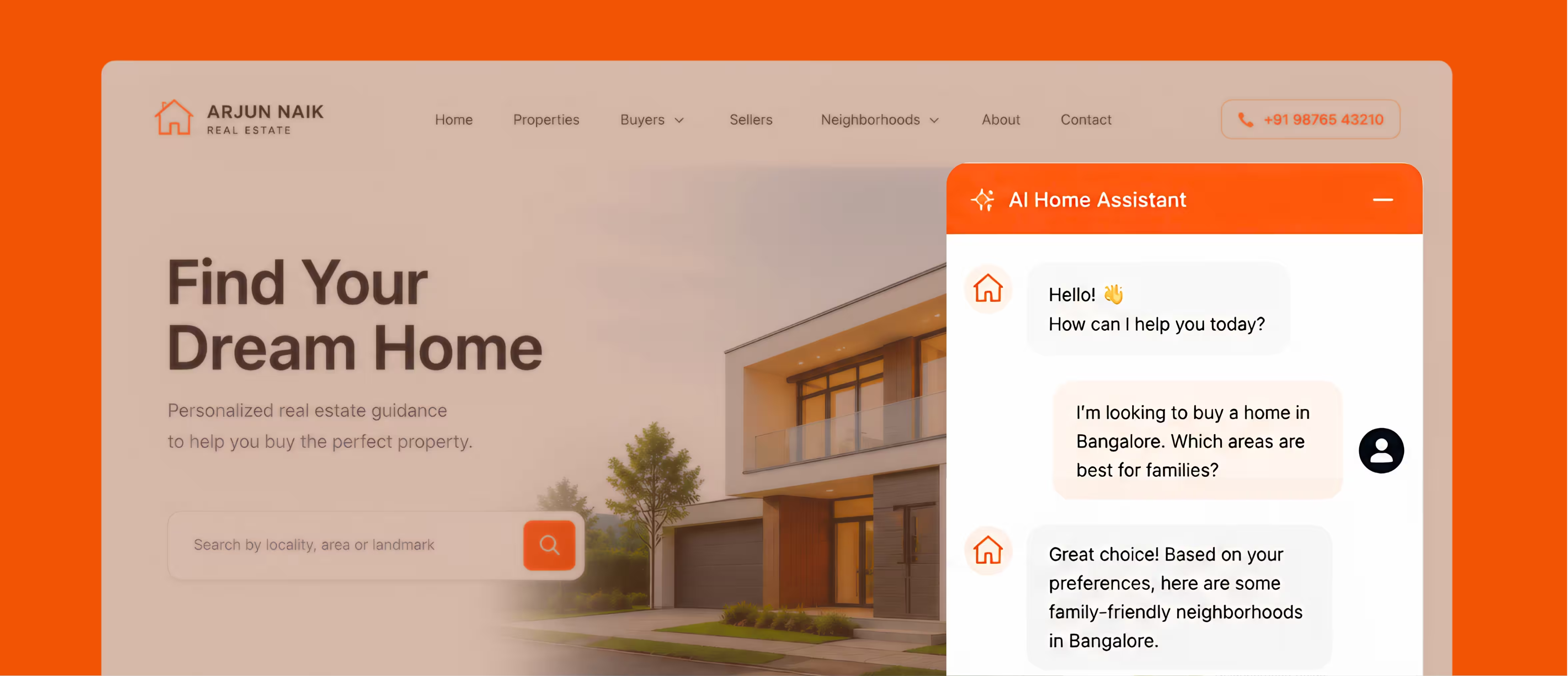
- Use AI-powered chatbots to answer basic questions and pre-qualify leads while you sleep.
- Sync all forms and bot conversations to your CRM, with tags by topic and location, so you can follow up in a targeted way.
Tools and Tech Stack for AI Visibility
You do not need a huge tech stack, but a few focused tools can multiply your efforts.
AI visibility platforms
Some platforms now specialize in AI search optimization for real estate, helping you structure listings, schema, and content for AI consumption.
Look for tools that:
- Auto-generate or validate schema for agents and listings.
- Highlight gaps in your local topical coverage.
- Monitor how often your content is referenced in AI responses (where possible).
If you want a deeper breakdown of how these areas apply to your own setup, a free AI visibility audit can help map schema readiness, local coverage, and AI mention signals.
If you want a deeper breakdown of how these areas apply to your own setup, a free AI visibility audit can help map schema readiness, local coverage, and AI mention signals specific to your market.
Prospecting and intent tools
AI-enhanced prospecting tools can reveal patterns in who is searching for what, which you can then turn into content and offers.
Useful capabilities include:
- Signals when homeowners in your area are likely to sell soon.
- Heat maps of property search interest by zip code or neighborhood.
- Alerts for shifts in demand (e.g., more interest in condos vs single-family homes).
On-site AI chat and automation
Finally, make your site feel like a 24/7 digital sales assistant.
Add:
- AI chat that answers common questions, guides people to the right content, and offers to schedule calls.
- Automated follow-up sequences customized by lead source and topic.
- Smart forms that adapt questions based on whether someone is buying, selling, or just researching.
A 90-Day AI Visibility Playbook for Agents
You do not need to do everything at once. Here is a focused 3-month roadmap to transform your AI visibility without burning out.
Month 1 - Fix the basics
Goals: Clean, consistent entity signals and technical readiness.
- Standardize your name, address, phone, and branding across all major profiles.
- Claim, verify, and optimize Google Business Profile and key portals.
- Add or audit Agent, LocalBusiness, and listing schema on your website.
- Improve site speed and mobile experience on top 10 pages.
- Do an AI visibility audit: test how often you appear in AI assistants and note gaps.
Month 2 - Launch your content cluster
Goals: Clearly signal topical and local authority.
- Choose 1-2 high-value topics (e.g., first-time buyers in [city], selling in [neighborhood]).
- Create one in-depth pillar guide for each topic, with strong intros and a summary box.
- Publish 3-5 supporting articles around each pillar (neighborhoods, schools, costs, process).
- Add FAQ sections to pillar pages with question-answer formatted content.
- Internally link between all related articles and your main service pages with descriptive anchor text.
Month 3 - Push distribution and authority
Goals: Earn mentions, distribute content, and systematize.
- Pitch yourself as a local expert to at least 3 podcasts, YouTube channels, or news outlets.
- Turn your best articles into LinkedIn posts, Instagram carousels, and short videos that link back to your site.
- Share new content in relevant online communities (local Facebook groups, forums, newsletters) without spamming.
- Add your new pillar and cluster pages to your email newsletter sequences.
- Re-run your AI visibility audit from Month 1 and compare how often you appear now.
At this stage, most agents use a tracking layer like Wintraction to continuously monitor AI visibility, content gaps, and changes in how often their brand appears across AI search systems.
Common AI Visibility Mistakes to Avoid
Avoiding a few common traps can save you months of wasted effort.
Outsourcing generic, AI-sounding content
If your content sounds like it could have been written for any city or any agent, AI systems have no reason to associate it specifically with you.
Instead:
- Fill your articles with specific streets, buildings, schools, and local references.
- Add your own stories, examples, and case studies to show real experience.
- Use AI tools to assist, but always inject your unique perspective before publishing.
Ignoring reviews and reputation signals
AI assistants increasingly factor in reviews and overall reputation when recommending service providers.
Make review generation part of your process:
- Ask every happy client for a review that mentions what you helped them with and where.
- Spread reviews across Google, key portals, and (if relevant) Facebook or Yelp.
- Respond to reviews thoughtfully, AI can read responses too.
Treating AI as just another channel
AI visibility is not just posting on one more platform; it is about rewiring your entire digital footprint so machines can understand and trust you.
That means:
- Thinking in terms of entities, schema, and topical authority - not just keywords.
- Updating processes: every new listing, client story, or market shift becomes potential structured content.
- Measuring success not only by traffic, but by qualified inquiries and recommendations coming via AI-mediated discovery.
What's Next: The Future of AI Visibility for Real Estate Agents
Over the next few years, AI systems will evolve from answering questions to orchestrating entire property journeys - from researching neighborhoods to shortlisting listings, booking tours, and connecting users with agents.
In that world:
- Agents who invest in AI visibility today will already be embedded in the default paths AI tools take when helping buyers and sellers.
- Your human skills: negotiation, empathy, local intuition will matter more, not less, because AI will send you more serious, ready-to-act clients.
- The gap will widen between visible, trusted local experts and everyone else who still thinks of the internet as a place to just list properties.
If you commit to the 90-day plan in this guide and keep iterating, you will not just do AI SEO, you will become the go-to real estate expert AI systems rely on when your ideal clients ask for help.
If you're serious about becoming the agent AI assistants recommend first in 2026, let's turn this playbook into action for your brand.
Ready to take action?
Become the agent AI recommends first
Get a free audit showing exactly where you stand in AI search and what it takes to move up.
30 minutes only. No sales pressure.
To understand why showing up inside AI answers matters so much in the first place, read our complete guide to answer engine optimization.